
Pruning
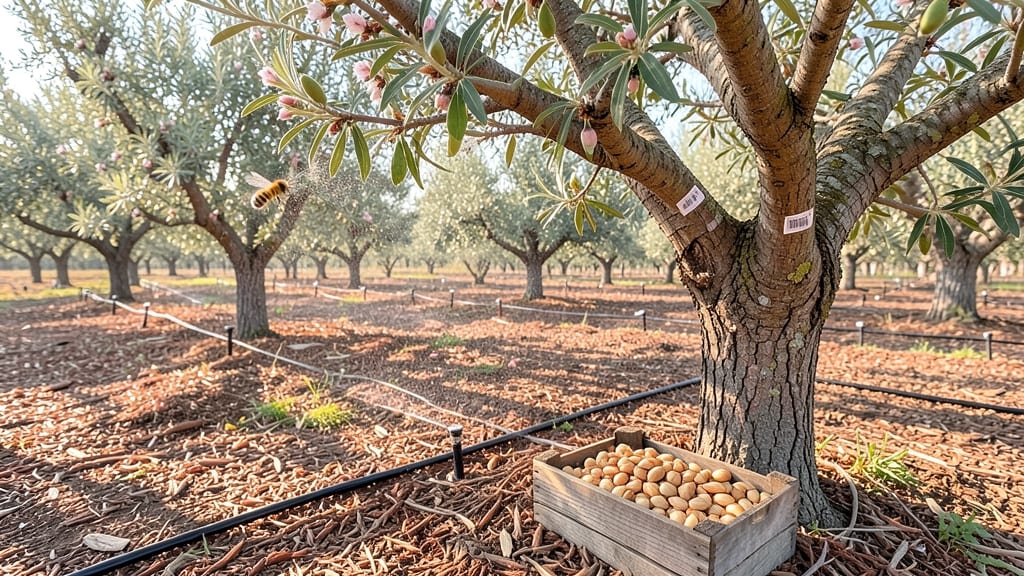
Almond tree farming starts with pruning—the secret weapon for turning a struggling orchard into a nut-producing powerhouse. ✂️ I’ve watched barren branches transform into heavy-laden limbs just by mastering the timing and technique, and I’m sharing the exact year-round schedule that works for both backyard trees and small-scale orchards.
The key isn’t just cutting back—it’s understanding when to shape for airflow, when to thin for fruit development, and when to let the tree rest. Most growers focus only on winter pruning, but spring and summer adjustments can double your yield by directing energy where it counts.
My first almond tree produced 20% more nuts after I added summer pruning to the mix.
You’ll end up with trees that resist disease, produce larger nuts, and live longer—all from strategic cuts. The best part? Even small-scale growers can see results in just one season. We’ll cover the tools, the seasons, and the telltale signs of a well-pruned tree.
Works for self-pollinating varieties, grafted trees, and even container-grown almonds in warm climates. Let’s get those branches in shape for harvest time.
📚 In This Guide
- What you need
- Instructions
- Tips and common mistakes
- Wrapping up and next steps
What you need
- ● Hand Pruners: 1-2 pairs (bypass pruners, sharp and durable, for clean cuts on small branches).
- ● Loppers: 1 pair (for thicker branches, 1.5–2 inches in diameter).
- ● Pruning Saw: 1 (for branches too thick for loppers, 8–12 inches long).
- ● Disinfectant (70% Isopropyl Alcohol or Bleach Solution): Small bottle or spray for sterilizing tools between cuts (prevents disease spread).
- ● Gloves: 2 pairs (cut-resistant and durable, like leather or heavy-duty work gloves).
- ● Safety Goggles: 1 pair (to protect from debris and dust).
- ● Ladder or Step Stool: 1 (for reaching higher branches, ensure it’s stable and tall enough for your trees).
- ● Tarp or Drop Cloth: 1 (to collect fallen branches and debris).
- ● String or Twine: Small roll (for marking branches that need attention).
- ○ Water Sprayer (Optional but Helpful): For cleaning tools or rinsing off sap after pruning.
- ● Knowledge of Almond Tree Varieties: Research which types grow best in your climate (e.g., Nonpareil, Carmel, Butte).
- ● Soil Test Kit: To check pH and nutrient levels (ideal range: 6.0–7.5).
- ● Fertilizer (Balanced NPK 10-10-10 or Almond-Specific Blend): Apply post-pruning for recovery.
- ○ Tree Wrap or Pruning Sealant: Optional for protecting cuts from pests/disease (especially in wet climates).
- ● Weather Forecast: Plan pruning sessions during dormant seasons (late winter/early spring) to avoid stressing the tree.
Step-by-Step guide to year-round almond tree pruning
Here's how I've refined my approach to keep almond trees productive and healthy through every season.
✂️ Step 1: Winter Pruning for Structural Foundation
Start between late winter and early spring—just as buds begin to swell but before new growth emerges. This is when trees are dormant but about to wake up, making them less stressed for major cuts. Focus on removing dead, diseased, or crossing branches first. These are easy to spot—they're either brown and brittle or rubbing against other limbs, creating wounds where pests can enter.
Next, thin out the canopy to improve airflow and sunlight penetration. Aim for an open center with branches spaced 12-18 inches apart. I always step back every few cuts to visualize the tree's shape. Prune back to a strong lateral branch or bud, cutting at a 45-degree angle just above it. This ensures the tree directs energy to new growth rather than sealing off the wound with a flat cut.
☀️ Step 2: Summer Light Pruning for Nut Production
Mid-summer is all about fine-tuning rather than heavy pruning. Wait until July or August when the tree has already set fruit but before fall rains arrive. Look for suckers—those vigorous shoots growing from the base or along branches. These steal energy from nut production, so remove them completely at the base. Use sharp loppers to avoid tearing bark, which invites disease.
Also, trim back any branches that are shading the center of the tree. You'll see these as areas where sunlight barely reaches the ground. Thin out 10-20% of the smallest branches in these spots to let light penetrate. This encourages more blossoms next spring, which directly translates to higher nut yield. Water the tree deeply after pruning to help it recover faster.
🌿 Step 3: Fall Cleanup to Prevent Winter Stress
Late fall, after leaves have dropped but before the first hard frost, is the time for sanitation pruning. Remove all leaf litter and fallen nuts from under the tree—this reduces pest and disease pressure over winter. Prune out any branches that look weak or diseased, even if they're small. Healthy trees can handle a few cuts now, but avoid heavy pruning; you don't want to stimulate new growth that won't harden off before cold sets in.
Pay special attention to water sprouts—those vertical shoots that shoot up from the trunk or branches. These are a tree's way of compensating for stress, and they rarely produce nuts. Cut them back to a lateral branch or bud. This step might seem minor, but it's critical for maintaining the tree's energy balance through winter. Mulch around the base with 2-3 inches of organic material to insulate roots and retain moisture.
⏰ Step 4: Spring Maintenance for Blossom Health
As soon as buds begin to swell in early spring, do a quick check for damaged or dead wood from winter storms. Prune these out immediately—they'll only slow down the tree's recovery. Focus on thinning out crowded branches to prevent blossom clusters from rubbing together, which can damage flowers and reduce pollination success.
This is also the time to shape the tree for better airflow. Look for branches growing inward or downward—these are prime candidates for removal. Cut just above an outward-facing bud to encourage growth in the right direction. Avoid heavy pruning now; the tree is already diverting energy to flower production. A light touch ensures you don't stress the tree before it even gets to harvest season.
Tips & tricks for year-round almond tree care
Real talk: Pruning isn't just about cutting branches—it's about strategic growth management. Here's what I've learned after years of trial and error with my own orchard.
Tool Selection: Invest in sharp, high-quality pruning tools—dull shears tear bark and create wounds that invite disease. I use bypass pruners for branches under 1-inch thick and a pruning saw for thicker limbs. Always clean tools with rubbing alcohol between trees to prevent cross-contamination of pathogens. The right tools make all the difference in clean cuts that heal properly.
Seasonal Timing Secret: The exact timing matters more than you'd think. In Step 1's winter pruning, I look for that "just-swollen" bud stage—when buds are visible but haven't burst yet. This window (typically February-March in most climates) gives the tree time to heal before spring growth begins. For summer pruning (Step 2), I wait until after harvest but before fall rains to avoid fungal issues from prolonged moisture on fresh cuts.
Visualization Technique: Before making any cuts in Step 1, I step back and visualize the tree's final shape from all angles. Imagine sunlight streaming through the center—you should see clear paths through the canopy. This mental exercise helps me avoid the common mistake of over-thinning one side while leaving dense clusters on another. Think of it as sculpting rather than just removing branches.
Mulching Strategy: The 2-3 inches of organic mulch mentioned in Step 3 isn't just decorative—it's a critical moisture and temperature regulator. I use wood chips because they break down slowly, releasing nutrients while maintaining consistent soil temperatures. Apply mulch in a donut shape, keeping it 2-3 inches away from the trunk to prevent rot. This simple step reduces watering needs by up to 30% during summer.
Pro Tips for Almond Tree Farming
- Real talk: Pruning isn't just about cutting branches—it's about strategic growth management.
- Tool Selection: Invest in sharp, high-quality pruning tools—dull shears tear bark and create wounds that invite disease.
- Seasonal Timing Secret: The exact timing matters more than you'd think.
Frequently asked questions
Got questions about almond tree farming and pruning?
You’re not alone! Here are answers to the most common queries to help you grow a thriving orchard.
How often should I prune my almond trees?
Prune your almond trees year-round but focus on key times: late winter/early spring (before buds swell) for structural shaping, and summer (after harvest) to remove deadwood and thin fruit clusters. Avoid heavy pruning in fall—it can stress trees before winter.
When do almond trees start producing nuts?
Almond trees typically take 3–5 years to bear fruit after planting, depending on variety and care. Young trees need patience—focus on proper pruning, watering, and soil health to speed up maturity. Pro tip: Dwarf varieties may fruit sooner (2–3 years).
What’s the best climate for growing almond trees?
Almonds thrive in USDA Zones 5–10, but they love hot, dry summers (like California’s Central Valley) and 100–200 frost-free days. Avoid humid climates—fungus risks rise! If you’re in a cooler zone, choose cold-hardy varieties like ‘Butte’ or ‘Peerless’.
How do I fix overgrown or misshapen almond trees?
Start with drastic but careful pruning: Remove dead, crossing, or inward-growing branches first. Thin out dense foliage to improve airflow, and never cut more than 25% of the canopy in one season. Over 2–3 years, you’ll reshape the tree—patience is key!
Can I grow almond trees in containers or small spaces?
Yes, but with limits! Dwarf varieties (like ‘Nonpareil’) work best in large pots (15+ gallons) with well-draining soil. Expect smaller yields and more frequent pruning to control size. For small spaces, consider espalier training—it saves room and boosts sunlight exposure!
Do almond trees need cross-pollination?
Almond trees are self-unfruitful—they need at least one compatible pollinator variety (e.g., ‘Nonpareil’ + ‘Butte’) within 50–100 feet. Bees do the work! Plant two varieties if you want nuts. Pro tip: Check your local extension office for pollinator-friendly pairs.
Wrapping up and next steps
Almond tree farming thrives on consistent, strategic pruning—the key to boosting yield and tree health year-round. 🌿 From winter’s structural cuts to summer’s light shaping, each season offers a chance to optimize growth and productivity.
With the right tools, timing, and techniques, you’re not just maintaining trees—you’re investing in a bountiful harvest for years to come.
Ready to transform your orchard? Start small—pick one tree this season, apply what you’ve learned, and watch your skills (and nut yield!) grow. Your future harvests will thank you! 🌱