
Pruning
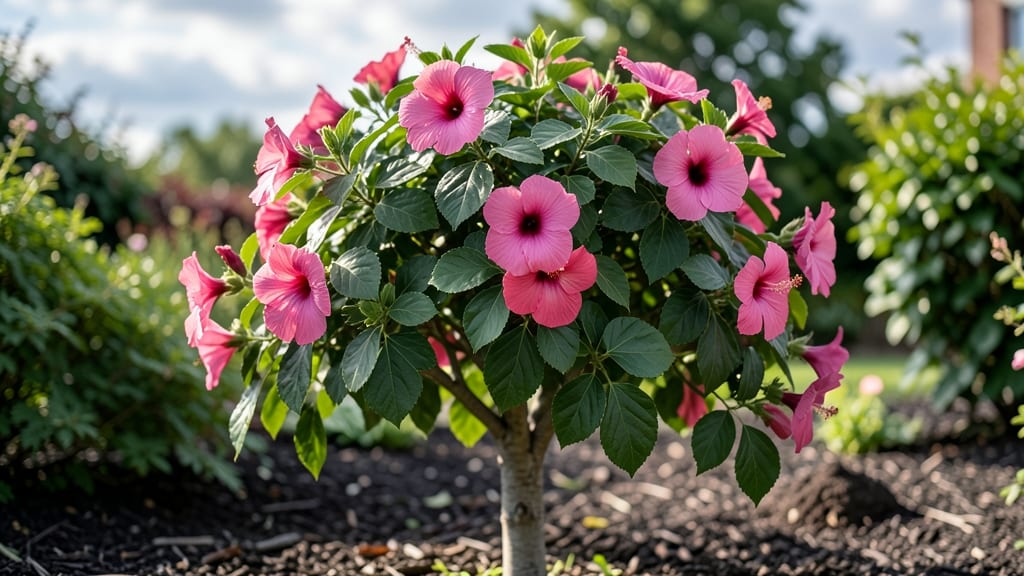
Shaping an Althea 🌳 into a tree form requires strategic pruning to guide its natural growth into a single, sturdy trunk and well-defined branches.
If you’ve ever watched your Althea sprawl into a wild, multi-stemmed bush instead of the elegant tree you envisioned, you’re not alone. The key lies in understanding when and how to prune—not just to cut back overgrowth, but to encourage a strong, upright structure from the start.
In this guide, I’ll walk you through the exact steps to train your Althea into a tree form, including seasonal pruning tips, tools to use, and how to avoid common mistakes that lead to weak branching or stunted growth.
By the end, you’ll have a graceful, long-lasting Althea tree that becomes the centerpiece of your garden—no guesswork required.
How to prune Althea for tree form: step-by-step growth control
Transforming your Althea (Hibiscus syriacus) into a tree form requires patience and precision. The key lies in selective pruning during the plant's early years to encourage a single, strong trunk while maintaining a balanced canopy.
Without proper guidance, you risk creating a multi-stemmed bush or weak structure that can't support its own weight. Let’s break down the exact steps to achieve that elegant tree silhouette you envision.
First, understand that tree-form Althea pruning differs significantly from traditional bush pruning. Your goal is to eliminate competing stems and shape the remaining branches to create a tapered, natural look. This process begins when your plant is young—ideally within the first 2-3 years of growth.
Waiting too long increases the risk of permanent multi-trunk growth, which is difficult to correct later.
Before you begin, gather your tools: sharp bypass pruners, gloves, and disinfectant to prevent disease spread. Choose a clear day for pruning to reduce stress on the plant. The best time to prune for tree form is late winter or early spring, just as new growth begins.
This timing ensures you’re working with dormant branches and allows the plant to heal before summer heat sets in.
Step-by-Step Guide to Pruning Althea for Tree Form
- 1 Identify the strongest stem: Select the straightest, thickest central stem as your main trunk. Remove all other stems at the base using clean cuts at a 45-degree angle.
- 2 Support the trunk: Use a stake or bamboo pole tied gently to the main stem with soft plant ties to prevent bending. This is critical for young, flexible stems that can flop under their own weight.
- 3 Prune lateral branches: Once the main trunk reaches 3-4 feet tall, begin shaping the canopy. Remove 1/3 of the upper branches to encourage airflow and sunlight penetration. Focus on weak or crossing branches first.
- 4 Thin the canopy: In year 2-3, remove 20-30% of older branches from the bottom half of the plant to create a natural taper. Aim for a pyramidal shape with wider branches at the top.
- 5 Encourage new growth: After pruning, apply a balanced fertilizer (5-10-10) to stimulate new, healthy branches. Water deeply to reduce shock, and avoid fertilizing in late summer or fall to prevent tender growth before winter.
- 6 Monitor and adjust: Throughout the growing season, watch for suckers or water sprouts at the base. Remove them immediately to prevent competing stems. Adjust stakes as the trunk thickens to avoid girdling.
One of the most common mistakes gardeners make is pruning too late in the season. If you wait until summer or fall, your Althea won’t have enough time to heal and prepare for winter.
This can lead to dieback or weakened branches that struggle to support the plant’s weight. Always prioritize early spring pruning to give your Althea the best chance at a strong, healthy structure.
Another critical error is over-pruning in a single session. Removing more than 30% of the plant’s foliage at once can shock the Althea, leading to reduced flowering or even plant decline.
Instead, spread pruning tasks over 2-3 sessions if needed, especially for mature plants. This gradual approach allows the plant to adapt and recover without stress.
For young Althea plants (under 2 years old), focus on removing all but one central stem and providing structural support. As the plant matures, shift your attention to canopy shaping and branch thinning.
Remember, the goal is to mimic a natural tree form, not a manicured topiary. Embrace the organic shape that develops over time for the most authentic and resilient tree structure.
Once your Althea reaches mature height (15-20 feet), maintenance pruning becomes simpler. Focus on removing dead, diseased
Althea tree form vs. bush growth: key differences in pruning needs
When shaping your Althea (Hibiscus syriacus), the growth form you choose—tree or bush—drastically changes your pruning approach. A tree-form Althea requires selective pruning to maintain a single trunk and strong branches, while a bush-form thrives with regular thinning to encourage dense foliage.
The timing, cuts, and goals differ completely, so understanding these distinctions is crucial for success.
For tree-form Althea, your priority is creating a central leader trunk with well-spaced branches. This means removing competing stems early and training the plant vertically. In contrast, bush-form Althea benefits from annual rejuvenation pruning to stimulate new growth from the base.
Both forms need attention, but the methods couldn’t be more different.
| Pruning Factor | Tree Form | Bush Form |
|---|---|---|
| Primary Goal | Single trunk + spaced branches | Dense, multi-stemmed structure |
| Best Pruning Time | Late winter/early spring | Late winter or post-flowering |
| Cutting Technique | Selective removal of competing stems | Thinning 1/3 of oldest stems annually |
| Height Management | Limit to 6-8 ft for balance | Allow natural spread (8-10 ft wide) |
| Flowering Impact | Flowers on new wood; prune after blooming | Flowers on old wood; prune post-flowering |
For tree-form Althea, focus on removing lower branches to create a clear trunk and prune back lateral branches to 1/3 their length. This encourages upward growth and prevents a leggy appearance.
In contrast, bush-form Althea needs regular thinning of the oldest stems to promote new growth from the base, ensuring a full, rounded shape.
Another key difference is flowering timing. Tree-form Althea produces flowers on new wood, so prune after blooming to avoid removing next year’s flowers. Bush-form Althea, however, flowers on old wood, so prune immediately after flowering to stimulate new growth for the following season.
If you’re transitioning from a bush to a tree form, start by selecting the strongest central stem and removing all competing branches within the first 12-18 inches. Use tree ties to support young trunks until they’re sturdy enough to stand alone.
For bush forms, avoid heavy pruning—focus on shaping rather than drastic cuts to maintain the plant’s natural density.
Remember, consistency is key. Tree-form Althea requires annual pruning to maintain its structure, while bush-form Althea benefits from light pruning every 1-2 years to prevent overgrowth. Whichever form you choose, proper pruning ensures your Althea stays healthy, vibrant, and visually stunning in your garden. 🌳