
Orchid Care
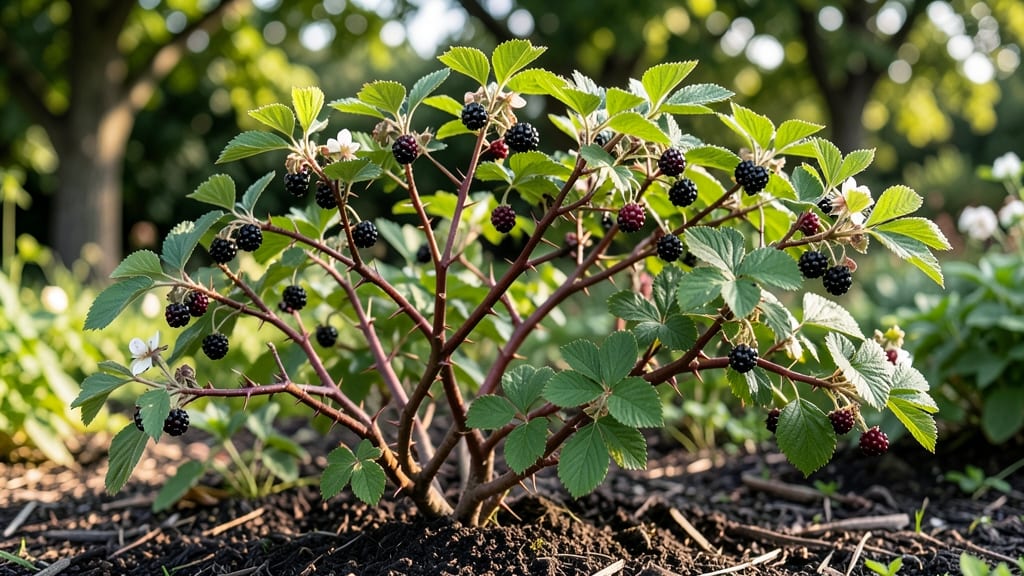
Boysenberries grow as vigorous bushes, not trees, so they need sturdy trellising or support to manage their sprawling canes. Compact varieties like 'Thornless Boysenberry' or 'Black Diamond' thrive in small spaces, while traditional types require at least 6 feet of width and regular pruning for best fruit production.
Boysenberries aren't trees—they're fast-growing brambles that spread aggressively through long, arching canes. 🌿 These canes produce fruit on second-year growth, which means winter pruning (cutting back old canes) is key to keeping plants productive.
The right support system—like a strong trellis or wire fence—helps direct growth upward, preventing fruit from rotting on the ground and making harvesting easier. Without proper support, traditional varieties can sprawl 10+ feet wide, while compact types stay neatly contained.
For small gardens, varieties like 'Thornless Boysenberry' or 'Black Diamond' are game-changers. These dwarf bushes grow just 3-4 feet tall and wide, making them perfect for containers or vertical gardens.
They still produce abundant berries but with far less maintenance. Just remember: even compact varieties need well-draining soil and full sun to reach their full potential.
💡 In This Article
- Why Boysenberry Bushes Need Proper Pruning and Support
- Top Space-Saving Boysenberry Varieties for Small Gardens
Why boysenberry bushes need proper pruning and support
Boysenberry canes follow a biennial growth cycle, meaning they produce fruit only on second-year wood. Each cane grows vigorously in its first year, then flowers and fruits the following season before dying back. This cycle explains why winter pruning—cutting back old canes to the ground—is essential.
Without pruning, plants become overcrowded with non-fruiting canes, reducing yield by up to 50% and increasing disease risk. The sprawling habit comes from their natural tendency to arch outward, which is why support systems are critical.
Support systems like trellises or wire fences elevate canes off the ground, improving air circulation and reducing rot. A well-designed trellis with 12-18 inch spacing between wires allows canes to climb while keeping fruit accessible.
Traditional varieties need 6-8 feet of width to sprawl naturally, but this leads to tangled canes and poor harvestability. In contrast, supported plants produce fruit that's cleaner, easier to pick, and more uniform in size. The right support also reduces breakage during heavy fruit loads.
The best time to prune is late winter or early spring, before new growth begins. Remove all dead or weak canes first, then select 6-8 of the healthiest canes to keep—these will fruit the following year. Thin canes to 12-18 inches apart on the trellis to prevent overcrowding.
For traditional varieties, a T-bar trellis (with horizontal wires) works best, while compact varieties can thrive on simpler vertical stakes or cage systems. Proper pruning extends plant lifespan by 5-10 years while maximizing fruit quality.
What most gardeners overlook is how pruning affects fruit flavor. Overcrowded canes produce smaller berries with less sugar concentration because energy is divided among too many canes. Well-pruned plants direct resources into fewer, larger berries with higher soluble solids content (the measure of sweetness).
For example, a properly managed 'Black Diamond' bush yields berries with 12-14% sugar compared to 8-10% in unpruned plants. The difference is noticeable in taste and storage life.
Climate plays a role too. In cooler regions, pruning encourages earlier warming of canes, which helps break winter dormancy. In warmer climates, support systems prevent canes from sagging under fruit weight, reducing sunburn damage.
The key is balance: too much pruning stresses the plant, while too little leads to poor yields. Aim for 30-40% of the plant's canes being removed annually to maintain vigor while ensuring future fruit production.
For those with limited space, consider a fan-trellis system, where canes are trained to grow outward in a fan shape. This method works well for compact varieties and keeps fruit within easy reach. The trade-off? It requires more frequent pruning to maintain the fan shape.
Whether you choose a trellis, fence, or cage, the goal is the same: create an environment where canes grow upright, fruit develops optimally, and harvesting becomes a breeze. 🌱