
Pruning
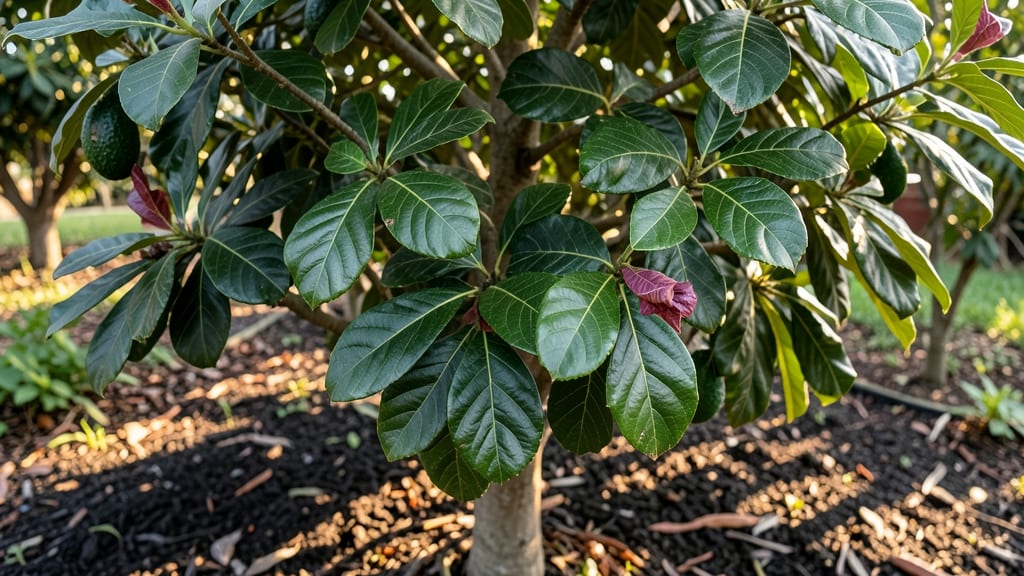
Mastering avocado tree leaf identification starts with their healthy deep green, glossy surface and distinctive oval shape—like a smaller, shinier version of a laurel leaf. 🌿 When leaves lose that vibrant hue or develop spots, it’s your tree’s way of signaling trouble before it’s too late.
I’ve seen everything from yellowing edges to blackened patches, and knowing what’s normal (like new growth being slightly lighter) saves seasons of frustration.
The first red flags appear as tiny yellow specks or webbing on undersides—often spider mites at work. Anthracnose shows up as dark, sunken spots with yellow halos, while root rot causes leaves to yellow and drop suddenly.
I learned the hard way that waiting to act turns minor issues into major pruning jobs. The key is catching problems early when treatments like neem oil or proper watering can still turn things around.
Healthy leaves should feel firm and spring back when gently pressed—soft or curling leaves mean stress. Compare both sides of the leaf: discoloration, spots, or unusual patterns are your clues.
Once you recognize these signs, you’ll spot trouble before it spreads, giving your tree the best chance to bounce back strong.
This isn’t just about spotting problems—it’s about understanding what your tree needs to thrive. Whether it’s adjusting water, improving drainage, or introducing beneficial insects, the right response keeps your avocado tree healthy and productive for years. Let’s get those leaves talking to you.
Understanding Leaf Stress Triggers
Avocado trees communicate their health through their leaves—often in ways that are easy to miss if you’re not familiar with the science behind it. When leaves change color, curl, or develop spots, it’s rarely a coincidence.
Instead, these visual cues point to specific environmental or biological stressors. Here’s why your avocado tree’s leaves might be sending up red flags, and what’s really causing the trouble.
Avocado trees are heavy feeders, and when their diet lacks key nutrients, leaves react fast. The most common deficiencies include: - Iron (Fe) Deficiency 🌱: Leaves turn yellow between veins (a condition called interveinal chlorosis), while veins stay green.
This happens when soil pH is too high (alkaline), locking out iron. Avocados thrive in slightly acidic to neutral soil (pH 6.0–7.0)—if yours is higher, iron becomes unavailable. - Magnesium (Mg) Deficiency 🍃: Older leaves develop yellow patches between veins, eventually browning.
Magnesium is mobile in the plant, so symptoms start at the bottom. Overwatering or poor drainage can wash it away. - Nitrogen (N) Deficiency 💨: Leaves turn pale green or yellow overall, stunting growth.
Nitrogen fuels leaf production, and a lack of it signals the tree can’t keep up with demand.
Actionable Fix: Test your soil (a simple kit from a garden center works) and amend with chelated iron (for alkaline soil) or Epsom salt (for magnesium). Use a balanced fertilizer (e.g., 6-6-6) in early spring to boost nitrogen.
Avocado trees are tropical at heart but can adapt—if conditions are just right. Push them too far, and leaves will revolt.
- Overwatering or Poor Drainage 💦: Leaves turn yellow and mushy, then drop. Roots suffocate in soggy soil, cutting off oxygen and nutrients.
Avocados hate "wet feet" and need well-draining soil (sandy loam is ideal). - Underwatering or Heat Stress 🔥: Leaves curl inward, edges crisp, and may fall off. Avocados need consistent moisture, especially in containers.
Mulching helps retain water and regulate soil temperature. - Cold or Frost Damage ❄️: Leaves develop brown, water-soaked spots or blacken entirely. Avocados are tender perennials (USDA zones 9–11). If temps drop below 32°F (0°C), leaves suffer irreversible damage.
Actionable Fix:
- Water deeply but infrequently (let top 2–3 inches of soil dry out between waterings).
- Mulch with wood chips (3–4 inches) to insulate roots.
- Protect from frost with frost cloth or move potted trees indoors if possible.
Not all leaf problems are environmental—some are caused by unwanted guests that feed on sap, block sunlight, or inject toxins.
- Spider Mites 🕷️: Tiny yellow or red pests that spin webs on undersides of leaves. They suck sap, causing silver stippling (tiny white dots) and leaf drop. Dry, hot conditions encourage outbreaks. - Avocado Lace Bugs 🐛: These pests leave yellowing, lace-like patterns on upper leaf surfaces.
They inject toxins while feeding, leading to premature leaf fall. - Fungal Infections (e.g., Root Rot, Anthracnose) 🍄: Dark spots with yellow halos or black, sunken lesions on leaves signal fungal trouble. Overwatering or high humidity creates the perfect breeding ground.
Actionable Fix:
- Blast leaves with water (knocks off mites and lace bugs).
- Apply neem oil (1 tsp per quart of water) as a natural pesticide.
- Space trees for airflow to reduce humidity-related fungi.
- Remove and destroy infected leaves to prevent spread.
Sometimes, leaves aren’t "sick"—they’re just physically stressed.
- Wind or Hail Scarring 🌪️: Leaves develop irregular tears or dents, often on exposed branches. Avocados have large, delicate leaves that can’t handle rough weather. - Mechanical Injury (e.g., Tools, Pets, Kids) 🛠️: Ragged edges or holes in leaves signal physical trauma.
Avoid pruning during wet weather (damp tools spread disease). - Herbicide Drift 🚫: If nearby lawns use glyphosate, avocado leaves may show yellowing or curling near the edges. Avocados are highly sensitive to broadleaf herbicides.
Actionable Fix:
- Protect trees during storms with burlap wraps.
- Prune with sharp, clean tools (sterilize with rubbing alcohol).
- Check for herbicide use in neighboring yards and request alternative treatments.
Practical fixes for common leaf issues
When your avocado tree’s leaves start whispering problems—through discoloration, spots, or odd shapes—it’s time to translate their silent SOS into action. Below are targeted solutions for the most common leaf troubles, paired with prevention tips to keep your tree thriving.
Think of this as your leaf-care first-aid kit, where every fix is simple, effective, and rooted in real-world gardening wisdom.
Cause: Yellow leaves often signal nitrogen deficiency (common in sandy soils) or root stress from soggy soil. Fix:
- Test Your Soil 🧪 Grab a soil test kit (or send a sample to your local extension office) to check pH and nutrient levels. Avocados prefer slightly acidic soil (pH 6.0–7.0).
- Fertilize Smart 🌱 Use a balanced fertilizer (like 6-6-6 or 8-3-9) in early spring. For nitrogen-specific fixes, try blood meal (organic) or Epsom salt (for magnesium, if leaves have yellow between veins).
- Adjust Watering 💧 Avocados hate "wet feet." Water deeply 1–2 times per week (more in summer, less in winter) and ensure drainage. Add perlite or sand to heavy clay soil to improve aeration.
Prevention Tips: ✔ Mulch with wood chips to retain moisture and regulate soil temp. ✔ Avoid over-fertilizing—too much salt can burn roots. ✔ Check drainage holes in pots if growing in containers.
Cause: Brown, brittle edges scream dehydration or salt accumulation from tap water or fertilizers. Fix:
- Water Deeply and Infrequently 💦 Instead of daily light watering, soak the root zone every 5–7 days (adjust for climate). Stick your finger 2 inches into the soil—if it’s dry, it’s time to water.
- Flush the Soil 🚰 Run water through the soil for 10–15 minutes to leach out excess salts. Repeat monthly, especially in pots.
- Use Filtered or Rainwater ☔ Tap water’s chlorine/sodium can stress trees. Collect rainwater or use a filter pitcher for potted avocados.
Prevention Tips: ✔ Group plants to create a microclimate with higher humidity. ✔ Avoid wetting leaves (especially in sun) to prevent fungal scorch. ✔ Use organic fertilizers (like compost tea) to reduce salt buildup.
Cause: Dark spots often mean avocado scab (fungus) or mite/pest damage. Fix:
- Prune Infected Leaves ⚔️ Snip off spotted leaves with sterilized pruners (dip in rubbing alcohol). Dispose of them in the trash—not compost—to prevent spread.
- Apply Fungicide 🛡️ Spray with copper fungicide (like Cupric Hydroxide) or a baking soda mix (1 tsp baking soda + 1 quart water + a drop of dish soap). Reapply every 7–10 days until new growth appears.
- Introduce Beneficial Insects 🐞 Release lacewings or ladybugs to combat mites. For severe infestations, use neem oil (1 tbsp per gallon of water, spray undersides of leaves).
Prevention Tips: ✔ Space trees for airflow (avocados need 15–20 feet between plants). ✔ Water in the morning to let foliage dry quickly. ✔ Inspect leaves weekly—catch pests early!
Cause: Leaves staying tiny or growth slowing? Your tree might be root-bound or lacking circulation. Fix:
- Repot if Needed 🏺 If roots circle the pot, upgrade to a 2–3 inch larger container with fresh, well-draining soil. Gently loosen roots before repotting.
- Improve Soil Aeration 🌬️ Mix cactus/succulent soil with compost (50/50) for better drainage. Add orchid bark for chunkiness.
- Fertilize for Growth 💪 Switch to a low-nitrogen, high-phosphorus fertilizer (like 5-10-10) to encourage root and leaf expansion.
Prevention Tips: ✔ Repot every 2–3 years for container-grown avocados. ✔ Avoid compacting soil around the base. ✔ Use raised beds if growing in-ground for better drainage.
Keep this quick-reference guide handy:
| Symptom | Likely Cause | Fast Fix |
|---|---|---|
| Yellow between veins | Magnesium deficiency | Epsom salt spray (1 tbsp/gallon) |
| Yellow edges only | Overwatering | Let soil dry; improve drainage |
| Curled leaves | Mites or heat stress | Neem oil spray + shade cloth |
| White powdery spots | Powdery mildew | Baking soda spray + better airflow |
Remember: Avocado trees are resilient—most issues are fixable with patience and the right care. Start with one solution at a time, monitor progress, and adjust as needed. Your tree will thank you with lush, vibrant leaves (and eventually, delicious fruit!). 🥑✨
Frequently asked questions
How can I tell if my avocado tree leaves are healthy?
Healthy avocado leaves should be deep green, glossy, and oval-shaped—similar to laurel leaves but slightly smaller. They should feel firm when touched and spring back if gently pressed. New growth may appear slightly lighter, but mature leaves should maintain vibrant color year-round.
What do yellow spots on avocado leaves mean?
Yellow spots often indicate nutrient deficiencies (like magnesium or iron) or fungal infections such as anthracnose. If spots have yellow halos, it’s likely a fungal issue—prune affected leaves and apply copper fungicide. For deficiencies, test your soil and amend with Epsom salt or chelated iron.
Why are my avocado leaves curling?
Curling leaves usually signal underwatering, heat stress, or pest infestations like spider mites. Check the undersides for tiny webs or pests—if found, spray with neem oil. For heat stress, provide afternoon shade, and water deeply but infrequently to keep soil consistently moist.
Can I use regular houseplant soil for my avocado tree?
No—avocado trees need well-draining soil to prevent root rot. Mix cactus/succulent soil with compost (50/50) or use a sandy loam blend. Avoid heavy garden soil, which holds too much moisture. For containers, add perlite or orchid bark to improve aeration.
How do I know if my avocado tree has a pest problem?
Look for tiny webs (spider mites), lace-like patterns (lace bugs), or sticky residue (aphids). Inspect leaf undersides with a magnifying glass—pests often hide there. Early signs include silver stippling or yellowing between veins. Treat with neem oil or introduce beneficial insects like ladybugs.