
Pruning
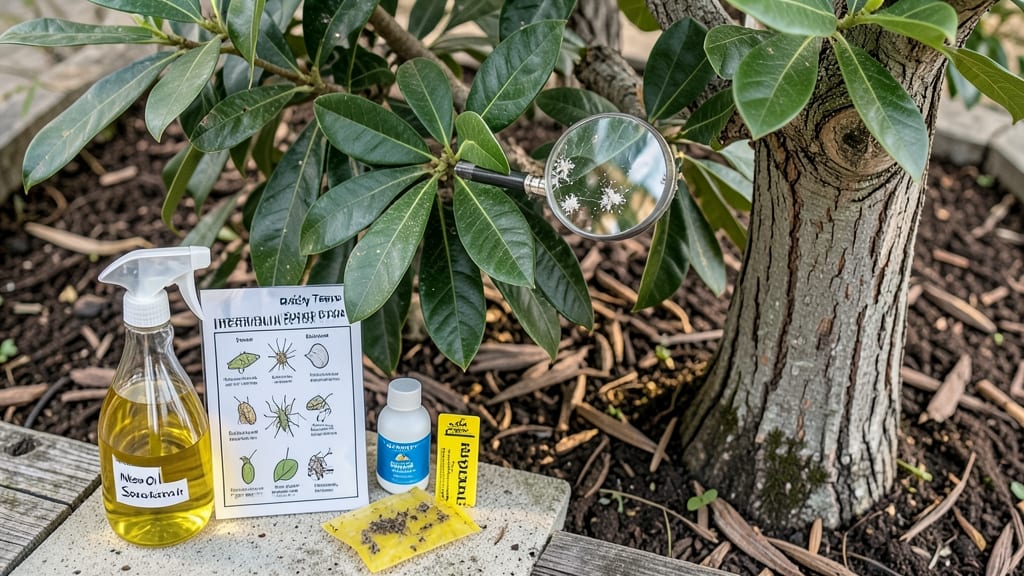
Avocado tree pests turn lush leaves into skeleton branches overnight. 🌿 I’ve watched my own trees go from thriving to struggling in weeks after spider mites or scale insects moved in—until I learned these organic sprays that actually work.
The worst offenders—aphids, mites, and mealybugs—leave sticky residue, curled leaves, or tiny webs. You’ll recognize them by the telltale signs: yellowing foliage, black sooty mold, or clusters of white fluff under leaves. The good news? Neem oil, insecticidal soap, and horticultural oil mixtures stop them cold when applied correctly.
By next week, your tree could be back to healthy growth, with pests nowhere in sight. The key is early detection and consistent treatment—once you spot the first signs, act fast. I’ll show you exactly how to mix and apply these sprays for maximum impact.
Most pests strike when trees are stressed—drought, poor soil, or overcrowded branches make them vulnerable. Prune for airflow, water deeply but infrequently, and keep the soil rich with compost. Companion plants like marigolds or basil also repel invaders naturally.
The organic sprays work best in the morning or evening when pests are active. Reapply every 5-7 days until the infestation clears. For severe cases, combine sprays with physical removal—scrubbing leaves with soapy water or introducing beneficial insects like ladybugs.
If your tree’s leaves start dropping heavily or the trunk shows signs of borer damage, it’s time to call an arborist. But for the everyday pests?
These sprays are your first line of defense. You’ll see improvement within days, and your avocado tree will thank you with better fruit next season.
Root Causes Of Avocado Tree Attacks
Avocado trees are a prized addition to any garden or orchard, but their vulnerability to pests isn’t just random bad luck—it’s often the result of specific environmental, biological, or even human-related factors. Understanding why these pests target your avocado tree is the first step to preventing them.
Below, we break down the most common reasons these invaders show up, backed by science and actionable insights.
Healthy soil is the foundation of a resilient avocado tree. When soil lacks essential nutrients or is poorly drained, the tree becomes stressed and more susceptible to pests. Here’s why:
- Nutrient Deficiencies: Avocados thrive in well-drained, slightly acidic soil (pH 6.0–7.0). If the soil is depleted of nitrogen, phosphorus, or potassium, the tree’s immune system weakens, making it easier prey for pests like avocado lace bugs or avocado thrips. These insects detect stressed trees through volatile organic compounds (VOCs) emitted during nutrient starvation.
- Compaction and Poor Drainage: Waterlogged roots or compacted soil restrict oxygen flow, leading to root rot and fungal infections. Weak roots mean the tree can’t absorb water or nutrients efficiently, signaling pests that the tree is vulnerable. Root-knot nematodes, for example, thrive in soggy, oxygen-poor soil.
- Lack of Beneficial Microbes: Healthy soil teems with mycorrhizal fungi and beneficial bacteria that protect roots from pathogens. Without these allies, pests like avocado stem borers exploit the tree’s compromised defenses.
Actionable Fix: Conduct a soil test to check pH and nutrient levels. Amend the soil with compost, organic matter, or slow-release fertilizers like bone meal (for phosphorus) or kelp meal (for potassium). For drainage issues, consider raised beds or sand amendments.
Pests don’t just attack weak trees—they’re drawn to opportunities. Overcrowding and stress create the perfect conditions for infestations:
- Lack of Air Circulation: Dense foliage or poorly spaced trees trap moisture, creating humid microclimates that pests like avocado mites and scale insects adore. Poor airflow also slows drying, allowing fungal diseases (e.g., Phytophthora root rot) to take hold, which in turn attracts secondary pests.
- Water Stress: Both overwatering and underwatering stress avocado trees. Overwatering drowns roots and attracts fungal pests, while drought stress makes leaves tough and less palatable—so pests like avocado lace bugs go for the softer, more nutritious leaves of neighboring trees.
- Physical Damage: Pruning wounds, hail damage, or even bird pecking create entry points for pests. Avocado stem borers, for instance, lay eggs in fresh cuts, and their larvae burrow into the tree, disrupting nutrient flow.
Actionable Fix:
- Prune trees to open the canopy and improve airflow—aim for a vase-shaped structure with spaced branches.
- Water deeply but infrequently (1–2 inches per week, depending on climate) to avoid moisture stress.
- Seal pruning wounds with pruning paint or organic tree sealant to deter borers.
Many avocado pests have life cycles synchronized with the tree’s growth patterns. Understanding these cycles helps predict—and prevent—outbreaks:
| Pest | Peak Activity Period | Why It Targets Your Tree |
|---|---|---|
| Avocado Lace Bug | Spring to early summer (new leaf flush) | Lace bugs feed on new growth, which is rich in sugars and proteins. They detect the tree’s hormonal shifts during flushing and swarm to exploit this nutrient bonanza. |
| Avocado Thrips | Late summer to fall (flowering/fruiting) | Thrips are drawn to pollen and flowers. When avocado trees bloom, these pests arrive en masse to feed on petals and developing fruit, transmitting viruses like Avocado Sunblotch. |
| Avocado Stem Borer | Summer (high humidity) | Borers lay eggs in wet or damaged bark. Their larvae thrive in warm, moist conditions, making summer the ideal time to infest stressed trees. |
Actionable Fix: Monitor your tree’s growth stages and apply preventative sprays (like neem oil or insecticidal soap) before pests arrive. For example, treat for lace bugs in late winter when buds swell, or use kaolin clay to deter thrips during flowering.
Avocado trees in the wrong climate or microclimate are like neon signs for pests. Here’s how environment plays a role:
- High Humidity: Pests like avocado mites and scale insects thrive in humid conditions because moisture slows their natural predators (like ladybugs) and keeps their eggs from drying out. Coastal or subtropical regions often see worse infestations.
- Warm Temperatures: Many avocado pests (e.g., mealybugs) reproduce faster in heat. A single mealybug can turn into hundreds in weeks if temperatures stay above 75°F (24°C).
- Wind and Pollen Drift: Wind can carry pests like avocado whitefly from infected trees, while pollen from other plants may attract thrips, which then jump to your avocado.
Actionable Fix:
- Improve airflow around trees with windbreaks or strategic pruning.
- Use shade cloth in peak summer to reduce heat stress on the tree (and pests).
- Plant pest-repelling companions like marigolds or basil near your avocado to disrupt pest life cycles.
Sometimes, the problem isn’t nature—it’s us. Unintentional human actions can introduce or worsen pest infestations:
- Contaminated Tools or Grafts: Pruning shears, grafting knives, or even potting soil can carry stem borers or nematodes from other plants. If you’ve moved trees or shared tools, you might’ve brought hitchhiking pests along.
- Overuse of Synthetic Chemicals: Harsh pesticides kill beneficial insects (like parasitic wasps that prey on lace bugs) faster than pests, creating a vacuum that pests rush to fill. This leads to secondary infestations that are harder to control.
- Ignoring Early Signs: Small pest populations explode when left unchecked. A few avocado mites on a leaf can become a full-blown outbreak in weeks if you wait to act.
Quick Fixes for Common Avocado Tree Invaders
Avocado trees are a gardener’s pride, but pests can turn your lush canopy into a battleground. The good news? Most issues have simple, organic solutions that don’t require harsh chemicals. Below, we’ll match the most common culprits to practical fixes—plus tips to keep your tree thriving long-term.
Signs: Wilting leaves, sawdust-like frass near the base, or adult weevils crawling in the soil at night.
How to Fix It: 🔥 🌱 Trap Crops & Barriers
- Plant marigolds or nasturtiums around the tree’s drip line—their strong scent repels weevils.
- Install a metal collar (1-inch wide) buried 2 inches deep around the trunk to block larvae from reaching roots.
🍳 👨🍳 DIY Spray (Weekly for 4 Weeks) Mix 1 tbsp neem oil + 1 tsp dish soap + 1 quart water in a spray bottle. Apply to soil and lower leaves at dusk (weevils are active then).
🔪 🌿 Manual Removal
- Handpick adults (they’re slow-moving) and drop them in soapy water.
- Pro tip: 💡 Use a flashlight at night—they’re easier to spot when they’re feeding!
Signs: Sticky residue (honeydew) on leaves, white/cottony bumps on branches, or ants (they love scale secretions).
How to Fix It: 🌡️ 🌿 Scrape & Prune
- Remove heavily infested branches with sterilized pruners (dip in rubbing alcohol).
- Wipe leaves with a damp cloth + 70% isopropyl alcohol (test on a small area first).
✨ 🍯 Organic Spray (Knockout Scale Fast)
- Horticultural oil spray (apply when temps are below 90°F to avoid leaf burn).
- Neem oil + water (2 tbsp/gal) + 1 tsp soap—spray every 5–7 days until gone.
- Pro tip: 🎯 Blast them off! Use a strong hose spray (like a pressure washer on gentle setting) to dislodge clusters.
🚫 🐜 Ant Control (Break the Scale-Ant Alliance)
- Ants protect scale insects. Use diatomaceous earth around the base or borax bait stations (follow package instructions).
Signs: Cottony white blobs in leaf axils, curled leaves, or black sooty mold (a fungus fed by their honeydew).
How to Fix It: 🔥 🧼 Soap Suds Attack
- Mix 1 tsp mild castile soap + 1 quart water in a spray bottle. Directly squirt mealybugs (they’ll dissolve on contact).
- Repeat every 3–4 days until no new cottony masses appear.
🌿 🍋 Vinegar Rinse (For Heavy Infestations)
- Dilute 1 part white vinegar + 3 parts water and spray only on infested areas (vinegar can harm beneficial insects).
- Pro tip: 💡 Release ladybugs! These predators love mealybugs—buy them online or attract them with dill or fennel plants.
🔪 🪒 Scrape & Seal
- Scrape off clusters with a wooden toothpick dipped in rubbing alcohol.
- Seal pruning cuts with pruning sealant to prevent reinfestation.
Signs: Tiny lace-like bugs on undersides of leaves, silver speckling on top, and yellowing foliage.
How to Fix It: 🌱 🌿 Preventative Planting
- Interplant with basil, mint, or rosemary—their scent deters lace bugs.
- Avoid over-fertilizing with nitrogen (weakens the tree’s defenses).
🍳 👨🍳 Neem Oil Bomb
- Spray neem oil (2 tbsp/gal) + 1 tsp soap every 5 days for 3 weeks.
- Pro tip: 🌡️ Timing matters! Apply in early morning or late evening to avoid harming bees.
🔪 🧼 Heavy-Duty Soap Spray
- Use insecticidal soap (like Safer®)—spray both leaf sides thoroughly.
- Repeat every 7 days until adults stop appearing.
- 🌿 Mulch properly: Use wood chips or straw (3–4 inches deep) to deter soil-dwelling pests.
- 💧 Water wisely: Deep watering early in the day reduces humidity (pests love dampness).
- 🍃 Prune regularly: Remove dead/diseased branches to eliminate hiding spots.
- 🐝 Encourage predators: Plant alyssum, dill, or marigolds to attract ladybugs, lacewings, and parasitic wasps.
- 🔍 Inspect monthly: Check leaf undersides, bark crevices, and soil for early signs of trouble.
Remember: Patience is key! Some pests take 4–6 weeks to fully eradicate. Stick with one method at a time to monitor effectiveness. With these organic fixes, your avocado tree will be back to thriving—and pest-free! 🌱💚
Frequently asked questions
What are the most common signs my avocado tree has pests?
Look for yellowing leaves, tiny webs on undersides (mite activity), sticky residue (honeydew from scale or mealybugs), or black sooty mold that grows where pests feed. Check bark crevices for white cottony clusters (mealybugs) or lace-like bugs (lace bugs) on leaf undersides. Early detection is key!
Can I use store-bought insecticides on my avocado tree?
Use organic insecticides only—avocado trees are sensitive to synthetic chemicals. Neem oil, insecticidal soap, or horticultural oil are safest. Always test sprays on a small leaf area first, and avoid applying when bees are active (early morning or evening works best).
How often should I inspect my avocado tree for pests?
Check your tree once a month during growing seasons (spring-fall), and biweekly if you've had past infestations. Focus on leaf undersides, new growth, and bark crevices—these are pest hotspots. Early detection makes treatment much easier!
Will companion plants really help repel avocado pests?
Plant marigolds, basil, or rosemary nearby—their strong scents naturally deter many pests. These plants also attract beneficial insects like ladybugs that prey on avocado pests. Plus, they improve airflow around your tree, reducing humidity that pests love.
When should I call a professional for avocado tree pests?
If you see heavy leaf drop, borer holes in the trunk, or no improvement after 6 weeks of treatment, it's time to call an arborist. Severe infestations (like stem borers) often require professional intervention to save the tree.