
Planting
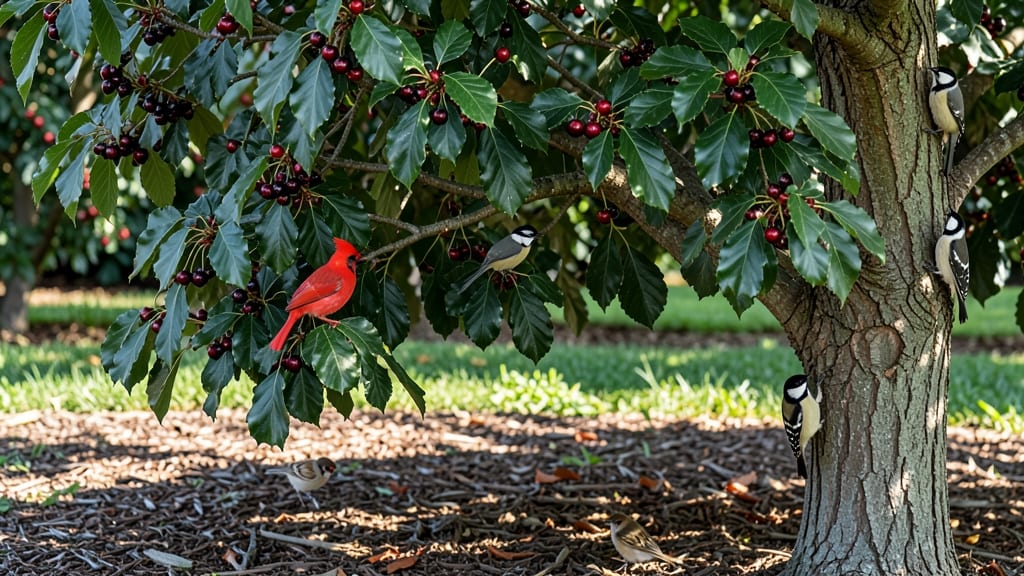
Birds in a tree plant isn’t just a hedge—it’s a living, buzzing ecosystem that gives you privacy while feeding hungry birds year-round. 🌿 I planted a mix of serviceberry, elderberry, and dogwood last spring, and now my backyard feels like a sanctuary.
The berries arrive in waves from early summer to late fall, and the spring blossoms turn heads before the leaves even fill in. The magic happens in layers: tall shrubs like elderberry create the backdrop, while medium-height dogwood adds structure and spring color.
Underneath, serviceberry spreads like a carpet of white blossoms, then turns golden in fall. Birds dive in for berries, while you enjoy the sound of wings and the sight of your garden thriving without a single seed packet.
By late summer, you’ll watch robins, thrushes, and even woodpeckers feast right outside your window. The foliage stays dense enough to block nosy neighbors, but the constant movement keeps the scene alive. It’s privacy that feels alive—no fence, no fence, just nature doing its thing.
Works in any yard size, from city lots to country acres. The key is spacing plants 6-8 feet apart so they fill in without gaps. Pair with native grasses for extra bird cover, and watch your garden become the neighborhood hotspot. Ready to grow your own bird buffet?
📚 In This Guide
- What you need
- Instructions
- Tips and common mistakes
- Wrapping up and next steps
What you need
- ● Birds in a Tree Plant (Fothergilla gardenii) – 1-3 plants (depending on desired coverage; spacing ~4-6 ft apart for full growth). Choose nursery-grown plants (3-5 gallons) for best results.
- ● Well-draining soil – Mix of native soil + compost (or pre-mixed acidic garden soil for optimal pH 4.5–6.0). 1 bag (40 lb) per plant.
- ● Mulch – 2–3 inches of pine bark or shredded leaves to retain moisture and suppress weeds.
- ● Organic fertilizer – Balanced 10-10-10 or slow-release granular (follow package rates for application).
- ● Garden trowel or spade – For digging holes.
- ● Measuring tape – To ensure proper spacing (4–6 ft between plants).
- ● Garden gloves – Protect your hands from thorns or rough soil.
- ● Watering can or hose with nozzle – For gentle, deep watering.
- ○ Optional: Pruning shears – For shaping after planting.
- ● Container or raised bed – If planting in pots (15+ gallon size per plant).
- ● Soil pH test kit – To verify acidic conditions.
- ● ✅ Sunlight – Partial shade to full sun (6+ hours/day). Avoid harsh afternoon sun in hot climates.
- ● ✅ Space – Minimum 4 ft wide x 6 ft deep per plant for mature growth.
- ● ✅ Water access – Regular watering (especially first year) to establish roots.
- ● ✅ Patience – Plants take 3–5 years to reach full privacy height (8–12 ft).
Step-by-Step instructions for planting a birds in a tree hedge
Here's how to create a lush, flowering hedge that gives you privacy while attracting birds all year.
🌱 Step 1: Choose the Perfect Planting Location
Select a spot with 6+ hours of sunlight daily—this plant thrives in full sun but tolerates partial shade. I always check the space between my property line and neighbors to ensure year-round coverage once mature. The soil should drain well, so avoid low spots where water pools after rain.
Measure the area you want to fill—this hedge grows 8-10 feet tall and wide at maturity, so plan for 4 plants spaced 4-6 feet apart for full coverage. Mark the spots with stakes to visualize the final look before digging.
🪴 Step 2: Prepare the Soil and Planting Holes
Loosen the soil to a depth of 12 inches using a shovel or garden fork. Mix in 2 inches of compost to improve drainage and fertility—this plant loves rich, well-draining soil. For each hole, dig twice as wide as the root ball and as deep.
Gently remove the plant from its container and tease apart any circling roots. Place it in the hole so the top of the root ball sits 1 inch above ground level—this prevents rot when water pools. Backfill with native soil, pressing lightly to eliminate air pockets.
☀️ Step 3: Water Thoroughly and Mulch Properly
Water each newly planted shrub with 1 gallon of water to settle the soil around roots. You'll see the soil sink slightly as it absorbs moisture—this confirms good root contact. After watering, spread 2-3 inches of mulch (like shredded bark) in a circle around each plant, keeping it 3 inches away from the stem.
Mulch helps retain moisture and regulate soil temperature, but don't overdo it—too much can suffocate roots. Water again after mulching to help everything settle. In the first year, keep the soil consistently moist (but not soggy) by watering 2-3 times per week unless rain provides enough moisture.
✂️ Step 4: Prune for Shape and Encourage Bushiness
Wait until spring to prune, but in the first year, remove any dead or damaged branches with clean cuts. Use sharp pruners to make 45-degree angles just above a leaf node—this encourages new growth. You'll notice the plant sends out multiple stems from the base, creating that classic "birds in a tree" shape.
After the first growing season, prune lightly in early spring to shape the hedge. Cut back any leggy growth to just above a set of healthy leaves. Avoid heavy pruning—the flowers appear on old wood, so you want to preserve last year's growth. A light trim keeps the plant full and flowering.
🌿 Step 5: Maintain Through the Seasons
Fertilize in early spring with a balanced 10-10-10 formula to support new growth. Water deeply during dry spells, but this plant is drought-tolerant once established—you'll know it needs water when the leaves start to wilt slightly. Deadhead spent flowers in late summer to encourage more blooms next season.
In winter, the evergreen foliage provides natural privacy, but check for any branches damaged by ice or snow. A light pruning in late winter removes dead growth and shapes the plant for spring. With consistent care, your hedge will fill in beautifully, creating a lush, bird-friendly screen that blooms year after year.
Tips & tricks for perfect birds in a tree hedge
These simple strategies will help you create a thriving, bird-friendly hedge that provides year-round privacy.
Location is Everything: The 6+ hours of sunlight requirement is non-negotiable for this plant—it's what triggers those vibrant blooms and keeps the foliage lush. I've seen people plant in partial shade and end up with sparse growth. If your yard only gets 4-5 hours of sun, consider planting along a south-facing fence where it can catch reflected sunlight. Also, avoid planting too close to large trees that compete for water and nutrients.
Root Ball Placement Matters: That 1-inch elevation above ground level in Step 2 isn't just a suggestion—it's crucial for preventing rot. When you plant, use a level to check each hole before placing the root ball. I've seen new gardeners plant too deep, which can suffocate the plant. Think of it like wearing the right shoes: too low and your feet get wet; too high and they don't fit right. Same principle applies here!
Watering Wisdom: The 2-3 times per week watering schedule assumes average summer conditions. In extreme heat (90°F+), you might need to water daily for the first few weeks until roots establish. A good test is to stick your finger 2 inches into the soil—if it's dry, it's time to water. Morning watering is best as it gives foliage time to dry before evening, reducing disease risk. I've learned this the hard way after losing plants to fungal issues from evening watering.
Pruning Pro Tips: Those 45-degree angles in Step 4 might seem fussy, but they make all the difference for bushier growth. Think of it like trimming your hair—cutting at an angle encourages new growth at that spot. For the first-year pruning, focus on removing only what's clearly dead or damaged. The plant will tell you what it needs through its natural growth patterns. And remember, the flowers come from old wood, so don't be too aggressive with your cuts.
Pro Tips for Birds In A Tree Plant
- These simple strategies will help you create a thriving, bird-friendly hedge that provides year-round privacy.
- Location is Everything: The 6+ hours of sunlight requirement is non-negotiable for this plant—it's what triggers those vibrant blooms and keeps the foliage lush.
- Root Ball Placement Matters: That 1-inch elevation above ground level in Step 2 isn't just a suggestion—it's crucial for preventing rot.
Frequently asked questions
How fast does a Birds in a Tree plant grow?
Birds in a Tree (Cornus controversa) grows at a moderate pace—expect 12–24 inches per year under ideal conditions. With proper care, it can reach 10–15 feet tall and wide within 5–10 years. Patience pays off, as its dense foliage and vibrant blooms are worth the wait!
Can I plant Birds in a Tree in full sun?
While it tolerates full sun, this plant thrives best in partial shade (morning sun + afternoon shade). Too much direct sun can scorch its leaves, especially in hot climates. If you must plant it in full sun, water deeply and mulch well to retain moisture.
What do I do if my Birds in a Tree isn’t blooming?
No flowers? Don’t panic! Young plants (under 3 years old) often skip blooming while establishing roots. Ensure it gets well-draining soil, consistent water, and partial shade. Over-fertilizing can also reduce blooms—stick to balanced, low-nitrogen fertilizer in early spring.
Is Birds in a Tree deer-resistant?
Good news! This plant is moderately deer-resistant thanks to its bitter-tasting leaves. However, deer may still nibble in winter when food is scarce. To deter them, apply deer repellent or plant near fragrant herbs like rosemary or lavender.
How much water does a Birds in a Tree plant need?
First year:
Water deeply 2–3 times per week to encourage root growth. After establishment: Water once a week (or when topsoil feels dry). Drought-tolerant once mature, but mulch helps retain moisture in hot or dry climates.
Can I prune Birds in a Tree after it blooms?
Yes! Prune in late winter or early spring (before new growth) to shape the plant and remove dead wood. Avoid heavy pruning after blooming, as it may reduce next year’s flowers. Use clean, sharp shears to make angled cuts just above a bud or branch.
Wrapping up and next steps
Transforming your outdoor space into a lush, private sanctuary with birds in a tree plant is simpler—and more rewarding—than you think! 🌿 From its vibrant blooms to its year-round foliage, this beauty delivers both privacy and style with minimal effort.
Whether you’re a green thumb or just starting your gardening journey, this plant is your perfect ally for a serene, nature-filled retreat.
Ready to take the next step? Pick your spot, gather your tools, and plant with confidence! Watch as your garden flourishes—and so does your peace of mind. 🌸✨