
Pests and Diseases
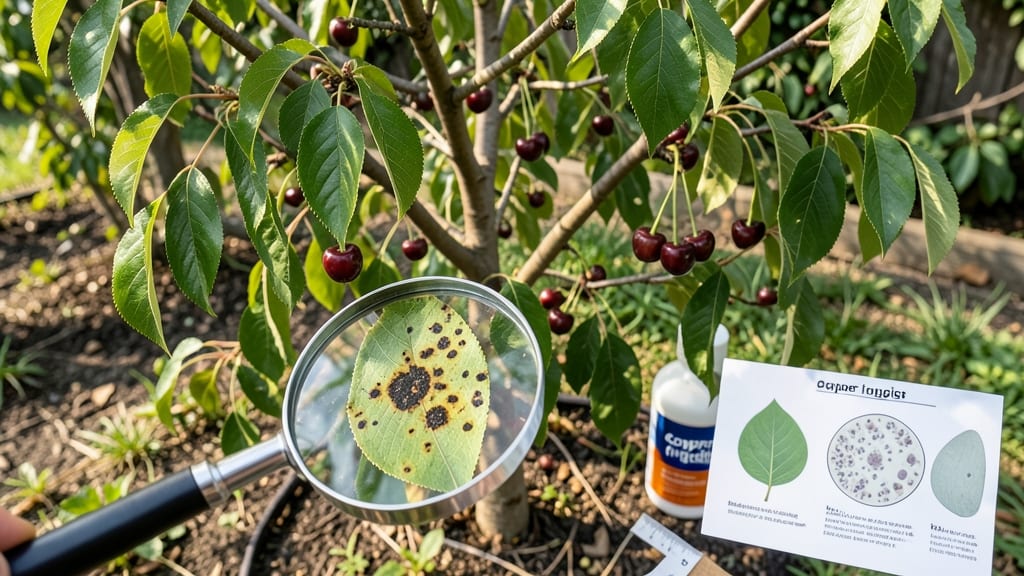
Black spots on cherry tree leaves mean your tree is fighting a fungal battle—and it’s winnable. 🌿 I’ve seen this disease turn vibrant foliage into a sad, spotted mess, but the right steps can bring those leaves back to life.
The key is acting fast before the spots spread to branches or fruit.
Most often, those black spots are leaf spot fungus, thriving in damp, shady conditions. Poor air circulation, overhead watering, or last season’s fallen leaves left on the ground all invite trouble.
I’ve learned the hard way that ignoring it leads to defoliation by summer, so don’t wait—prune first to improve airflow, then tackle the fungus.
You’ll restore your tree’s health with a mix of copper fungicide sprays (organic option) and baking soda solution (DIY fix). After treatment, keep an eye out for new spots—prevention is about proper pruning, mulching correctly, and watering at the base to keep leaves dry.
Within weeks, you’ll see fresh, unspotted growth.
Works for sweet, tart, or ornamental cherries—just adjust timing for your climate. The goal is a tree that looks as good as it tastes. Let’s get those leaves healthy again.
Understanding Leaf Spot Triggers
Black or dark spots appearing on your cherry tree’s leaves aren’t just cosmetic—they’re often a cry for help from your tree. These blemishes usually stem from fungal infections, environmental stress, or pest activity, each with distinct causes and solutions.
Let’s break down the most common culprits behind those unsightly marks.
---
Fungi are the #1 reason for black spots on cherry leaves, thriving in warm, damp conditions. Here’s how they strike:
#### 1. Anthracnose: The Classic Leaf Spot - What’s happening? The fungus Gloeosporium or Colletotrichum infects leaves, stems, and fruit, causing dark, sunken spots with yellow halos.
In wet weather, spores splash from infected debris onto healthy leaves. - Why now? Fungal spores overwinter in fallen leaves or bark and explode in activity when spring rains and temperatures hover between 60–80°F (15–27°C).
Poor air circulation (like overcrowded trees) makes it worse. - Actionable clue: Look for spots that ooze pinkish spores when wet—this is anthracnose’s calling card.
#### 2. Leaf Spot Fungi (Alternaria, Cercospora, Septoria) - What’s happening? These fungi create small, circular black spots with concentric rings or gray centers.
They often appear on lower leaves first because spores rain down from above. - Why now? High humidity (above 75%) and frequent leaf wetness (like morning dew or overhead watering) give spores the perfect breeding ground.
Weakened trees (from drought, poor soil, or nutrient deficiency) are easy targets. - Actionable clue: Check the underside of leaves—you might spot tiny black fungal fruiting bodies (like tiny dots) where spores form.
#### 3. Powdery Mildew: The Fuzzy Black Spot - What’s happening? While powdery mildew usually looks white, severe infections can darken leaves as the fungus smothers stomata (leaf pores), causing necrosis (dead tissue). - Why now? This fungus loves shady, humid spots and young, tender leaves.
It spreads via windborne spores, especially in summer afternoons with poor airflow. - Actionable clue: Wipe a leaf with your finger—if it leaves a powdery residue, it’s mildew. Blackened areas may appear crusty or leathery.
---
Not all black spots are fungal. Sometimes, your tree’s own biology reacts to stress—like a bruise after a bad workout.
#### 1. Sun Scorch or Heat Stress - What’s happening? Intense sunlight + sudden temperature swings (like hot days followed by cold nights) cause brown, crispy black spots on leaf edges.
This is not a disease—it’s your tree’s way of saying, “I’m sunburned!” - Why now? Common in early spring or late summer when trees flush new growth but can’t handle sudden heat.
Thin-barked cherry varieties (like Prunus avium) are extra vulnerable. - Actionable clue: Spots start on exposed, upper leaves and may look dry and papery (not wet or slimy like fungal spots).
#### 2. Water Stress (Over- or Under-Watering) - What’s happening? Too much water drowns roots, leading to black, mushy spots (often with yellowing). Too little?
Leaves develop brown, crunchy edges from dehydration. - Why now? Compacted soil or poor drainage traps water, while drought or shallow roots starve the tree.
Cherry trees hate “wet feet”—their roots need well-draining soil. - Actionable clue: Dig near the base—if soil smells sour or stays soggy for days, it’s overwatering. If leaves feel dry and brittle, it’s thirst.
#### 3. Chemical Burn from Fertilizers or Sprays - What’s happening? Over-application of nitrogen, copper fungicides, or herbicides can cause blackened, necrotic patches on leaves. Even “organic” sprays (like neem oil) can burn if misused. - Why now? Hot, sunny days after spraying amplify damage.
Cherry trees are sensitive to salt buildup from synthetic fertilizers too. - Actionable clue: Spots appear within days of treatment and look ragged, not circular.
---
Sometimes, tiny critters leave behind black spots as a “signature.”
#### 1. Sooty Mold (From Sap-Sucking Pests) - What’s happening? Aphids, scale, or mites feed on sap, excreting sticky honeydew that attracts sooty mold—a black, fuzzy fungus.
The mold doesn’t harm the tree directly, but it blocks sunlight, weakening leaves. - Why now? Outbreaks spike in warm, dry weather when pests multiply.
Weak trees (from drought or disease) get hit hardest. - Actionable clue: Wipe a leaf—if it leaves a black, powdery smear, it’s sooty mold. Check for tiny pests on stems or leaf undersides.
#### 2. Borer or Beetle Larvae - What’s happening? Cherry tree borers or Japanese beetles create irregular blackened areas as they chew through leaves or bark.
Their frass (poop) can also stain leaves. - Why now? Adult beetles emerge in late spring/early summer, while borers target stressed or injured trees. - Actionable clue: Look for small holes, sawdust-like frass, or adult beetles on leaves.
--- | Symptom | Likely Cause | Key Spot Feature | |---------------------------|---------------------------|-------------------------------------| | Wet, oozy spots | Anthracnose fungus | Pink spores when damp | | Small rings with gray centers | Cercospora leaf spot | Underside has black dots | | Crusty, powdery black | Powdery mildew | White residue wipes off | | Dry, crispy edges | Sun scorch | Only on sun-exposed leaves | | Mushy, yellowing leaves | Overwatering | Soggy soil, foul smell | | Black, fuzzy coating | Sooty mold | Sticky residue (honeydew) |
Natural Fixes for Leaf Spots
Once you’ve identified the culprit behind those unsightly black spots on your cherry tree leaves, it’s time to act! The good news? Most fungal and bacterial issues respond well to organic, DIY-friendly solutions—no harsh chemicals required.
Below, we’ll match each cause to its best fix, plus prevention tips to keep your tree thriving.
---
Fix: Prune + Spray + Prevent
1. 🔪 Prune Infected Leaves & Branches - Use sterilized pruners (wipe with rubbing alcohol) to remove all spotted leaves, twigs, and fruit (if affected). Dispose of them in the trash—not the compost! - Thin out the canopy to improve air circulation (fungi love humidity).
2. 🌿 Apply a Copper Fungicide Spray - Mix 1 tsp copper sulfate (or a pre-made organic copper fungicide like Bonide Copper Fungicide) with 1 gallon of water. - Spray early morning or late evening (avoid direct sun) to coat both sides of leaves and branches. - Reapply every 7–10 days until new growth appears spot-free.
3. 🌱 Boost Tree Health with Organic Fertilizer - Fungal spots thrive on weak trees. Feed your cherry tree with: - Compost tea (rich in beneficial microbes) - Fish emulsion (for nitrogen) - Mycorrhizal fungi (to strengthen roots)
💡 Prevention Tip: Mulch properly—keep mulch 3–4 inches away from the trunk to prevent moisture buildup.
---
Fix: Clean + Copper + Quarantine
1. 🧼 Sterilize Tools & Work Area - Bacterial spots spread via water splashes and contaminated tools. Wash pruners with bleach water (1:10 ratio) after each use. - Avoid overhead watering—use drip irrigation or water at the base of the tree.
2. 🛡️ Use a Bacterial Blight Spray - Mix 1 tbsp baking soda + 1 tsp horticultural oil + 1 tsp soap in 1 gallon of water. Spray every 5–7 days for 2–3 weeks. - For severe cases, try copper fungicide (bacteria can develop resistance to baking soda).
3. 🚫 Remove & Destroy Infected Debris - Do not compost infected leaves—they’ll reinfect next season. Bag and trash them immediately.
🔥 Pro Tip: Bacterial spots love wet leaves—water early in the day so foliage dries by evening.
---
Fix: Spray + Introduce Predators + Oil Treatment
1. 💦 Blast Off Pests with Water - A strong hose spray (50+ psi) can knock off aphids and mites. Do this every 3–4 days for 2 weeks.
2. 🐞 Bring in Beneficial Bugs - Release ladybugs, lacewings, or predatory mites (available at garden centers) to eat pests naturally.
3. 🛢️ Apply Horticultural Oil - Mix 1 tbsp neem oil or horticultural oil with 1 quart of water + a drop of dish soap. Spray at dusk to suffocate insects (reapply weekly).
🌡️ Prevention Tip: Mulch with crushed eggshells—the sharp edges deter crawling pests!
---
Fix: Shade + Feed + Mulch
1. 🌳 Provide Afternoon Shade - If leaves are crispy with blackened edges, your tree may be sun-scorched. Install shade cloth (30–50%) for young trees or plant nearby shade trees for mature ones.
2. 🍃 Fertilize with Iron & Magnesium - Yellowing with black spots? Test soil for iron (Fe) or magnesium (Mg) deficiency. - Apply Epsom salt (1 tbsp per gallon of water) or chelated iron spray in early spring.
3. 🌿 Mulch to Retain Moisture - Use 3–4 inches of organic mulch (wood chips, straw) to keep roots consistently moist (but not soggy).
✨ Bonus Tip: Avoid over-fertilizing with nitrogen—too much can weaken leaves, making them prone to stress.
--- | Season | Task | Frequency | |-------------|-----------------------------------|-----------------------------| | Spring | Prune dead branches + copper spray | Early spring (before buds) | | Summer | Monitor for new spots + water deeply | Every 2 weeks | | Fall | Rake & remove ALL fallen leaves | Once, before winter | | Winter | Apply dormant oil spray | Late winter (before buds) |
--- Final Reminder: Act fast! The sooner you treat leaf spots, the less damage they’ll cause. Check your tree weekly during growing season, and your cherry tree will stay healthy, lush, and spot-free! 🌿🍒
Frequently asked questions about cherry tree leaf spots
Why do black spots appear on cherry tree leaves in wet weather?
Fungal diseases like anthracnose or leaf spot thrive in damp conditions. When humidity stays above 75% and leaves remain wet for long periods (like after rain or overhead watering), fungal spores germinate and infect the foliage. These spots often start small and darken as the fungus spreads, especially on lower leaves where spores accumulate.
Can I use household items like baking soda to treat fungal spots?
Yes! A baking soda spray (1 tbsp baking soda + 1 tsp horticultural oil + 1 tsp soap in 1 gallon of water) works well for mild fungal infections. Spray it every 5-7 days until new growth appears. For severe cases, combine it with a copper fungicide for better results. Always apply early morning or late evening to avoid leaf burn.
Will pruning alone fix black spots on my cherry tree?
Pruning helps reduce fungal spread by removing infected leaves, but it’s not a standalone cure. Always pair it with fungicide sprays and improved airflow (thinning dense branches). Remove all fallen leaves from the ground too—they harbor fungal spores that reinfect your tree. Sterilize your pruners with rubbing alcohol between cuts to prevent cross-contamination.
Are black spots on cherry leaves always caused by disease?
Not always! Other causes include sun scorch (dry, crispy black edges from intense sunlight), pest damage (like sooty mold from aphids), or even nutrient deficiencies. Check for these clues: Wet spots with pink spores = fungus; dry, papery edges = sunburn; black fuzzy coating = sooty mold. Identifying the cause helps you target the right treatment.
How often should I monitor my cherry tree for new spots?
Inspect your tree weekly during the growing season (spring through fall). Focus on new leaves and the undersides of foliage—these are prime spots for early infection. After treating, check every 3-4 days to catch outbreaks before they spread. Keep a record of where spots appear to track patterns (like after rain or pruning).