
Pests and Diseases
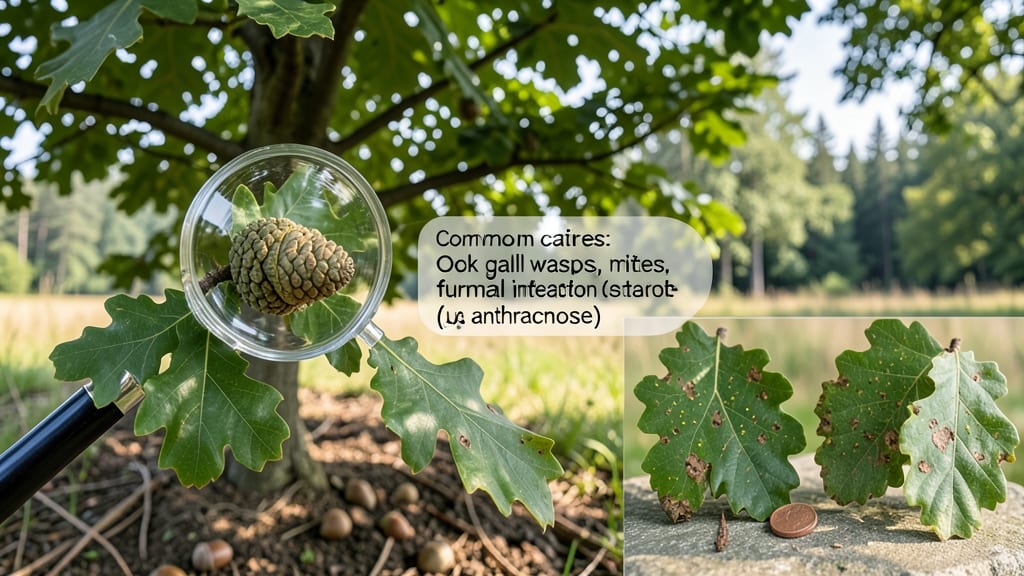
Those strange bumps on your oak leaves aren't just weird—they're likely gall wasps or other insects turning your tree into their nursery. 🌿 I've seen healthy oaks turn into leaf-covered bumpshops overnight, and the key to saving your tree is acting fast before the damage spreads.
The good news? Most gall insects do minimal harm beyond the unsightly bumps, but severe cases can weaken your tree over time. You'll need to identify the exact type of gall (round, spiny, or leafy) to know whether to prune, spray, or just monitor.
Grab a magnifying glass—close inspection reveals whether it's a wasp gall, fungus, or even environmental stress. Once you confirm the culprit, treatment is straightforward: remove heavily infested branches, apply horticultural oil in spring, and encourage natural predators like birds.
The bumps will eventually fall off on their own, but early action prevents next year's infestation. Works for red, white, or live oaks—just adjust timing based on your local gall wasp emergence schedule. Let's get your tree back to looking normal!
Root Causes Behind Leaf Bumps
Those mysterious bumps on oak tree leaves—often called galls—aren’t random quirks of nature. They’re the result of complex interactions between insects, fungi, bacteria, or even environmental stressors.
Understanding the why behind these growths is the first step to addressing them effectively. Below, we break down the most common culprits and their scientific mechanisms.
Insects are the most frequent architects of oak leaf galls, using their saliva, eggs, or larvae to trigger abnormal plant growth. These galls serve as protective nurseries or food sources for the insects. Here’s how it works:
🌿 Wasps and Gall Wasps (Cynipidae Family)
Gall wasps are the primary offenders, injecting chemicals into leaves that disrupt normal cell development. The tree responds by forming a gall—a swollen, often spiky structure—to contain the wasp’s larvae. Common examples include:
- Oak apple galls: Round, apple-like galls (1–2 inches) caused by Biorhiza pallida. The wasp’s larvae feed inside, emerging the following year.
- Oak marble galls: Hard, marble-like bumps from Andricus quercuscalicis, often found on leaf edges.
- Spangle galls: Tiny, raised spots caused by Neuroterus species, which create clusters of tiny galls.
Pro Tip: 🔥 Timing matters! Many gall wasps have one-year life cycles, so galls may not appear until the following spring or summer.
🐛 Mites and Spider Mites (Eriophyidae Family)
While less common than wasps, mites can also trigger galls by feeding on leaf cells, causing them to proliferate abnormally. Eriophyid mites create:
- Oak leaf blister galls: Puffy, yellowish-green bumps that distort leaf shape.
- Oak leaf curl galls: Leaves may thicken and curl around the edges.
Unlike wasps, mites are microscopic and often go unnoticed until the damage is visible.
Not all bumps are insect-made—some stem from pathogenic microbes that exploit weak tree defenses. These infections often appear as:
🍄 Anthracnose (Colletotrichum Species)
A fungal disease that causes dark, sunken bumps on leaves, often accompanied by yellowing or browning. Anthracnose thrives in:
- Wet, humid conditions (spring rains are peak season).
- Stressed trees (drought, poor nutrition, or compacted soil).
The fungus enters through stomata (leaf pores) or wounds, triggering cell death and gall-like lesions.
🦠 Bacterial Leaf Gall (Pseudomonas Species)
Less common but destructive, bacterial galls appear as water-soaked, raised bumps that ooze when cut open. Pseudomonas syringae exploits:
- Leaf injuries (e.g., from hail or pruning).
- High humidity and warm temperatures (ideal for bacterial spread).
Unlike fungal galls, bacterial infections often spread rapidly and can lead to defoliation if untreated.
Sometimes, bumps aren’t caused by pests or pathogens but by the tree’s physiological response to stress. Common triggers include:
💦 Excess Moisture or Poor Drainage
Waterlogged soil or overhead irrigation can cause edema—a condition where leaves develop blister-like bumps due to:
- Root oxygen deprivation (leading to gas buildup in leaves).
- Cell swelling from excess water uptake.
These bumps are usually soft, translucent, and painless (unlike insect galls, which are hard).
🔥 Nutrient Deficiencies or Toxicities
Imbalances in soil nutrients—such as excess nitrogen or deficiencies in magnesium or iron—can distort leaf growth, leading to:
- Raised, corky bumps (from abnormal cell division).
- Yellowing between leaf veins (iron deficiency).
Pro Tip: 🌡️ Test your soil! A simple soil test can reveal if nutrient imbalances are the culprit.
Not sure if those bumps are from insects, fungi, or stress? Use this table to narrow it down:
| Feature | Insect Galls | Fungal/Bacterial Galls | Environmental Stress |
|---|---|---|---|
| Appearance | Hard, woody, or spiky; often spherical | Soft, sunken, or oozing; may have dark spots | Blister-like, translucent, or corky |
| Location | Leaf edges, veins, or undersides | Random, often near leaf margins | Entire leaf surface (often lower leaves) |
| Season | Peak in spring/summer (wasps); may persist year-round | Wet seasons (spring/fall); worsens in humidity | Year-round, but worse after heavy rains |
| Tree Health | Tree may look healthy (galls are localized) | Leaf yellowing, wilting, or dieback | General decline (weak growth, poor color) |
Fixing Bumpy Oak Leaves Naturally
Now that you’ve identified the culprit behind those pesky bumps on your oak tree leaves—whether it’s gall wasps, mites, or fungal infections—it’s time to take action! The good news? Most of these issues can be managed with targeted, eco-friendly solutions that restore your tree’s health without harsh chemicals.
Below, we’ll break down cause-specific fixes, step by step, plus prevention tips to keep your oak thriving.
Gall wasps are sneaky, but you can outsmart them with physical removal and habitat disruption.
🍳 Step 1: Prune Infested Branches
- When to do it: Late winter or early spring (before wasps emerge) or immediately after galls form (summer/fall).
- How to prune:
- Use sterilized pruning shears (rub with rubbing alcohol) to cut 2–3 inches below the galls.
- Remove only heavily infested branches—don’t over-prune, as this stresses the tree.
- Bag and dispose of pruned branches in the trash (not compost)—wasps may still be inside!
👨🍳 Step 2: Apply Horticultural Oil (Organic Barrier)
- Best for: Early spring (before wasps lay eggs).
- How to apply:
- Mix horticultural oil (like Neem Oil or dormant oil) with water (follow label instructions).
- Spray thoroughly on both sides of leaves and branch bark when the tree is dormant (no leaves).
- Reapply after rain or every 2–4 weeks during the growing season.
🥘 Step 3: Introduce Beneficial Predators
- Natural enemies of gall wasps:
- Parasitic wasps (like Torymus species) lay eggs inside galls, killing the larvae.
- Birds (e.g., chickadees, nuthatches) eat adult wasps.
- How to attract them:
- Install birdhouses or nesting boxes near the tree.
- Plant native flowering shrubs (e.g., serviceberry, elderberry) to support beneficial insects.
⏰ Prevention Tips for Gall Wasps
- 💡 Monitor early: Check for tiny white egg clusters on new leaves in spring—remove them immediately.
- 🌡️ Avoid over-fertilizing: Excess nitrogen attracts more wasps.
- ✨ Encourage tree vigor: Water deeply during droughts and mulch (3–4 inches) to reduce stress.
Mites thrive in dry, dusty conditions but hate water and predators. Here’s how to kick them out:
🔪 Step 1: Blast Off Mites with Water
- When: Early morning or evening (avoid direct sun).
- How:
- Use a hose with a strong jet nozzle to rinse leaves (mites can’t survive without moisture).
- Focus on the undersides of leaves—their favorite hiding spot!
- Repeat weekly during dry spells.
👨🍳 Step 2: Soap Spray (Safe & Effective)
- Recipe: Mix 1 tbsp mild castile soap (or insecticidal soap) in 1 quart of water.
- How to apply:
- Spray until leaves are glistening (cover both sides).
- Reapply every 5–7 days for 2–3 weeks.
- Test first: Spray a small area to check for leaf burn.
🥘 Step 3: Encourage Mite-Eating Friends
- Predatory mites (like Phytoseiulus persimilis) and lacewings devour spider mites.
- How to attract them:
- Plant dill, fennel, or yarrow nearby—they attract beneficial insects.
- Avoid broad-spectrum pesticides (they kill good bugs too!).
🎯 Prevention Tips for Mites
- 💡 Keep leaves dust-free: Hose down trees monthly during dry weather.
- 🌡️ Mulch properly: Use wood chips (not plastic) to retain moisture.
- ✨ Increase humidity: Group plants together or use a sprinkler on hot days.
Fungal infections spread via splashing water and poor airflow. Stop them with sanitation and airflow tricks.
🔥 Step 1: Remove & Destroy Infected Leaves
- When: Early spring (before new growth) or fall cleanup.
- How:
- Rake up and bag all dropped leaves (fungal spores overwinter here).
- Burn or trash (don’t compost!) infected debris.
- Sterilize tools with bleach water (1:10 ratio) between cuts.
👨🍳 Step 2: Apply Fungicide (Organic or Chemical)
- Best options:
- Baking soda spray: Mix 1 tsp baking soda + 1 tbsp oil + 1 tsp soap in 1 quart water.
Spray every 7–10 days. - Copper fungicide (e.g., Copper Soap)—follow label rates. - Neem oil (for prevention)—spray weekly during rainy seasons. - When to spray: At first sign of spots and after heavy rain.
🥘 Step 3: Improve Airflow & Drainage
- Thin the canopy: Remove overcrowded branches to reduce humidity.
- Raise the soil: Add 2–3 inches of organic mulch (but keep it away from the trunk).
- Water at the base: Avoid overhead watering (use drip irrigation instead).
✨ Prevention Tips for Fungal Galls
- 💡 Space trees properly: Ensure 6–10 feet between oaks for airflow.
- 🌡️ Water in the morning: Lets leaves dry quickly.
- 🎯 Choose resistant varieties: Some oak species (like white oak) are less prone to fungal galls.
If your oak tree is severely infested (e.g., 50%+ leaf loss, oozing sap, or wilting), it’s time to consult an arborist.
Signs you need help: - Large, expanding galls that deform branches. - Multiple infestations (e.g., mites + fungal galls together). - Young or stressed trees that can’t recover on their own.
Final Pro Tip: 🌟 Combine methods! For example, prune + horticultural oil for gall wasps, or water blasts + soap spray for mites. Consistency is key—most issues improve within 4–6 weeks of treatment.
Frequently asked questions
Are bumps on oak leaves always caused by insects?
No, they can come from insects, fungi, bacteria, or even environmental stress. Insects like gall wasps create hard, woody bumps, while fungal infections produce soft, sunken spots that may ooze. Environmental causes like poor drainage or nutrient imbalances create blister-like bumps. Always examine the texture, location, and seasonality to identify the culprit.
Will removing the bumps harm my oak tree?
Not if you do it correctly! Prune only heavily infested branches (cut 2-3 inches below the bumps) and dispose of them properly. Removing galls won't hurt the tree—it actually helps prevent the spread of pests. Just avoid over-pruning, which stresses the tree. For fungal bumps, remove and destroy infected leaves to stop spore spread.
How long do I need to treat the bumps before they disappear?
With consistent treatment, most bumps will disappear within 4-6 weeks. Gall wasps have a one-year life cycle, so you may see new galls the following spring if you don't treat early. For fungal infections, expect 2-3 weeks of regular treatments (like neem oil or baking soda spray) before improvement. Mites respond fastest to water blasts and soap sprays (1-2 weeks).
Can I use chemical pesticides on my oak tree?
Chemical pesticides should be a last resort. Most oak trees are resilient, and natural methods (like horticultural oil or soap sprays) work well. If you choose chemicals, opt for systemic fungicides or insecticidal soaps labeled for oak trees. Always follow label instructions carefully, and consider consulting an arborist first—they can recommend targeted solutions that won't harm beneficial insects or the tree itself.
Will my oak tree recover fully if I treat the bumps now?
Yes, with proper care! Oak trees are tough and can bounce back even after moderate infestations. The key is acting early—once you identify the cause and apply treatments (pruning, sprays, or cultural fixes), your tree should regain its health within a growing season. Severe cases (like large fungal infections or heavy mite damage) may take longer, but oaks rarely suffer permanent harm from these issues alone.