
Container Gardens
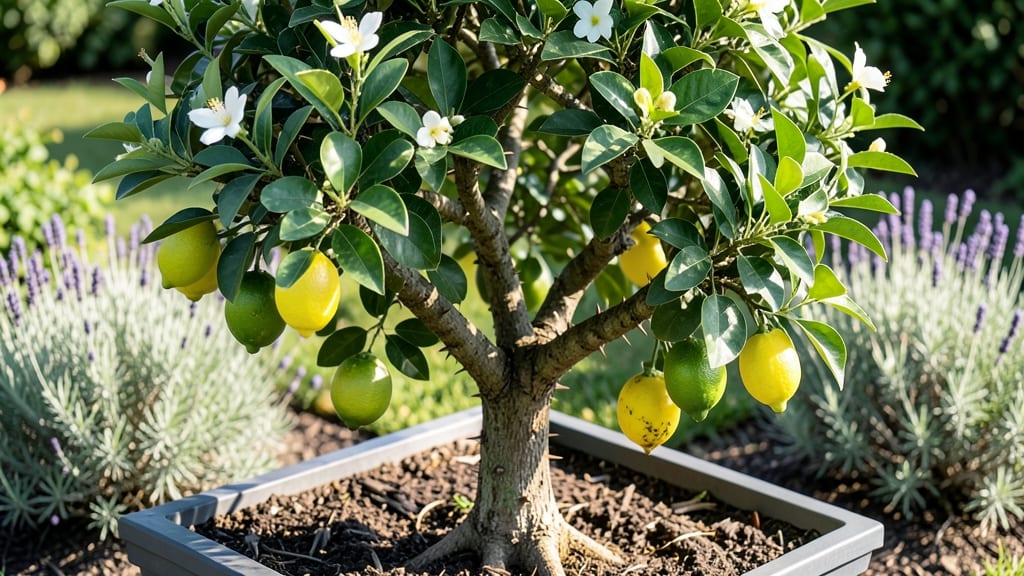
You can grow a lemon tree in Illinois using cold-resistant varieties like 'Meyer' or 'Improved Meyer,' though outdoor planting only succeeds in USDA Zones 7-10. For reliable results year-round, indoor cultivation with controlled lighting and warmth works best for Illinois' colder winters.
Illinois' chilly winters make outdoor citrus cultivation tricky, but the right approach can yield fruit. 🌱 The 'Meyer' lemon stands out as the most adaptable variety, surviving brief cold snaps down to 15°F when properly protected.
Even in northern Illinois (Zones 5-6), container-grown trees can overwinter indoors before moving back outside in spring. I’ve seen gardeners in Chicago successfully grow these trees in large pots on sunny patios during summer months, bringing them inside before temperatures drop below freezing.
For indoor success, position your tree near a south-facing window or use grow lights for 8-10 hours daily. Maintaining 65-75°F temperatures and occasional misting prevents leaf drop—a common issue in dry Illinois winters.
The key is consistency: lemon trees thrive on routine, whether you're pruning in early spring or fertilizing every 6-8 weeks during growing season.
💡 In This Article
- Cold-Hardy Lemon Tree Varieties for Illinois Climates
- Indoor Lemon Tree Care for Illinois Growers
Cold-hardy lemon tree varieties for Illinois climates
Illinois' harsh winters (often dipping below 0°F) eliminate most traditional lemon trees, but hybrid varieties like 'Meyer' and 'Improved Meyer' have adapted to survive brief cold snaps. These hybrids originated from crosses between true lemons and mandarins, inheriting the mandarin's cold tolerance while retaining lemon flavor.
The 'Meyer' lemon, for example, can endure temperatures down to 15°F for short periods, thanks to its thicker leaves and more compact growth habit compared to standard lemons.
The key to their survival lies in their genetic makeup.
These cold-hardy varieties produce a natural antifreeze-like compound called "dehydrin" during cold exposure, which prevents ice crystal formation in their cells. 🌬️ In Illinois' Zone 6-7 climates, gardeners often use protective measures like burlap wraps or frost cloths to extend their outdoor growing season.
Another option is the 'Eureka' lemon hybrid, which, while not as cold-tolerant as 'Meyer,' can survive brief dips to 20°F when planted in sheltered microclimates like south-facing walls.
When selecting a variety, consider your specific Illinois location. Northern areas (Zones 5-6) may only allow container growing with winter indoor protection, while southern regions (Zones 7-9) might support outdoor planting with winter mulching.
The 'Improved Meyer' stands out for its larger fruit size and slightly better cold resistance than the original 'Meyer,' making it ideal for Illinois gardeners who want both productivity and winter survival.
One common misconception is that all cold-hardy citrus trees produce the same quality fruit. In reality, 'Meyer' lemons are sweeter and thinner-skinned than traditional lemons, with a flavor profile more similar to a cross between lemon and orange.
This makes them particularly well-suited for Illinois' shorter growing seasons, as they mature faster (typically 9-12 months from planting) than standard varieties that require tropical climates.
For outdoor planting in Illinois, choose dwarf varieties that stay below 8-10 feet tall, as they're easier to protect during winter. The rootstock also matters—trifoliate orange rootstock (used in many cold-hardy citrus) provides additional cold resistance by promoting deeper root systems that insulate the tree better.
This combination of hybrid genetics and proper rootstock creates the resilience needed to thrive in Illinois' challenging climate.
Consider these key factors when selecting your variety:
- Cold tolerance: 'Meyer' (15°F) > 'Improved Meyer' (18°F) > 'Eureka' hybrid (20°F)
- Fruit quality: 'Meyer' for sweetness, 'Improved Meyer' for size
- Growth habit: Dwarf varieties for easier winter protection
- Rootstock: Trifoliate orange for best cold resistance
Remember that even cold-hardy varieties need proper winter care. In Illinois' Zone 5-6 areas, this means bringing potted trees indoors before temperatures drop below 30°F, while outdoor plants require heavy mulching and protective coverings.
The payoff? Homegrown lemons with that fresh, zesty flavor you'd normally only find in specialty stores! 🍋