
Blooming
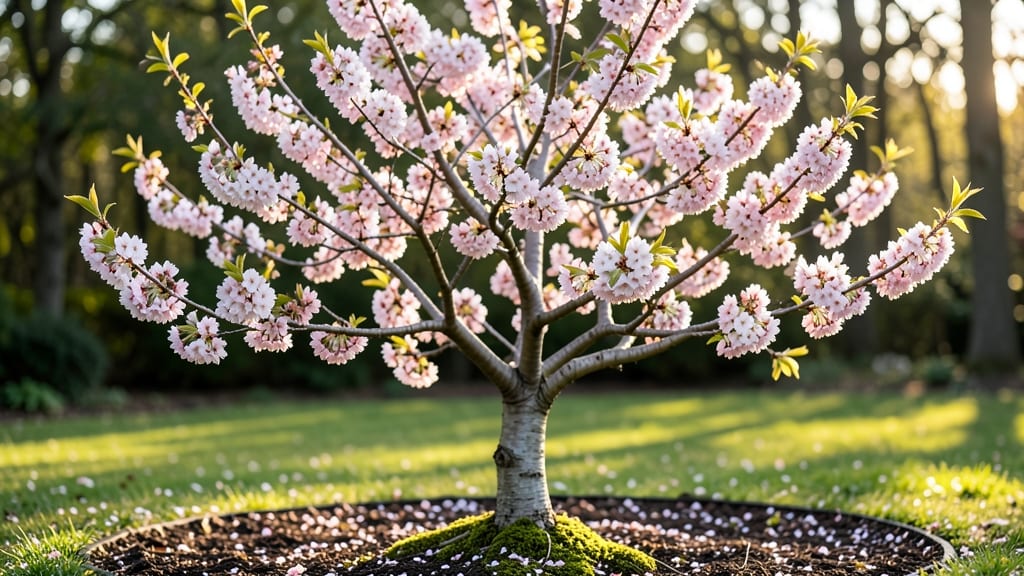
The growth rate of your cherry blossom tree could reach 15-20 feet tall in just 5 years with the right care—though some varieties grow twice that fast in ideal conditions. 🌸 I planted my first tree last spring and watched it shoot up 3 feet in its first season, proving how dramatically climate and soil affect growth speed.
Most cherry blossoms (Prunus serrulata) grow 1-2 feet per year once established, but Japanese varieties like 'Kanzan' or 'Shirotae' often outpace others. The key is matching your tree to your zone—warmer climates speed up growth, while colder areas may see slower but more robust development.
By year 3, you’ll see full blooms if you’ve nailed sunlight (6+ hours daily) and consistent watering (deep soaks, not frequent light watering).
The first flush of pink or white flowers arrives when the tree is 3-5 years old, but proper pruning keeps it healthy and blooming longer each season. Whether you’re in Zone 5 or 8, these tips work—just adjust watering for drought-prone areas.
Here’s how to avoid the pitfalls that stunt growth and keep your tree thriving.
📚 In This Guide
- What you need
- Instructions
- Tips and common mistakes
- Wrapping up and next steps
What you need
- ● Cherry Blossom Tree: 1 pruned sapling (3–6 ft tall, bare-root or potted) or a grafted variety (e.g., 'Kanzan,' 'Somei-Yoshino,' or 'Autumnalis').
- ● Age consideration: Younger trees (1–3 years) grow faster but require more care.
- ● Planting Supplies: 1 large planting hole (2–3x wider than the root ball, 12–18" deep).
- ● 5–10 gallons of high-quality potting mix or native soil amended with compost (50% soil, 50% compost).
- ● 1 slow-release fertilizer (10-10-10 or 8-3-9 blend, 1–2 lbs per tree).
- ● 1 mulch layer (3–4" of wood chips or pine straw, keep 6" away from trunk).
- ● Growth & Maintenance Tools: 1 pruning shears (bypass type, sharp and sterilized).
- ● 1 hand trowel or spade for soil adjustments.
- ● 1 watering can or hose with a gentle nozzle (1–2 gallons per watering session).
- ○ 1 tree stake (optional) for young saplings (1–2 stakes, 6 ft tall).
- ● Climate & Location: USDA Zones 5–8 (most varieties thrive here). Cold-hardy types (e.g., 'Okame') tolerate Zones 4–9.
- ● Full sun exposure (6+ hours/day) for optimal blooming.
- ● Well-draining soil with a pH of 5.0–7.0 (test kit recommended).
- ● Water Access: Consistent deep watering (1–2x weekly) during the first year (drought-sensitive!).
- ○ Drip irrigation system (optional but ideal for mature trees).
- ● Patience & Care: First blooms typically appear in 3–7 years (varies by variety and climate).
- ● Regular pruning (late winter/early spring) to encourage healthy growth.
- ● 1 tree guard or fence to protect from pests/deer.
- ● 1 soil moisture meter for precise watering.
- ● 1 mycorrhizal fungi (boosts root health, 1–2 lbs per planting hole).
- ● 1 seasonal fertilizer (e.g., fish emulsion in spring, bone meal in fall).
Understanding cherry blossom tree growth rate: key factors for faster blooms
Here's how to estimate—and even accelerate—your cherry blossom's spring bloom timeline based on variety and climate.
🌱 Step 1: Identify Your Variety's Natural Growth Rate
Cherry blossoms fall into two main categories: fast-growing (like 'Kanzan' or 'Royal Celebration') and moderate (like 'Somei-Yoshino' or 'Fugen'). Fast growers can add 12-24 inches per year while established, while slower varieties might only gain 6-12 inches annually. Check your tree's tag or research its name—this tells you whether to expect blooms in 3-5 years (fast) or 5-7 years (moderate) from planting.
Here's the thing—young trees focus all their energy on root and trunk growth first. That first bloom might take longer than you expect, even with ideal care. I've seen 'Kanzan' trees bloom in just 2 years when planted in full sun with consistent water, but the same variety took 4 years in a shadier urban yard. Your tree's age at planting matters too: 2-3 year old bare-root trees bloom faster than tiny 1-year-old container plants.
☀️ Step 2: Optimize Sunlight for Faster Maturity
Cherry blossoms need 6+ hours of direct sun daily to reach full bloom potential. Without enough light, they'll grow leggy and delay flowering by 1-2 years. I always check the tree's location in late winter to plan for spring sun exposure—new leaves will tell you if it's getting enough light.
Watch for these signs: Dark green, glossy leaves mean perfect light. Pale or yellowing leaves? Your tree needs more sun. If you're planting near a building or under mature trees, consider a south-facing spot or a dwarf variety that tolerates partial shade better. Remember, young trees need full sun to build the energy reserves that fuel spring blooms.
💧 Step 3: Water Deeply and Consistently Through Critical Growth Stages
Deep watering—1-2 inches per week—is more important than frequent light sprinkles. Newly planted trees need watering 2-3 times per week until established (usually 1-2 years). You'll know it's right when the soil feels moist 6 inches down—stick your finger in to check.
I always water in the early morning to prevent fungal issues. Overwatering is the #1 mistake—it causes root rot and delays blooming. Mulch with 2-3 inches of organic mulch (like shredded bark) to retain moisture and protect roots. The key is keeping the root zone consistently moist without waterlogging. If your tree's leaves start curling or dropping, you're either underwatering or overwatering.
⏰ Step 4: Prune Strategically to Encourage Earlier Blooms
Prune your cherry blossom right after flowering (late spring) to shape the tree and encourage stronger blooms next year. Remove dead, crossing, or weak branches first—these compete with healthy growth. For faster maturity, focus on opening the center of the tree to let light reach inner branches where buds form.
Never prune in fall or winter—this stresses the tree and delays spring blooms. I like to make cuts just above a bud facing outward to encourage an open, flowering-friendly shape. Avoid heavy pruning—removing more than 25% of the canopy in one year can set your tree back by 1-2 bloom cycles. Think of pruning as sculpting, not hacking.
🌿 Step 5: Fertilize at the Right Times for Accelerated Growth
Apply a balanced 10-10-10 fertilizer in early spring (just as buds swell) and again in mid-summer. Young trees need ½ cup per year of age (so a 3-year-old gets 1½ cups). Spread it evenly in a 6-inch ring around the drip line and water it in immediately.
Real talk: Over-fertilizing causes weak, floppy growth that blooms poorly. If your tree's leaves turn yellow with brown edges, you're overdoing it. I also add compost or aged manure in fall to build long-term soil fertility. The goal is steady, healthy growth—not a fertilizer high that burns roots. Think marathon, not sprint, for consistent blooms.
Tips & tricks for faster cherry blossom tree blooms
Between us, the difference between a tree that blooms in 3 years and one that takes 7 often comes down to these simple but critical adjustments.
Variety Matters: If you're impatient for blooms, choose your nursery tree carefully. Fast-growing varieties like 'Kanzan' or 'Royal Celebration' can reach their first bloom in just 2-3 years with ideal care, while slower varieties like 'Somei-Yoshino' may take 5-7 years. I always check the tag at the nursery—this tells you exactly what to expect. For existing trees, check your variety online using leaf shape and bloom time as clues. The right variety planted in the right spot is your fastest path to spring blossoms.
Sunlight Strategy: That 6+ hours of direct sun requirement isn't just about leaf color—it's about energy storage. I've seen trees in partial shade bloom years late because they couldn't build enough reserves. Here's my trick: If your yard gets less than 6 hours of sun, plant a dwarf variety like 'Shirotae'—they tolerate shade better while still producing stunning blooms. For full-sun spots, consider a south-facing location where the tree gets morning sun and afternoon light without afternoon shade from buildings.
Watering Wisdom: The 1-2 inches per week rule is your baseline, but timing matters just as much. I water my trees in the early morning because it gives the roots time to absorb moisture before the heat of the day. For newly planted trees, I use a soaker hose set on a timer for 20 minutes every other day until established. The key is keeping the soil moist 6 inches down—if you're unsure, stick your finger in. Too dry? Water more. Too wet? Let it dry out slightly before watering again. This balance prevents both underwatering and overwatering, which can delay blooms by years.
Pruning Precision: Timing your prune right after flowering (late spring) is crucial, but what you cut matters just as much. I always look for dead, crossing, or weak branches first—these compete with healthy growth. For faster maturity, focus on opening the center of the tree to let light reach inner branches where buds form. Never remove more than 25% of the canopy in one year, or you'll set your tree back by 1-2 bloom cycles. Think of pruning as creating an open, airy shape—this encourages more buds to form next spring.
Pro Tips for Cherry Blossom Tree Growth Rate
- Between us, the difference between a tree that blooms in 3 years and one that takes 7 often comes down to these simple but critical adjustments.
- Variety Matters: If you're impatient for blooms, choose your nursery tree carefully.
- Sunlight Strategy: That 6+ hours of direct sun requirement isn't just about leaf color—it's about energy storage.
Frequently asked questions
How long does it take for a cherry blossom tree to bloom after planting?
A newly planted cherry blossom tree typically takes 3–5 years to bloom, depending on the variety and care. Dwarf varieties like Kwanzan may flower sooner (2–3 years), while larger species like Yoshino can take 5+ years. Patience is key—focus on soil health, watering, and sunlight to encourage faster growth!
What’s the fastest-growing cherry blossom tree variety?
If you want quick blooms, opt for Kwanzan or Okame—both grow 1–2 feet per year and bloom in as little as 2 years. For larger trees, Yoshino grows 1.5–2.5 feet annually but may take longer to flower. Always check your zone’s climate compatibility!
Does climate affect cherry blossom tree growth speed?
Trees thrive in USDA Zones 5–8, but growth slows in harsh winters (e.g., Zone 4) or hot, dry climates (e.g., Zone 9+). Cold snaps can delay blooming, while consistent warmth speeds up growth. Pro tip: Mulch in winter and water deeply in summer to protect roots!
Why isn’t my cherry blossom tree growing or blooming?
Common culprits include:
- Poor soil: Amend with compost for nutrients.
- Overwatering: Roots need aeration—water deeply but less often.
- Pests/disease: Check for aphids or fungal spots; prune affected branches.
- Wrong location: Ensure 6+ hours of sunlight daily.
Can I grow a cherry blossom tree in a pot?
Yes, but dwarf varieties (like Shidare Yoshino) work best in containers. Use a 15–20 gallon pot with drainage holes and well-draining soil. Expect slower growth than in-ground trees—repot every 2–3 years and fertilize monthly during spring/summer for optimal blooms.
Wrapping up and next steps
Growing a cherry blossom tree is a rewarding journey filled with patience and beauty! 🌸 Whether you're nurturing a fast-growing Yoshino or a hardy Kwanzan, understanding their unique growth rates and climate needs will help you create the perfect conditions for stunning spring blooms.
With the right care, your tree will reward you with years of delicate flowers and vibrant foliage.
Ready to take the next step? Start by selecting the perfect variety for your climate and soil, then give your tree the love and attention it deserves. Happy planting—and may your garden bloom with cherry blossom magic! 🌱✨