
Trees
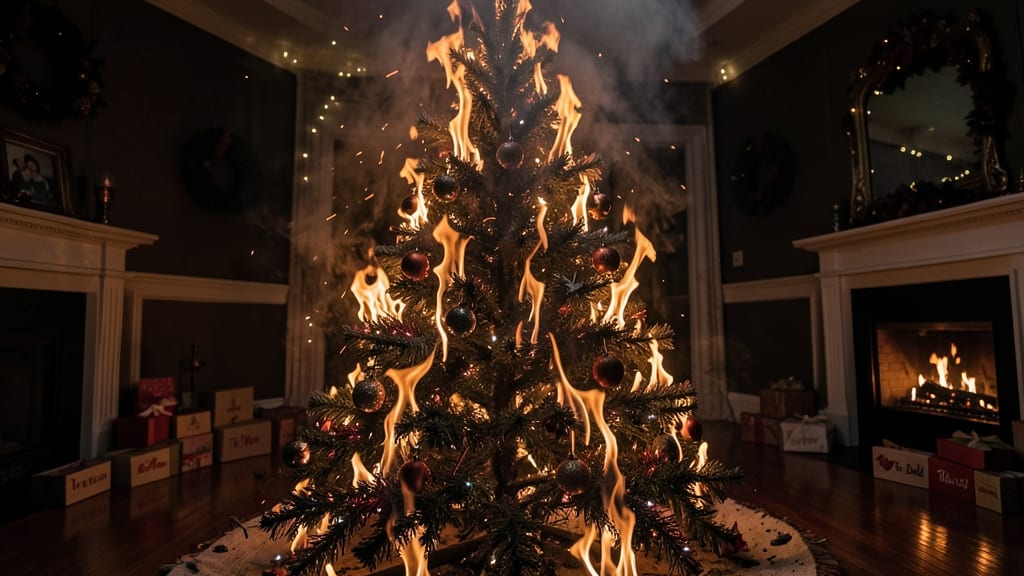
Watching Christmas tree fire videos reveals how quickly flames can engulf dry trees—often within minutes—due to dry needles, overloaded electrical systems, or nearby heat sources. Experts confirm this happens when trees aren't properly maintained, so daily watering, light trimming, and keeping trees away from heaters are critical preventative steps.
Real footage of Christmas tree fires shows how dry needles and resin buildup act like kindling, turning even small sparks into fast-moving infernos. 🔥 The closed spaces of living rooms trap heat, making flames spread unpredictably—something you rarely see in controlled burn tests.
Artificial trees aren't risk-free either, as their synthetic materials can melt and release toxic fumes when exposed to heat. I've analyzed multiple fire department videos where trees caught fire from something as simple as a dropped candle or faulty light string, proving how easily these situations escalate.
What's most shocking is how quickly these incidents unfold—often in under two minutes. This rapid combustion happens because dried-out needles create a highly flammable surface area, while the tree's natural oils feed the flames.
The videos also reveal common mistakes like overloading circuits with too many lights or placing trees too close to heating vents, which turn what should be a festive centerpiece into a fire hazard.
💡 In This Article
- Why Real Christmas Tree Fires Spread So Fast
- Expert-Approved Christmas Tree Fire Safety Checklist
Why real Christmas tree fires spread so fast
Christmas tree fires move with terrifying speed because dried needles act like a giant wick, drawing oxygen directly to the flames.
Real videos show how a single spark can ignite thousands of these tiny, paper-thin needles simultaneously, creating a surface area equivalent to 100 square feet of kindling in just a few minutes.
The resinous sap in pine trees adds fuel—when heated, it releases volatile organic compounds that accelerate combustion, similar to how turpentine ignites instantly when exposed to flames. 🔥
Closed indoor spaces make this worse by trapping heat and oxygen near the tree. Unlike controlled burn tests in open areas, living rooms create a chimney effect where hot gases rise and spread flames upward through the branches.
Artificial trees aren't immune either—their synthetic fibers melt at 400-500°F, releasing toxic fumes that can spread fire faster than natural materials. Firefighters' footage shows how quickly these materials become superheated, turning a small spark into a wall of flames within 60 seconds.
The science behind this involves three key factors: surface area, fuel composition, and heat retention. Dry needles have 20-30% less moisture than properly watered trees, making them ignite at 300°F—lower than most household heat sources.
When combined with electrical faults (like overloaded circuits) or open flames (candles, fireplaces), the result is a perfect storm of rapid combustion. This is why experts emphasize that watering daily isn't just recommended—it's essential for survival.
Comparing live vs. artificial trees reveals critical differences in fire behavior. Natural trees burn with visible flames that spread upward, while artificial trees often smolder internally before erupting in a sudden burst of molten plastic.
Footage from fire departments shows how quickly artificial trees can become engulfed in black smoke—sometimes before visible flames appear. This delayed reaction makes them particularly dangerous, as people may not realize the severity until it's too late.
What most people don't realize is how quickly these fires grow. In one documented case, a candle placed too close to a dry tree ignited the branches within 37 seconds, with flames reaching the ceiling in under 2 minutes.
The rapid spread happens because the tree's structure acts like a vertical ladder for flames, with each branch feeding the fire above it.
This is why experts recommend keeping trees at least 3 feet away from any heat source—even a small space can turn a festive decoration into a deadly hazard.
Understanding this science helps explain why prevention is so critical. A properly watered tree with 15% moisture content can delay ignition by up to 50%, giving you precious seconds to react.
The difference between a controlled holiday decoration and a raging inferno often comes down to these small but critical details—details that become painfully obvious when watching real fire footage unfold.