
Pruning
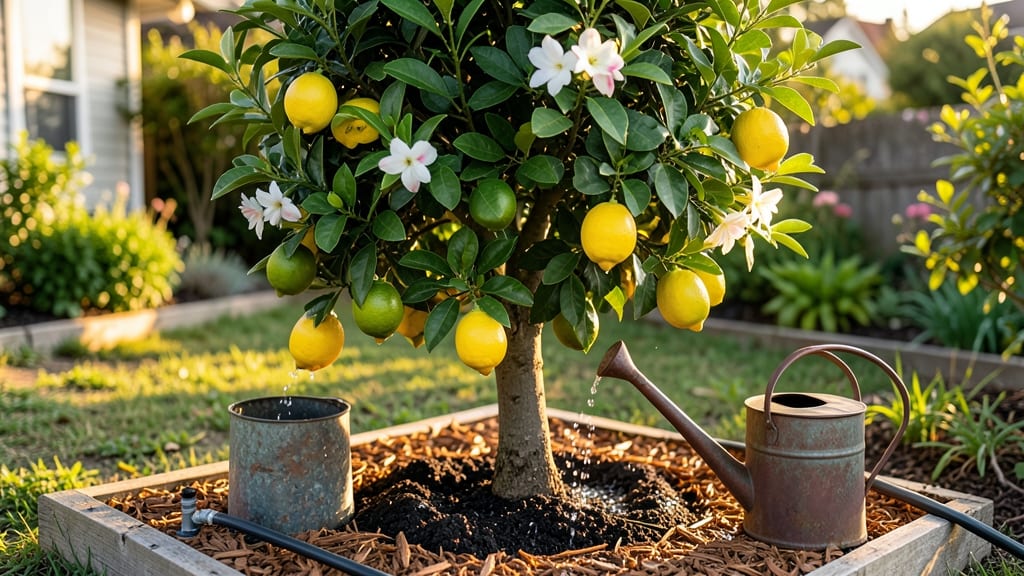
Mastering citrus tree irrigation is the difference between a bountiful harvest and a struggling plant 🍊 — and most gardeners get it wrong by watering too shallowly.
Picture this: your tree’s roots stretch deep into the soil, searching for moisture, while you’re giving it a quick sprinkle that barely reaches an inch down. That’s not hydration—that’s a recipe for stress.
Deep, infrequent watering is the key to keeping roots strong and fruit productive, especially in Zone 9b where summer heat demands precision.
But here’s the catch: citrus trees hate soggy roots just as much as they crave moisture. Overwatering in winter can drown them, while summer drought sends them into survival mode.
The solution? A seasonal watering schedule that matches your tree’s needs—whether it’s deep soaks in July or light touches in January.
In this guide, I’ll break down the exact watering frequency, signs of trouble, and the best methods (drip systems, soaker hoses, and manual deep watering) to keep your citrus thriving year-round—no guesswork required.
Deep root watering schedule for citrus trees by season
Citrus trees thrive when their roots receive consistent, deep hydration—but most gardeners make the mistake of watering too lightly or too frequently. Deep root irrigation ensures water reaches the 6-12 inch soil layer where roots actively absorb moisture, especially critical during fruit development.
Unlike shallow watering, which encourages surface roots and stress, deep watering mimics natural rainfall patterns and reduces fungal risks.
Your citrus tree’s water needs shift dramatically with seasonal temperature changes and rainfall patterns. In summer’s scorching heat, roots dry out faster, while winter dormancy demands minimal watering. Even rainy seasons require adjustments—overwatering in saturated soil leads to root rot, a silent killer of citrus trees.
Let’s break down the science-backed schedule to keep your tree hydrated without drowning it.
🌱 Key Principle: Always water early morning (6-9 AM) to allow foliage to dry before evening, preventing fungal diseases like citrus canker. Use a moisture meter or the finger test (insert 3 inches deep—if dry, water). For mature trees, aim for 5+ gallons per session; dwarf varieties need 1-2 gallons.
| Season | Watering Frequency | Depth per Session | Water Amount | Adjustments |
|---|---|---|---|---|
| Spring | Every 3-4 days | 12-18 inches | 3-5 gallons | Increase if temps >80°F |
| Summer | Daily or every 2 days | 18-24 inches | 5-10 gallons | Mulch 3-4 inches deep |
| Fall | Every 5-7 days | 12 inches | 2-4 gallons | Reduce as temps drop |
| Winter | Every 10-14 days | 6-12 inches | 1-2 gallons | Avoid wet foliage |
*Adjust for potted trees (water 2x more frequently) and clay soil (reduce by 30%).
In spring, your citrus tree transitions from dormancy and needs frequent deep watering to support new growth. Focus on root zone hydration—avoid wetting leaves to prevent citrus blight.
If your area receives consistent rain (1 inch/week), reduce watering by 50% to prevent waterlogged soil. Use a soaker hose or drip irrigation for precision.
Summer is the most critical season for citrus irrigation. Heat stress causes fruit to drop prematurely, and shallow roots bake in dry soil. Deep watering every 1-2 days is non-negotiable—especially for bearing trees.
Apply 3-4 inches of mulch (straw or wood chips) to lock in moisture and regulate soil temperature. Drip irrigation is ideal here, delivering water slowly at root level.
Fall signals a shift toward reduced watering as temperatures drop. Your tree’s growth slows, so water every 5-7 days unless your region experiences unseasonal drought.
Watch for leaf yellowing—a sign of overwatering in cooler weather. Drainage holes in containers become critical; ensure pots have exit holes to prevent root suffocation.
Winter care varies by climate zone. In frost-free zones (9b+), water lightly every 10-14 days to prevent root desiccation.
In cooler zones, halt watering entirely if frost is forecasted. Potted citrus need extra attention—move containers to sheltered areas and water every 7-10 days to avoid soil compaction.
Pro tip: Test soil moisture before watering. Dig 3 inches deep—if soil feels damp, wait. For sandy soil, water more frequently but shallower; clay soil holds moisture longer, so reduce sessions. Organic matter (compost) improves water retention—add 2 inches annually to the root zone.
Remember, citrus trees hate soggy roots. Always pair deep watering with well-draining soil (amend with perlite or coarse sand if needed). If your tree’s leaves curl or drop fruit, it’s often a watering imbalance. Adjust your schedule and monitor closely—your tree’s harvest depends on it! 🌿
Signs of overwatering vs. underwatering in citrus trees
Citrus trees are delicate when it comes to water. Too much or too little can spell disaster for your lemon, orange, or grapefruit tree. The key is learning to read your tree’s signals—yellowing leaves might mean overwatering, but crispy edges scream thirst.
I’ve seen both scenarios ruin beautiful citrus trees, and I’m here to help you spot the difference before it’s too late.
Overwatering is sneaky because citrus roots need oxygen. When soil stays soggy, roots suffocate, leading to root rot and fungal diseases. Underwatering, on the other hand, causes leaf scorch and fruit drop, stunting growth.
Both issues share some symptoms, like leaf drop, but the details reveal the truth. Let’s break it down so you can act fast.
Overwatering vs. Underwatering: What to Watch For
Overwatering
- Mushy, yellow leaves (especially lower leaves)
- Foul-smelling soil (rotten odor)
- Stunted growth despite frequent watering
- Peeling bark or dark spots on trunk
Fix:
Let soil dry completely between waterings. Improve drainage with perlite or sand.
Underwatering
- Crispy, brown leaf edges (like paper)
- Premature fruit drop (or small, bitter fruit)
- Dry, curling leaves that feel rough
- Wilting even with moist soil (root stress)
Fix:
Water deeply 2-3x/week (1-2 gallons per tree). Mulch to retain moisture.
One of the most common mistakes I see is watering citrus trees on a strict schedule without checking soil moisture. Instead, stick your finger 2-3 inches deep—if it’s dry, water; if it’s damp, wait. Mulch heavily (3-4 inches) to regulate moisture and prevent evaporation.
This simple trick saved my Meyer lemon tree last summer when temperatures hit 100°F.
If your citrus tree is dropping fruit prematurely, it’s usually a sign of underwatering stress. The tree prioritizes survival over fruit production when roots can’t access water.
On the flip side, overwatered trees may drop fruit too, but the leaves will tell the real story—yellowing and mushy instead of crispy. Always check the leaves first!
Don’t ignore root rot symptoms, like blackened roots or a slimy trunk base. This is a death sentence for citrus trees if untreated. If you suspect root rot, trim affected roots with sterilized pruners and repot in fresh, well-draining soil.
For outdoor trees, consider a soil drench with hydrogen peroxide (1 part peroxide to 20 parts water) to kill fungi.
Pro tip: Adjust your watering based on the season. In summer heat, citrus trees need daily deep watering, while winter slows their thirst—reduce to every 10-14 days.
Pay attention to your local climate and soil type; sandy soil dries faster than clay. The goal? Consistent moisture without soggy roots. Your citrus tree’s health—and your harvest—depends on it.