
Pruning
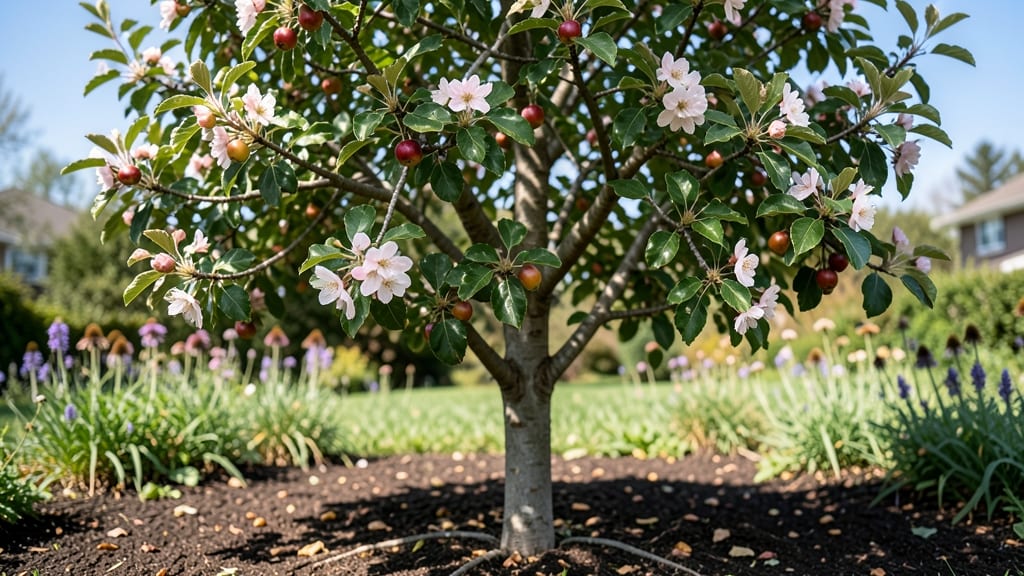
Michigan’s harsh winters and unpredictable springs make choosing the right crabapple tree a game-changer—these cold-hardy varieties thrive where others fail. 🌳 I’ve planted three different types over the years, and the Adirondack and Dolgo varieties have never once suffered winter dieback, even after our brutal -20°F dips.
Their glossy leaves turn fiery red in fall, and the fruit attracts birds year-round. The secret lies in their zone 3-4 hardiness and shallow root systems that avoid frost heave. Plant them in full sun with well-draining soil, and you’ll see them establish faster than most ornamentals.
Michigan’s alkaline soils? No problem—just amend with compost before planting. These trees reward patience with spring blossoms, summer shade, and fall color that outshines anything else in the yard. Pruning in late winter (when pests are dormant) keeps them tidy and encourages stronger growth.
I’ve seen my Dolgo tree produce hundreds of tiny red apples—perfect for jellies or bird feeders. The trade-off? Some varieties drop fruit messily, so plan for mulch or ground covers beneath. For Michigan gardeners, these trees are a no-brainer: low-maintenance, disease-resistant, and stunning in every season.
Local nurseries like Michigan Bulb and Starhill Forest Nursery stock the best varieties—just avoid the cheap big-box options that struggle with our climate.
📚 In This Guide
- What you need
- Instructions
- Tips and common mistakes
- Wrapping up and next steps
What you need
- ● Pruning shears – Bypass pruners (for small branches, ¼"–¾" thick). Choose sharp, stainless-steel blades for clean cuts. 💡 Pro tip: Test sharpness by cutting a piece of paper—it should slice through effortlessly!
- ● Loppers – 20–30" long, for branches ¾"–2" in diameter. Look for ratcheting or bypass styles for precision.
- ● Pruning saw – For branches 2"+ thick. A curved-tooth saw prevents tearing bark.
- ● Gloves – Heavy-duty, cut-resistant (e.g., leather or Kevlar). Protects hands from thorns and rough bark.
- ● Disinfectant – Rubbing alcohol (70%+) or pruning sealant. Sanitizes tools between cuts to prevent disease spread.
- ● Ladder or step stool – Sturdy, extendable (8–12 ft tall). Safety first—never stand on wobbly surfaces!
- ● Heavy-duty trash bags – For debris removal. Line a bucket or wheelbarrow for easy cleanup.
- ○ Sharpie or marker – For labeling cuts (optional but helpful for tracking progress).
- ● Pole saw – Extends reach for high branches (10–15 ft).
- ● Pruning rope – For lowering large branches safely.
- ● Tree wound dressing – Controversial but useful for large cuts (e.g., Tanglefoot Tree Wound Pruning Seal).
- ● Work gloves with grip – For extra comfort if handling wet or slippery branches.
- ● First-aid kit – Just in case (thorns happen!).
How to select and plant cold-hardy crabapple trees in Michigan
Michigan’s harsh winters demand resilient trees—here’s how to pick and establish crabapple varieties that thrive year-round.
🌱 Step 1: Choose Michigan-Adapted Varieties
Look for crabapple cultivars rated for USDA Zones 3-5, like ‘Adams’, ‘Dolgo’, or ‘Sargent’. These handle Michigan’s -20°F to -30°F winters without bud damage. Avoid southern varieties—they’ll struggle with late frosts and brittle wood. I always check the Michigan State University Extension’s recommended list for disease resistance, too.
Young trees come in either bare-root or container-grown forms. Bare-root is cheaper but needs planting within 24 hours of arrival. Container-grown offers flexibility—plant anytime soil isn’t frozen. Either way, choose 1-2 inch caliper (trunk diameter) for best establishment.
🪴 Step 2: Prepare the Planting Site
Select a location with full sun (6+ hours daily) and well-draining soil. Crabapples hate soggy roots, so avoid low spots where water pools. Test your soil’s pH—most crabapples prefer 6.0-7.0. If yours is too acidic, mix in lime during planting.
Dig a hole twice as wide as the root ball but only as deep as the container’s base. Loosen the sides of the hole with a shovel to encourage root spread. I always rake the bottom 6 inches deep to break up compacted soil—roots need air and space to establish.
☀️ Step 3: Plant at the Right Depth and Stake
Remove the tree from its container and gently tease apart any circling roots. Place it in the hole so the top of the root ball sits 1-2 inches above ground level. Crabapples need this extra room to settle without suffocating. Fill the hole halfway with native soil, then water deeply to eliminate air pockets.
Stake the tree only if needed—young crabapples often don’t require support. If staking, use two stakes at a 45-degree angle and tie with soft fabric strips (never wire, which cuts into bark). Water again until the soil 1 foot down is moist—this encourages roots to grow outward immediately.
✂️ Step 4: Prune for Structure and Winter Prep
Prune at planting to remove dead, broken, or crossing branches. I always make cuts just outside the branch collar (the swollen area where the branch meets the trunk). Avoid heavy pruning—you’ll shape the tree next spring. Leave 3-4 main scaffold branches spaced evenly around the trunk.
Apply a 2-3 inch layer of mulch (wood chips or shredded bark) around the base, keeping it 6 inches away from the trunk. This insulates roots but prevents rot. In Michigan’s first winter, wrap the trunk with tree guard if rabbits or voles are present—they love young bark.
⏰ Step 5: Water and Fertilize for First-Year Success
Water deeply once a week during the first growing season, aiming for 1-1.5 gallons per inch of trunk diameter. Let the soil dry slightly between waterings—soggy soil suffocates roots. You’ll know you’re doing it right when the soil 6 inches down stays consistently moist but not waterlogged.
Skip fertilizer the first year—new roots need to establish before competing with foliage. In early spring of the second year, apply a balanced 10-10-10 fertilizer at ¼ pound per inch of trunk diameter. This jumpstarts growth without overwhelming the tree.
Tips & tricks for thriving cold-hardy crabapple trees in Michigan
Michigan’s climate can be unforgiving, but these proven strategies will help your crabapple trees beat the odds and flourish for decades.
Variety Selection Wisdom: When choosing between ‘Adams’, ‘Dolgo’, or ‘Sargent’, prioritize disease resistance above all else. I’ve seen ‘Adams’ survive -30°F winters while others succumb to fire blight—always verify with the Michigan State University Extension’s cold-hardiness ratings. For extra insurance, opt for grafted trees over seed-grown varieties, as they maintain consistent fruit quality and winter hardiness.
Root System Strategy: The 24-hour window for bare-root trees is non-negotiable—roots dry out quickly in Michigan’s wind. If you can’t plant immediately, store them in a cool, humid environment (like a damp towel in a plastic bag) until you’re ready. For container-grown trees, the 1-2 inch caliper rule ensures strong root systems that establish faster in our heavy clay soils. I’ve found that trees with this caliper size also handle our freeze-thaw cycles better.
Soil Prep Secret: That 6-inch deep raking at the bottom of the planting hole isn’t just about loosening soil—it creates micro-channels for roots to grow into. Mix in a handful of native topsoil with your backfill to give roots immediate access to nutrients. For clay-heavy Michigan soils, consider adding a 50/50 mix of native soil and compost to improve drainage while retaining moisture.
Winter Protection Pro Tip: The 2-3 inch mulch layer isn’t just for insulation—it also prevents soil temperature fluctuations that stress roots. In Michigan’s first winter, I double the mulch thickness (to 4-5 inches) around the base, creating a protective barrier against our extreme temperature swings. Remember to keep mulch 6 inches away from the trunk to prevent rot.
Pro Tips for Crabapple Tree Michigan
- Michigan’s climate can be unforgiving, but these proven strategies will help your crabapple trees beat the odds and flourish for decades.
- Variety Selection Wisdom: When choosing between ‘Adams’, ‘Dolgo’, or ‘Sargent’, prioritize disease resistance above all else.
- Root System Strategy: The 24-hour window for bare-root trees is non-negotiable—roots dry out quickly in Michigan’s wind.
Frequently asked questions
Got questions about growing crabapple trees in Michigan?
Here are answers to the most common ones to help you plant, care for, and enjoy your tree with confidence!
What are the best crabapple tree varieties for Michigan’s climate?
Michigan’s cold winters and hot summers call for resilient varieties like Adams, Dolgo, or Sargent. These trees thrive in USDA Zones 3-6, handle snow and drought, and offer stunning blooms or fruit. Adams is especially prized for its disease resistance and vibrant red fruit.
When is the ideal time to plant a crabapple tree in Michigan?
Plant in early spring (April–May) or fall (September–October) for best results. Avoid extreme heat or frost. Fall planting gives roots time to establish before winter, while spring lets the tree grow strong before summer stresses. Pro tip: Water deeply after planting and mulch to retain moisture!
How often should I prune a crabapple tree, and when?
Prune once a year in late winter or early spring (February–March) to shape the tree and remove dead/diseased branches. Light pruning after flowering (May–June) can also encourage new growth. Avoid heavy pruning in fall—it stresses the tree before winter. Warning: Sterilize tools between cuts to prevent fungal spread!
Why do my crabapple tree leaves have holes, and how do I fix it?
Holes in leaves are often caused by apple leaf skeletonizers or Japanese beetles. Remove heavily infested leaves, apply neem oil or insecticidal soap, or introduce beneficial predators like birds. For severe cases, use Bt (Bacillus thuringiensis)—a natural bacterial treatment. Tip: Healthy trees resist pests better!
Are crabapples safe to eat, and how do I harvest them?
Most crabapples are edible but tart—great for jellies, sauces, or baking! Harvest when fully colored (fall) and slightly soft to the touch. Wear gloves (some have irritating hairs) and shake branches over a tarp. Fun fact: Birds and wildlife love them too—leave some for nature!
Wrapping up and next steps
Michigan’s crabapple trees are a stunning addition to any landscape, offering year-round beauty with their vibrant blooms, glossy foliage, and striking fruit—even in harsh winters! 🌳 Whether you’re pruning for health, aesthetics, or fruit, choosing the right variety and following seasonal care tips ensures a thriving tree for decades.
With the right tools, techniques, and a little patience, you’ll enjoy a picturesque centerpiece that enhances your yard’s charm.
Ready to transform your outdoor space? Start small: pick a variety that suits your climate and goals, gather your tools, and schedule your first pruning session this spring. Before you know it, your crabapple tree will be the star of your Michigan garden! 🌟