
Pruning
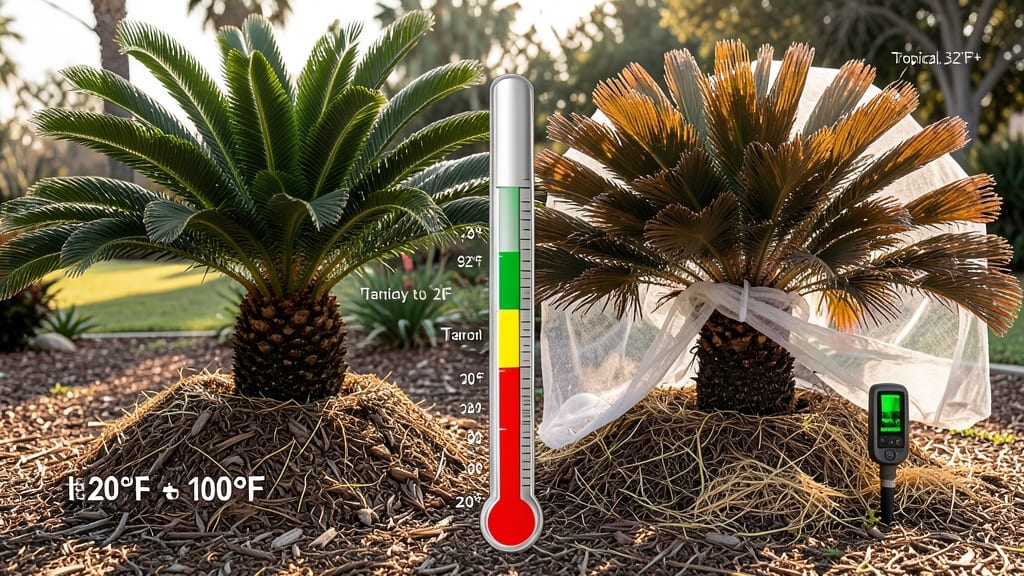
Your palm tree’s survival depends on knowing its temperature tolerance—some handle chilly nights down to 15°F, while others wilt at the first frost. 🌿 I’ve watched tropical palms shiver in 40°F weather and cold-hardy varieties thrive where others freeze, and the difference comes down to the species you choose.
The key is matching your palm to your climate zone. Mediterranean varieties like the Pindo palm or Canary Island date palm handle USDA zones 8-11, while tropical palms (think coconut or royal palms) need zones 10-12.
A quick check of your local hardiness zone can save you from buying a palm doomed to freeze. When temperatures dip, watch for brown leaf tips or drooping fronds—signs your palm is struggling.
Mulching, wrapping the trunk, or even moving potted palms indoors can buy critical time during sudden cold snaps. The right variety planted in the right spot means your palm stays lush all year. Cold snaps don’t have to mean palm tree death.
With the right choices and a few protective tricks, you can grow palms even in cooler climates—just pick wisely and give them a fighting chance when winter hits.
📚 In This Guide
- What you need
- Instructions
- Tips and common mistakes
- Wrapping up and next steps
What you need
- ● Cold-hardy palm tree seedlings or saplings: Choose from varieties like Trachycarpus fortunei (Windmill Palm), Chamaerops humilis (European Fan Palm), or Sabal minor (Dwarf Palmetto). Quantity: 1–3 plants (depending on garden size).
- ○ Soil test kit: To check pH (ideal: 5.5–7.0) and drainage. Optional: Soil amendments like perlite or sand for better aeration.
- ● Thermometer (outdoor/soil probe): To monitor microclimates. Specs: -4°F to 120°F range.
- ● Mulch (organic or inorganic): 2–3 inches of pine straw, bark chips, or gravel to insulate roots.
- ● Pruning tools: Bypass pruners (for small fronds)
- ● Loppers (for thicker stems)
- ● Sterilizing solution (70% isopropyl alcohol)
- ● Frost cloth or burlap: Lightweight, breathable fabric for temporary cold protection (down to 20°F). Size: 3’x5’ per palm.
- ● Drip irrigation system or hose: For consistent moisture (palms hate soggy roots but need steady hydration).
- ● USDA Hardiness Zone Map: Identify your zone (e.g., Zone 7–9 for most cold-hardy palms). USDA Plant Hardiness Zone Finder.
- ● Local climate data: Check historical lows (e.g., Palm Beach County vs. Seattle—big difference!).
- ● Palm tree care guides: Books or online resources (e.g., Palms of the World by Andrew Henderson).
- ● Neighborhood scout: Visit local nurseries or gardens to observe thriving cold-hardy palms in your area.
- ● 🌡️ Test your microclimate: Place your thermometer near potential planting spots—south-facing walls or paved areas can trap heat!
- ● ✨ Choose container-grown palms: Potted palms (e.g., Trachycarpus) are easier to move indoors if frost hits unexpectedly.
- ● 🔥 Avoid "tropical" palms: Skip Cocos nucifera (Coconut Palm) or Phoenix dactylifera (Date Palm)—they’ll crisp at 28°F!
How to select and care for cold-hardy palm trees
Not all palms freeze—here’s how to pick the right varieties and protect them through winter.
🌱 Step 1: Identify Your Hardiness Zone
First, check your USDA Plant Hardiness Zone—this tells you which palms can survive your winters. Zones 8-10 are safest for most palms, but some varieties tolerate Zone 7 with protection. Use the USDA zone map to pinpoint your location, then focus on palms rated for your zone or one colder.
For example, Windmill palms (Trachycarpus fortunei) thrive in Zone 6, while Mexican fan palms (Washingtonia robusta) struggle below Zone 9. If you’re in a marginal zone, opt for container-grown palms you can move indoors when temperatures drop below 25°F.
☀️ Step 2: Choose the Right Palm Variety
Cold-hardy palms have thick trunks, fan-shaped fronds, and slower growth—traits that help them survive frost. Start with these top picks: Windmill palm (Trachycarpus fortunei) for Zone 6, Needle palm (Rhapidophyllum hystrix) for Zone 5, or Dwarf palmetto (Sabal minor) for Zone 7. Avoid tropical palms like coconut or royal palms unless you live in Zone 10+.
Look for palms labeled "cold-resistant" at nurseries. Young palms are more vulnerable, so choose established plants with thick trunks—these store more energy to survive winter. Skip palms with thin, hollow stems; they’ll split or die in freezing temps.
🪴 Step 3: Plant in the Warmest, Sheltered Spot
Position your palm in full sun where it gets afternoon warmth but avoids cold air pockets. South- or west-facing walls provide natural protection. Amend heavy or clay soil with 3 inches of compost to improve drainage—palms hate soggy roots in winter. Plant in well-draining soil and water deeply after planting to settle roots.
If planting in containers, use a fast-draining mix (60% potting soil, 30% perlite, 10% sand). Larger pots (15+ gallons) retain heat better than small ones. Bury the trunk slightly deeper than in the nursery pot—this adds stability and insulation against cold winds.
❄️ Step 4: Protect Palms from Frost
When temperatures drop below 32°F, cover the fronds with burlap or frost cloth to prevent damage. Secure the cover with stakes or weights so it doesn’t blow off. For container palms, move them to a garage, shed, or insulated patio—anywhere above 25°F. If you can’t move them, wrap the pot and trunk with bubble wrap or straw for extra insulation.
Water palms sparingly in winter—overwatering stresses cold-stressed roots. Let the soil dry slightly between waterings, and avoid wetting the fronds, which can freeze. Mulch the base with 3 inches of wood chips or straw to insulate roots from ground freeze.
⏰ Step 5: Monitor and Recover After Freeze
After a hard freeze, check for brown or black fronds—these are dead and should be trimmed in early spring. Use sterilized pruners to cut back damaged fronds at the base of the trunk. Healthy new fronds will emerge from the center once temps warm above 50°F. Avoid pruning until new growth appears to avoid inviting disease.
Fertilize lightly in early spring with a balanced palm fertilizer (8-8-8 or 10-10-10) to encourage recovery. If your palm looks weak or fails to regrow, it may need root inspection—lift the plant to check for rot or damage. Most cold-hardy palms bounce back with proper care, but severe damage may require replacing the plant.
Tips & tricks for perfect cold-hardy palm selection
Took me years to learn these lessons the hard way—here’s how to avoid my mistakes and give your palms the best shot at surviving winter.
Zone Matching Matters: When selecting palms for your hardiness zone, don’t just look at the minimum rating—consider your local microclimate. A Windmill palm might survive Zone 6 winters in a sheltered location, but could still suffer in an exposed spot. I’ve seen them thrive in Zone 6 with afternoon sun against a south-facing wall, while identical plants just 20 feet away in full exposure struggled. Pay attention to your specific site conditions rather than just the zone number.
Container Strategy for Marginal Zones: If you’re in Zone 7 or 8 with occasional dips below 25°F, container-growing gives you flexibility. Use at least 15-gallon pots—they provide better insulation than smaller containers. I’ve had Dwarf Palmetto palms survive winters in Zone 7 by moving them to an unheated garage when temps drop below 28°F. The key is moving them BEFORE the first freeze, not waiting until damage occurs. Mark your calendar for the average first frost date in your area.
Winter Watering Wisdom: The most common mistake I see is overwatering in winter. Cold-stressed roots can’t absorb moisture efficiently, leading to rot. Let the soil dry out more between waterings in winter—stick your finger 2 inches into the soil. If it’s damp, wait another week. I’ve had palms recover from winter browning when I adjusted their watering, but I’ve never seen one bounce back from root rot caused by overwatering. Mulch with 3 inches of straw or wood chips to help regulate soil moisture and temperature.
Pro Tips for Palm Tree Temperature Tolerance
- Took me years to learn these lessons the hard way—here’s how to avoid my mistakes and give your palms the best shot at surviving winter.
- Zone Matching Matters: When selecting palms for your hardiness zone, don’t just look at the minimum rating—consider your local microclimate.
- Container Strategy for Marginal Zones: If you’re in Zone 7 or 8 with occasional dips below 25°F, container-growing gives you flexibility.
Frequently asked questions
about palm tree temperature tolerance—because even resilient plants need a little TLC in tricky weather! Here are answers to the most common queries to help you keep your palms thriving.What’s the coldest temperature most palm trees can survive?
Most tropical palms struggle below 25–30°F (-4 to -1°C), while cold-hardy varieties like the Windmill Palm (Trachycarpus fortunei) or Needle Palm (Rhapidophyllum hystrix) can handle 10–15°F (-12 to -9°C) for short periods. Prolonged frost? Even the toughest palms may suffer damage.
Can palm trees recover from frost damage?
Yes, but it depends on the severity! Mild frost (above 20°F/-7°C) may cause leaf browning, but new fronds often regrow. Severe frost (below 15°F/-9°C)Pro tip: Avoid pruning until spring to assess full damage.
Are there palm trees that thrive in USDA Zone 7 or colder?
Dwarf Palmetto (Sabal minor), Chinese Windmill Palm (Trachycarpus fortunei), and Siberian Dwarf Palm (Nannorrhops ritchiana) are top picks for Zones 6–8. These varieties tolerate 0–10°F (-18 to -12°C) with proper winter care (like mulching and windbreaks).
How can I protect my palm tree from cold snaps?
Start with mulching the root zone (3–4 inches of wood chips) and wrapping the trunk with burlap or frost cloth. For potted palms, move them to a sheltered spot or insulate with bubble wrap. Water sparingly—wet fronds freeze faster! A Christmas light wrap (yes, really!) can add 5–10°F of protection.
What’s the best alternative if I live in a very cold climate?
If palm trees are too risky, consider cold-hardy palms like:
- Needle Palm (Rhapidophyllum hystrix) – Zone 6, slow-growing, and deer-resistant.
- Pygmy Date Palm (Phoenix roebelenii) – Zone 9, but indoor-friendly in pots!
- Mediterranean Fan Palm (Chamaerops humilis) – Zone 7, drought-tolerant.
For Zone 5 or colder, opt for ornamental grasses (like fountain grass) or yucca plants—they mimic the look without the frost risk!
Wrapping up and next steps
Understanding your palm tree’s temperature tolerance is the first step to keeping it thriving—whether you’re in a chilly USDA Zone 8 or a toasty Zone 10! From cold-hardy Windmill Palms to heat-resistant Canary Island Date Palms, there’s a perfect variety for every climate.
With the right care—like mulching, watering wisely, and choosing the right spot—your palm can not only survive but flourish year-round.
Ready to give your palm the best shot at success? Start by identifying your zone and picking a variety that matches your local weather. Then, watch it grow—your green thumb (and your palm’s happy vibes) will thank you! 🌴✨