
Pruning
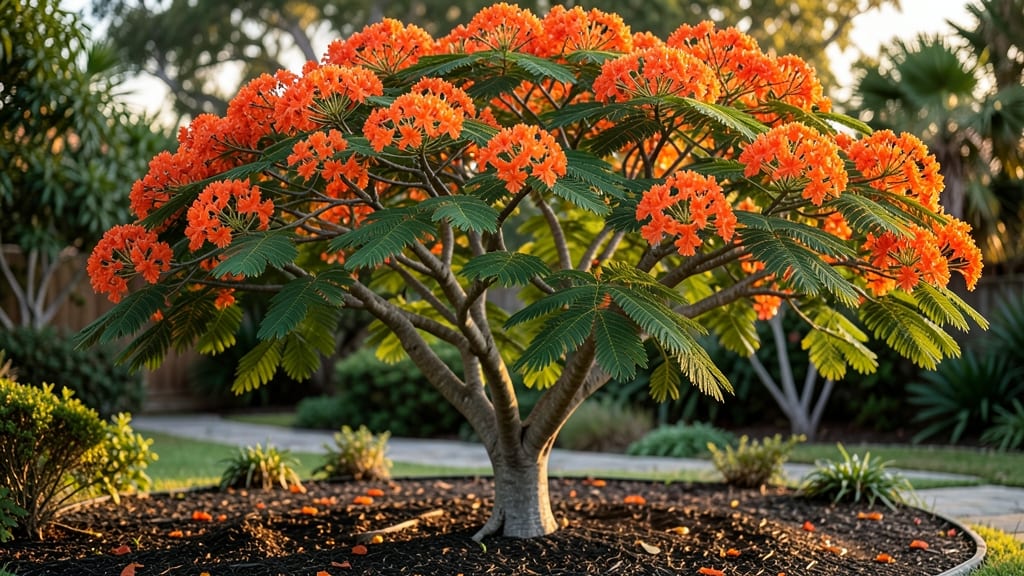
Flame trees in Florida need seasonal pruning to thrive: trim dead branches in late winter, shape growth in early spring, and remove crossing limbs in summer. Varieties like Delonix regia flourish with minimal cuts but benefit from strategic pruning to boost vibrant blooms and structural health.
Florida's warm climate and humidity create ideal conditions for flame trees, but they also demand careful timing to prevent stress. 🌿 The late-winter trim removes winter-damaged branches before new growth begins, while spring shaping encourages fuller foliage.
Summer cuts focus on safety—removing limbs that could become hazards during storms. Delonix regia blooms best when pruned just after flowering, while other varieties may need different timing based on their growth patterns.
What sets Florida's flame trees apart is how they respond to pruning—too much can reduce next year's spectacular blooms, while too little risks overcrowding. I always recommend using sharp, sterilized tools to prevent disease spread, especially in Florida's damp air.
After pruning, a light application of balanced fertilizer helps the tree recover and prepares it for the next bloom cycle.
💡 In This Article
- Seasonal Flame Tree Pruning Science
- Step-by-Step Florida Flame Tree Pruning Guide
Seasonal flame tree pruning science
Florida's subtropical climate creates unique pruning challenges for flame trees. Unlike temperate regions, Florida's lack of true winter dormancy means trees grow year-round, but seasonal shifts still trigger key responses.
The late-winter trim (January-February) targets branches weakened by occasional cold snaps, as temperatures dip below 40°F—just enough to stress the tree but not kill it. This period coincides with reduced humidity, allowing wounds to heal faster before the rainy season begins.
The science behind spring shaping involves auxin hormones, which regulate growth patterns. When you make clean cuts at branch collars in March-April, you're redirecting the tree's energy toward new shoots rather than maintaining old growth.
For Delonix regia, this timing aligns with its natural bloom cycle—pruning too late risks cutting off next year's flower buds already forming. The Brachychiton acerifolius variety, however, blooms on old wood, so its pruning window extends slightly later to preserve flowering branches.
Summer pruning in Florida serves two critical purposes: safety and storm preparation. The state's frequent summer thunderstorms create wind shear that can snap weak limbs. Removing crossing branches (which compete for sunlight and nutrients) improves air circulation, reducing fungal risks in Florida's 80-90% humidity.
What's fascinating is how the tree responds—within 4-6 weeks, new growth emerges with thicker cell walls, making it more resilient to hurricane-force winds.
Root growth acceleration is another pruning benefit. When you remove 15-20% of the canopy, the tree diverts resources below ground, strengthening its root system—a crucial adaptation for Florida's sandy soils. This is why professional arborists recommend never removing more than 25% of foliage in a single session.
The root-to-canopy ratio must stay balanced to maintain the tree's stability during Florida's intense summer downpours.
Variety-specific responses highlight why one-size-fits-all pruning fails. Delonix regia produces flowers on new wood, so aggressive spring pruning can eliminate next year's blooms entirely. In contrast, Brachychiton acerifolius blooms on old wood, making summer pruning safer.
The key is understanding each variety's growth habit—like how Delonix sends out vigorous vertical shoots that need shaping, while Brachychiton grows more horizontally and benefits from lift cuts to raise the canopy above storm surge levels.
Florida's unique microclimates add another layer. Coastal areas with salt spray require more frequent pruning to remove salt-damaged foliage, while inland trees can go longer between cuts.
The 30-degree temperature differential between day and night in winter actually helps—it triggers temporary growth slowdown, making late-winter pruning less stressful for the tree. This natural rhythm is what makes Florida's flame trees both resilient and rewarding to prune correctly.