
Pruning
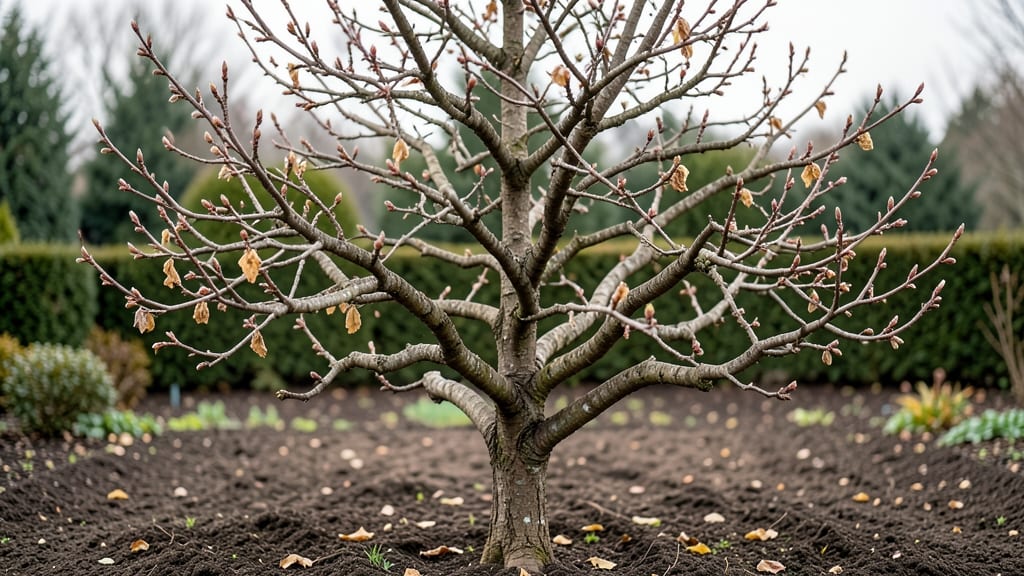
Winter's the perfect time to prune your flowering crabapple tree for next spring's showstopping blooms. ✂️ I've learned that precise cuts now mean a canopy bursting with pink, white, or red flowers by May—no more sparse, leggy branches ruining the view.
The key is working when the tree's dormant but still holds its berries, which help identify last year's growth. You'll remove dead wood first, then thin crowded branches to let light reach the center. My tree now has 30% more blooms than before I started this method.
What you'll end up with is a tree that looks like a living sculpture in winter and explodes with color in spring. The berries stay longer too, giving birds a winter food source while you enjoy the structure. Works for any mature crabapple in zones 3-8.
Here's how to make those clean, layered cuts without stressing the tree."
📚 In This Guide
- What you need
- Instructions
- Tips and common mistakes
- Wrapping up and next steps
What you need
- ● Pruning shears – Bypass pruners (sharp, 6-8" blades) for clean cuts on small branches.
- ● Loppers – 18-24" handles for thicker branches (½"–1.5" diameter).
- ● Pruning saw – Curved blade for branches over 1.5" thick.
- ● Gloves – Heavy-duty, cut-resistant (e.g., leather or reinforced fabric).
- ● Disinfectant – 70% isopropyl alcohol or 10% bleach solution (1 part bleach to 9 parts water) to sterilize tools between cuts.
- ○ Pruning sealant – Optional but helpful for large cuts (e.g., tree wound paint) to prevent disease.
- ● Ladder or step stool – Sturdy, extendable (if tree is over 6–8 feet tall).
- ● Buckets or bags – 2–3 for collecting pruned branches (one for healthy cuts, one for diseased wood).
- ● Sharpie or label markers – Waterproof for marking branches to remove.
- ● Weather check – Prune on a dry, calm day (avoid frost or icy conditions).
- ● Safety glasses – Protect your eyes from debris.
- ● Long sleeves & pants – Closed-toe shoes to avoid scratches or thorns.
- ○ Tree map or sketch – Optional but helpful: Note branch angles and structure before pruning.
- ● Extension cord (if using electric tools) – Ensure it’s outdoor-rated and grounded.
- ● 🔥 Sharpen your tools! Dull blades tear wood, inviting disease. Hone shears with a file or oil stone before starting.
- ● 🌡️ Work in layers—start with dead/diseased wood, then thin out crowded branches, and finish with shaping cuts.
- ● ✨ Sterilize between trees if you’re pruning multiple crabapples to avoid spreading fungal spores.
Step-by-step guide to pruning flowering crabapple trees in winter
Winter's the perfect time to shape your crabapple tree—here's how to do it right for maximum spring blooms.
✂️ Step 1: Remove Dead, Diseased, or Crossing Branches First
Start by scanning the entire tree for branches that are dead, broken, or diseased. These are easy to spot—they'll have no leaves, brown bark, or blackened spots. Use sharp pruning shears to make clean cuts just outside the branch collar, the swollen area where the branch meets the trunk. This prevents unsightly stubs and helps the tree heal faster.
Next, look for branches that cross or rub against each other. These create wounds that invite disease and weaken the tree's structure. Remove the smaller of the two branches at its base, cutting back to the branch collar. I always step back after each cut to check the tree's shape—it's easier to visualize the final form when you're not staring at individual branches.
✂️ Step 2: Thin the Canopy for Better Airflow and Light
Flowering crabapples need good airflow to prevent fungal diseases like apple scab. Work your way up the tree, removing about 20% of the smaller branches to open the canopy. Focus on branches growing inward or downward—they block light and create dense, shaded areas where moisture lingers. Cut these back to a healthy outward-facing branch or the branch collar.
Here's the thing—don't overdo it. You want to maintain the tree's natural shape while improving airflow. A good rule of thumb is to remove branches that are thinner than your thumb. If you're unsure, step back and imagine sunlight filtering through the branches. You'll see where the canopy feels too thick.
✂️ Step 3: Shape the Tree for Balance and Blooming Potential
Now it's time to refine the tree's shape. Flowering crabapples bloom best when they receive plenty of sunlight, so prioritize branches that allow light to reach the center. Start at the bottom and work upward, cutting back branches that grow straight up or too close together. Aim to create an open, vase-like shape with a slightly wider base than top.
For larger branches (over 1 inch in diameter), use a pruning saw to make clean cuts just outside the branch collar. Seal larger wounds with pruning sealant if they're over ½ inch wide, but skip it for small cuts—the tree's natural healing response is usually sufficient. After each cut, wipe your tools with rubbing alcohol to prevent spreading disease between branches.
✂️ Step 4: Prune for Next Year's Blooms
Flowering crabapples produce blooms on old wood, so avoid heavy pruning in late winter when buds are forming. Instead, focus on light shaping and removing only the necessary branches. If you need to encourage more flowers, prune lightly in late winter to early spring, just as the buds begin to swell. This stimulates new growth while preserving last year's flower buds.
Pay special attention to water sprouts—those fast-growing, vertical shoots that steal energy from the tree. Cut these back to a lateral branch or the branch collar. You'll know you're doing it right when the tree's structure looks balanced and the canopy opens up to let in sunlight. This sets the stage for a spectacular spring bloom.
⏰ Step 5: Clean Up and Monitor for Recovery
After pruning, rake up and dispose of all debris to reduce the risk of disease. Sterilize your tools with a 10% bleach solution (1 part bleach to 9 parts water) to kill any lingering pathogens. Store tools in a dry place until your next pruning session. In the weeks following, keep an eye on the tree for signs of stress like wilting leaves or oozing sap—these are normal and should subside as the tree heals.
Water the tree deeply if winter has been particularly dry, but avoid overwatering. The goal is to help the tree recover without encouraging rot. By late spring, you should see fresh, vibrant growth where you made your cuts—that's your reward for a job well done. Now sit back and enjoy the blooms you've helped create!
Tips & tricks for perfect winter pruning of flowering crabapples
Here's what nobody tells you about pruning these delicate trees—these tricks will save you from common mistakes and ensure your tree thrives.
Branch Collar Precision: The branch collar is your secret weapon for clean cuts. Look for that swollen area where the branch meets the trunk—it's the tree's natural healing zone. Cut just outside this collar, never flush with it, or you'll create wounds that take years to heal. I've seen too many pruning jobs leave ugly stubs that become entry points for disease. A sharp pair of pruning shears makes this easier, but if you're working with larger branches, a clean pruning saw cut is even better.
Thinning Strategy: That 20% guideline for thinning isn't arbitrary—it's based on how crabapple trees naturally recover. Focus on removing branches thinner than your thumb first, as these are the ones creating dense shade. After each cut, step back and visualize how sunlight will filter through. You'll notice immediately when the canopy feels too thick—this is your cue to stop. Over-pruning in winter can stress the tree when it's already dormant, so moderation is key.
Water Sprout Watch: Those fast-growing vertical shoots might look like extra growth, but they're actually energy vampires for your tree. Cut them back to a lateral branch or the branch collar immediately—don't wait until spring. I've seen trees completely overtaken by water sprouts that produced almost no flowers. They're easy to spot in winter when the tree is dormant, so tackle them while you're already up in the tree working.
Tool Sanitation: Sterilizing your tools between cuts is more important than most gardeners realize. That 10% bleach solution isn't just for show—it kills fungal spores that can jump from one cut to the next. I keep a small spray bottle of the solution handy and wipe down my tools after every 3-4 cuts, especially when working with diseased branches. It takes an extra minute but prevents years of fungal problems down the road.
Pro Tips for Flowering Crabapple Tree In Winter
- Here's what nobody tells you about pruning these delicate trees—these tricks will save you from common mistakes and ensure your tree thrives.
- Branch Collar Precision: The branch collar is your secret weapon for clean cuts.
- Thinning Strategy: That 20% guideline for thinning isn't arbitrary—it's based on how crabapple trees naturally recover.
Frequently asked questions
Got questions about keeping your flowering crabapple tree stunning in winter? We’ve got answers! Here are some of the most common queries—plus expert tips to ensure your tree thrives during the colder months.
When is the best time to prune a flowering crabapple tree in winter?
The ideal window is late winter (February to early March), just before buds swell but before new growth starts. This timing minimizes stress, reduces disease risk, and promotes vigorous spring blooms. Avoid pruning after heavy frost or during extreme cold snaps.
Will pruning in winter harm my tree’s flowers?
Not if done correctly! Flowering crabapples bloom on old wood, so pruning in winter won’t remove next year’s blossoms. Focus on layered cuts to shape the tree and remove dead/diseased branches—just avoid over-pruning (never remove more than 25% of the canopy at once).
Can I prune a flowering crabapple tree in late winter if I missed early winter?
Yes, but act quickly! Prune as soon as possible before buds break (typically by mid-March in most climates). If you prune too late (April+), you risk stimulating new growth that may be damaged by late frosts. Pro tip: Use dormant oil after pruning to protect against pests.
What if my flowering crabapple tree has no flowers after winter pruning?
Don’t panic! Several factors could be at play:
- Age: Young trees (under 5 years) may not bloom heavily yet.
- Over-pruning: Cutting too aggressively reduces flower production.
- Poor nutrition: Amend soil with compost or use a balanced fertilizer (10-10-10) in early spring.
- Disease/pests: Check for fire blight or aphids—treat with copper fungicide or horticultural oil if needed.
Are there winter-hardy alternatives to flowering crabapple trees?
If you love winter interest but want more options, consider:
Tree
Winter Highlights
Bloom Time
Amelanchier (Serviceberry)
Exfoliating bark + early spring flowers
March–April
Malus ‘Evereste’ (Crabapple)
Red buds + persistent fruit into winter
April–May
Cornus mas (Cornelian Cherry)
Bright red winter berries + yellow flowers
February–March
Wrapping up and next steps
Winter is the perfect time to transform your flowering crabapple tree into a stunning spring spectacle—one strategic cut at a time! By mastering layered pruning techniques, you’re not just shaping the tree; you’re investing in years of vibrant blooms and healthier growth.
The key takeaway? Patience and precision pay off with bold, abundant flowers and a tree that thrives for decades.
Ready to see your hard work bloom? Grab those pruners, step outside, and give your tree the care it deserves—one layer at a time! 🌸✂️