
Pruning
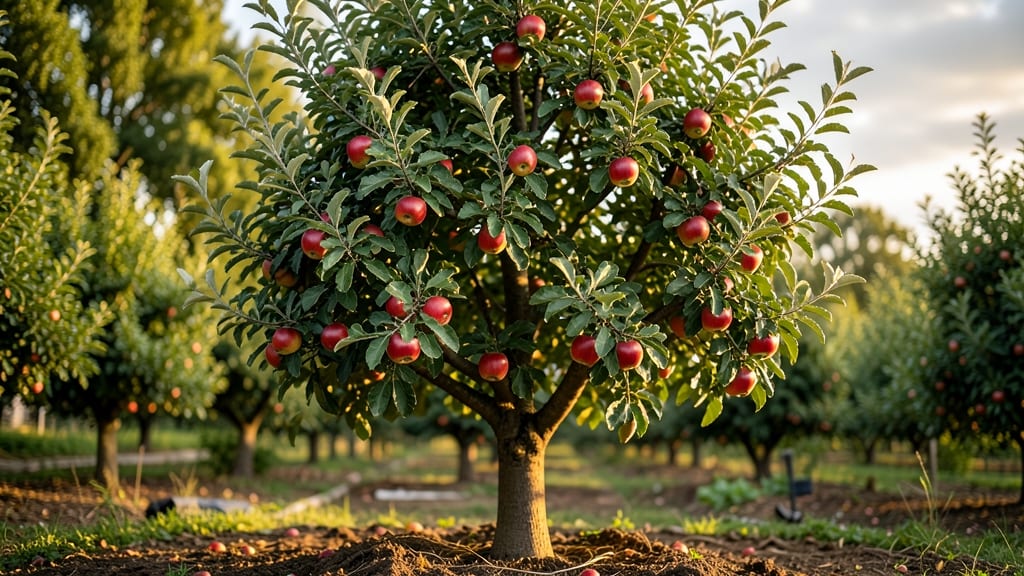
A Fuji apple tree can reach 12-15 feet tall at maturity, but its final height depends on variety, pruning, and climate—so let’s cut through the guesswork. 🌳 I’ve watched mine grow from a sapling to a fruit-bearing giant, and the difference between a well-pruned tree and an unmanaged one is night and day.
Some dwarf varieties stay under 8 feet, while standard trees can stretch toward 20 feet if left unchecked. The secret to controlling height lies in pruning during dormancy—every cut you make now determines how much space that tree will need in five years.
In colder climates, growth slows naturally, while warmer regions may see faster vertical expansion. That’s why I always check my local hardiness zone before planting. With proper care, you’ll end up with a tree that fits your space while still producing hundreds of pounds of fruit each season.
The key is balancing air circulation (for disease prevention) with sunlight exposure (for sweet apples). Even in small yards, a well-trained Fuji can thrive. For those with limited space, consider espalier techniques or dwarf rootstocks—both keep the tree manageable without sacrificing yield.
Just remember: the more you prune, the more your tree will reward you with juicy, crisp apples instead of a tangled mess.
📚 In This Guide
- What you need
- Instructions
- Tips and common mistakes
- Wrapping up and next steps
What you need
- ● Fuji apple tree sapling – Choose a variety based on your climate and desired mature height: Dwarf: 6–10 ft (2–3 m) – Best for containers or small gardens
- ● Semi-dwarf: 12–16 ft (4–5 m) – Ideal for home orchards
- ● Standard: 20+ ft (6+ m) – Needs ample space
- ● Pruning tools: Bypass pruners (sharp, clean)
- ● Loppers (for thicker branches)
- ● Pruning saw (for large limbs)
- ● Gloves – Heavy-duty, cut-resistant (to protect from thorns)
- ● Disinfectant (70% isopropyl alcohol or bleach solution) – For sterilizing tools between cuts
- ○ Pruning sealant (optional but recommended) – To prevent disease entry on large cuts
- ● Well-draining soil mix – Amend with compost (3–4 inches) if native soil is poor
- ● Mulch (wood chips or straw) – 2–3 inches to retain moisture and suppress weeds
- ○ Staking materials (optional) – For young trees in windy areas (T-posts + soft ties)
- ● 🌡️ Timing matters: Plant in early spring or fall for best root establishment.
- ● ✨ Variety check: Fuji trees thrive in USDA Zones 5–8; adjust care for extreme climates.
- ● 🔧 Tool sharpness: Dull blades crush branches—sterilize and sharpen before each use!
Understanding and managing Fuji apple tree height
Here’s how to predict, control, and work with the mature size of your Fuji apple tree—whether you’re planning space or pruning for fruit production.
🌳 Step 1: Identify Your Fuji Variety’s Mature Height Range
Fuji apple trees come in dwarf, semi-dwarf, and standard varieties, each with distinct mature heights. Dwarf varieties typically reach 6-10 feet, semi-dwarfs 10-16 feet, and standard trees 16-25 feet at full maturity. Check your tree’s label or ask your nursery for specifics—this determines your pruning and spacing strategy from day one.
Standard trees need 20+ feet of space between them, while dwarf varieties can thrive in 8x8-foot plots. If you’re planting near a fence or building, opt for a dwarf or semi-dwarf to avoid overgrowth issues. I always measure the mature height against my property layout before buying—trust me, it saves headaches later.
☀️ Step 2: Assess Your Climate’s Impact on Growth Rate
Warmer climates accelerate growth, while cooler regions slow it down. In USDA Zones 5-7, Fuji trees may take 4-6 years to reach half their mature height, while in Zones 8-9, they can grow 2-3 feet annually. Monitor your tree’s growth rate by marking its height on a nearby stake each spring—this helps you adjust pruning timing.
Southern climates also require more aggressive pruning to control height, as Fuji trees naturally grow taller in heat. If your tree starts stretching more than 12 inches per year, it’s time to prune back 1/3 of the new growth in late winter to redirect energy toward fruit production.
✂️ Step 3: Prune Strategically to Control Height
Prune during dormant season (late winter/early spring) to shape the tree while it’s not actively growing. Remove suckers (shoots at the base) immediately—they divert energy from fruit production. For height control, focus on cutting back the central leader (main upward branch) by 1/4 to 1/3 each year.
Use clean, sharp pruners to make cuts just above an outward-facing bud. Avoid topping the tree (cutting flat across the top)—this leads to weak, bushy growth. Instead, aim for an open-center shape that lets light and air reach the center branches, which reduces disease risk.
🪴 Step 4: Choose the Right Support System
Dwarf and semi-dwarf Fuji trees benefit from staking or trellising in their first 2-3 years to train them into a strong, upright structure. Use 4-6-foot stakes driven 6 inches deep on either side of the tree, then tie the trunk loosely with soft tree ties (never wire—it girdles the bark).
For standard trees, consider spreading branches outward with spreader bars during early growth to encourage a wider canopy. This prevents the tree from growing too tall too quickly while still allowing enough sunlight to reach lower branches for fruit production.
⏰ Step 5: Monitor and Adjust Over Time
Check your tree’s height annually in early spring before new growth begins. If it’s exceeding your target height by more than 2 feet, prune back 15-20% of the total height that season. Keep detailed notes—record height, pruning cuts, and fruit yield each year to spot patterns.
Real talk: Fuji trees are vigorous. Even with pruning, some varieties will outgrow expectations. If your tree consistently tops 12 feet in a dwarf variety, consider replacing it with a more compact cultivar like ‘Fuji Evergreen’ or ‘Fuji Mini.’
Tips & tricks for managing Fuji apple tree height
Working with Fuji apple trees requires understanding how variety, climate, and pruning techniques interact to control height—here's how to get it right.
Variety-Specific Planning: When selecting a Fuji variety, consider both mature height and your property layout. Dwarf varieties (6-10 feet) are perfect for small gardens or containers, while semi-dwarfs (10-16 feet) offer a balance between manageable size and fruit production. I always sketch my garden layout to scale before planting—this helps visualize how the mature tree will fit without overcrowding other plants or structures. For urban spaces, consider 'Fuji Evergreen' which stays particularly compact.
Climate-Adaptive Pruning: In warmer climates (Zones 8-9), Fuji trees can grow aggressively—up to 2-3 feet annually. To counteract this, I recommend a two-step approach: first, prune back 1/3 of the new growth in late winter, and second, monitor growth throughout the season. Use a measuring tape to track growth from spring through fall—if you notice more than 12 inches of new growth in a season, it's time for another round of pruning before dormancy. This prevents the tree from becoming unmanageable while maintaining fruit quality.
Support Systems for Young Trees: For dwarf and semi-dwarf varieties, establishing proper support in their first 2-3 years makes all the difference. I've found that using two 4-6 foot stakes on either side of the tree, tied loosely with soft tree ties, creates a stable framework without restricting growth. The key is to adjust the ties as the tree grows—never leave them too tight, as this can girdle the bark. For standard varieties, consider spreader bars during early growth to encourage a wider canopy, which naturally reduces height over time.
Long-Term Height Management: Annual height checks in early spring are non-negotiable. If your tree exceeds its target height by more than 2 feet, prune back 15-20% of the total height during dormancy. I keep a simple garden journal noting each year's height, pruning cuts, and fruit yield—this helps me spot patterns and adjust my approach. Remember, Fuji trees are resilient, but consistent monitoring prevents them from becoming unmanageable. If you're dealing with a particularly vigorous variety, consider replacing it with a more compact cultivar like 'Fuji Mini' after 2-3 years of aggressive growth.
Pro Tips for Fuji Apple Tree Height
- Working with Fuji apple trees requires understanding how variety, climate, and pruning techniques interact to control height—here's how to get it right.
- Variety-Specific Planning: When selecting a Fuji variety, consider both mature height and your property layout.
- Climate-Adaptive Pruning: In warmer climates (Zones 8-9), Fuji trees can grow aggressively—up to 2-3 feet annually.
Frequently asked questions
Got questions about managing your Fuji apple tree’s height? You’re not alone! Here are some of the most common concerns—plus quick answers to keep your orchard thriving.
How tall will a Fuji apple tree grow without pruning?
A standard Fuji apple tree can reach 12–16 feet tall if left unpruned, but dwarf varieties (like those grafted onto M.9 or B.9 rootstock) typically max out at 6–8 feet. Semi-dwarf trees hit 8–10 feet. Pruning early helps control height and improves fruit quality!
At what age should I start pruning a Fuji apple tree for height control?
Begin pruning in the first or second year after planting to establish a strong structure. Focus on removing water sprouts (vertical shoots) and shaping the tree’s scaffold branches. Young trees respond best to light pruning—aim for 20–30% of the canopy per year.
Does climate affect how tall a Fuji apple tree grows?
In warmer climates (like California or the Southeast), Fuji trees may grow taller and faster due to longer growing seasons. In cooler regions (e.g., Pacific Northwest), growth slows, and trees may stay shorter unless pruned aggressively. Always check your local hardiness zone (Fuji thrives in Zones 5–8).
Can I prune a Fuji apple tree to stay under 6 feet?
Yes! Use dwarf rootstock (like M.9) and prune consistently to keep it under 6 feet. Train it as a spindle bush or central leader shape, and prune late winter/early spring (before buds swell). Avoid heavy cuts—focus on selective branch removal to maintain airflow and sunlight.
Why is my Fuji apple tree growing too tall despite pruning?
Overgrowth often signals excess nitrogen, poor pruning technique, or rootstock mismatch. Check your fertilizer (balance N-P-K), ensure you’re pruning at the right time (dormant season), and verify the rootstock type. If needed, thin out dense branches to redirect energy to fruit production.
Are there Fuji apple tree alternatives with better height control?
If height is a major concern, consider columnar Fuji varieties (like ‘Fuji Columnar’), which grow 6–8 feet tall but only 1–2 feet wide. Alternatively, opt for semi-dwarf Fuji on MM.106 rootstock, which stays under 10 feet with minimal pruning. Both are great for small spaces!
Wrapping up and next steps
Understanding the Fuji apple tree height is key to nurturing a thriving orchard—whether you’re planning a backyard grove or managing a commercial plot. From dwarf varieties that stay under 8 feet to standard trees reaching 20+ feet, your climate and pruning habits play a huge role in shaping growth.
With the right care, you’ll not only control size but also boost fruit production and tree health.
Ready to take action? Start by selecting the perfect variety for your space and zone, then roll up your sleeves for regular pruning—your future harvests will thank you! 🌱🍏