
Trees
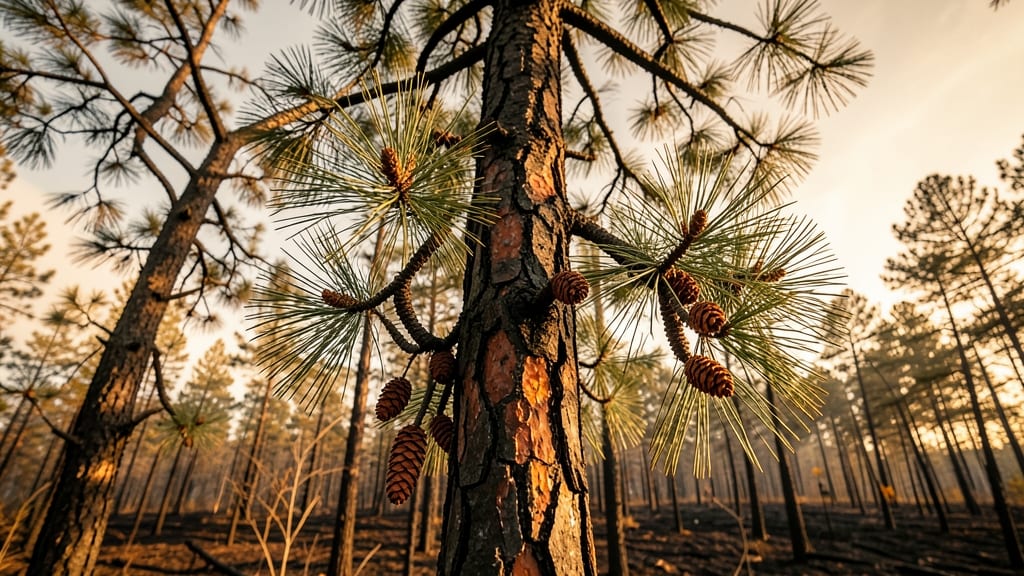
Pine cones come in countless shapes and sizes, each revealing clues about the tree they grow on. Learn to identify these 10 common pine cone tree types by their unique needle shapes and seed characteristics—perfect for gardeners, foresters, and nature enthusiasts.
Eastern White Pine Needle Clusters
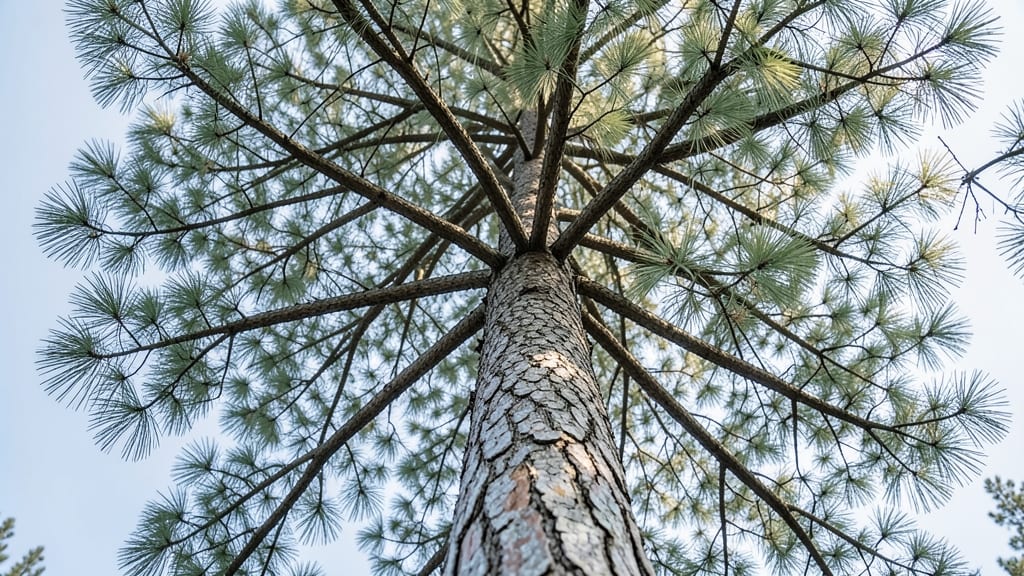
The Eastern White Pine (Pinus strobus) is one of the most recognizable trees in North America, thanks to its signature soft, flexible 5-needle clusters that feel almost silky between your fingers. Unlike other pines, these needles grow in bundles of five, making identification effortless even for beginners.
This adaptable tree thrives in urban landscapes and wildlife habitats alike, tolerating a wide range of soil types and even air pollution. Its golden-brown pine cones with smooth scales add seasonal interest, while the tree itself provides shelter for birds and small mammals. Plant it 20-30 feet apart for a natural, low-maintenance look that matures into a graceful, pyramid-shaped silhouette.
Perfect for city gardens and suburban yards, the Eastern White Pine offers year-round greenery with minimal care—just water deeply during the first growing season to establish strong roots. 🌱
Ponderosa Pine Long Needles and Large Cones
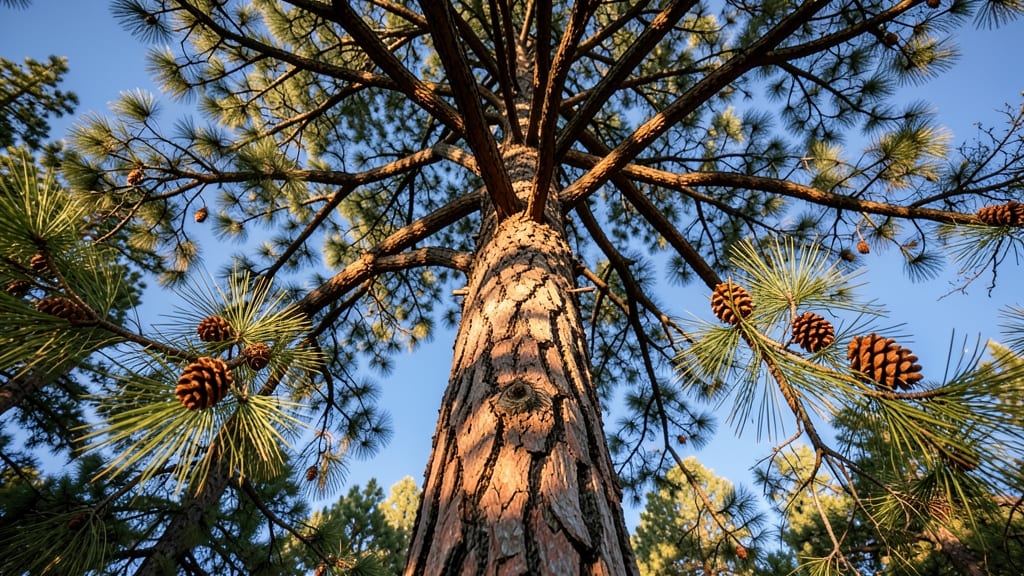
If you’ve ever spotted a towering pine with stiff, 5-needle bundles reaching 12 inches long, you’re likely looking at the Ponderosa Pine (Pinus ponderosa). This iconic Western tree isn’t just striking—its massive, symmetrical cones (up to 20 inches long) and drought-resistant nature make it a standout in arid landscapes.
The long, sharp needles grow in clusters of five, staying attached for 3-7 years, while the cones feature resin blisters that give them a unique texture. Plant this species in full sun with well-draining soil, and watch it thrive in USDA zones 3-8, where it can reach heights of 100+ feet. Its fast growth rate (2-3 feet per year) makes it a favorite for windbreaks and wildlife habitats.
Perfect for gardeners in dry climates or those seeking a low-maintenance, long-lived specimen, the Ponderosa Pine adds grandeur to any landscape. 🌟
Scots Pine Short Needles and Twisted Branches
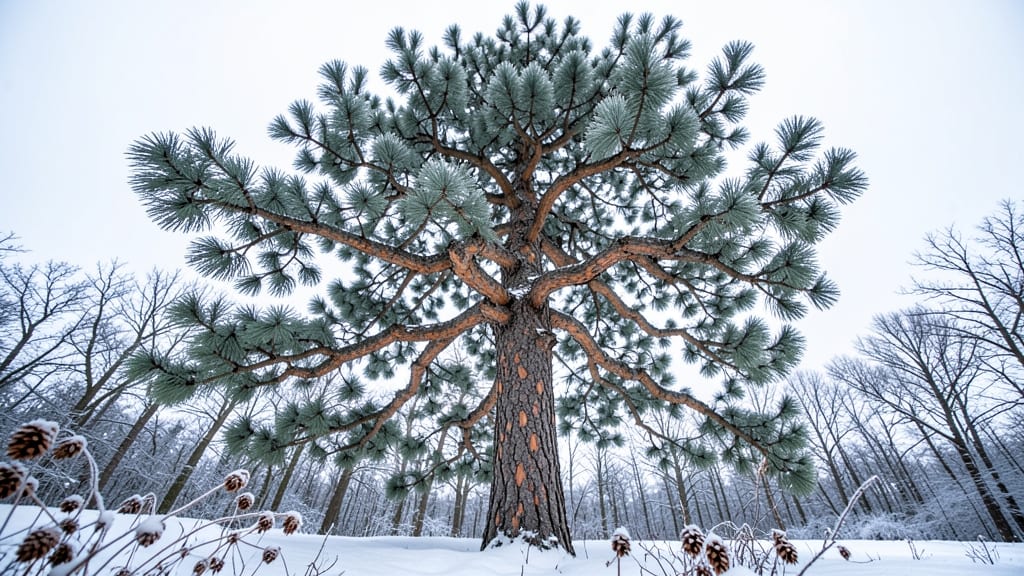
If you're looking for a pine tree that thrives in harsh winters and adds dramatic texture to your garden, the Scots pine (Pinus sylvestris) is your answer. Its signature short, stiff 2-needle clusters and twisted branches create a striking silhouette that stands out in cold climates.
Native to Europe and Asia, this hardy evergreen tolerates USDA zones 3-7, making it perfect for northern gardens. The orange-brown bark and small, twisted cones add seasonal interest, while its dense foliage makes it an excellent windbreak or focal point. Plant it in well-drained soil with full sun for best results.
Landscape designers love Scots pine for its ornamental value, while rural property owners rely on it for erosion control and wildlife habitat. Whether you're restoring a barren landscape or adding structure to a garden, this resilient tree delivers year-round beauty. 🌿
Loblolly Pine Curved Needles and Symmetrical Cones
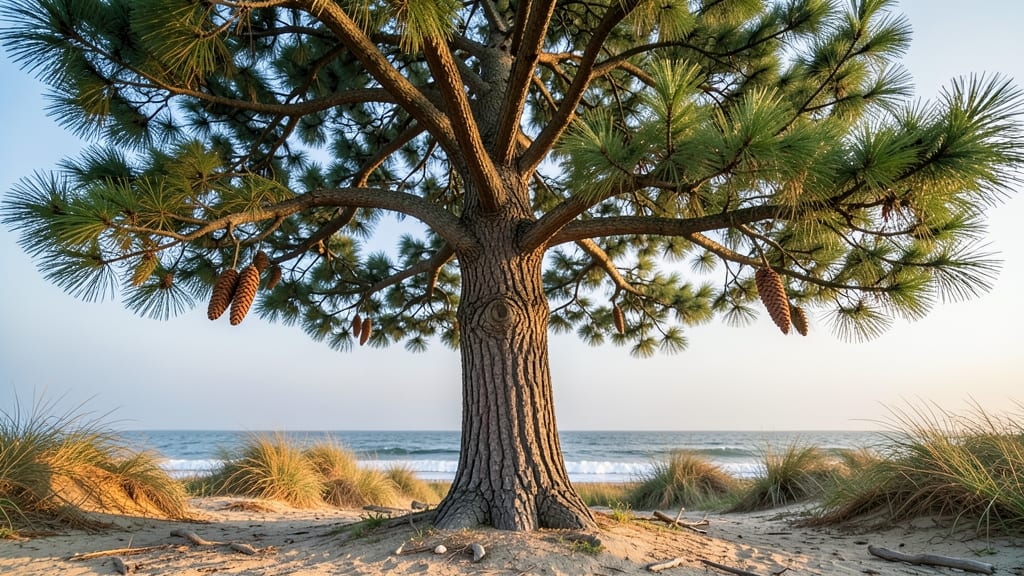
If you're looking for a fast-growing pine tree with coastal resilience, the loblolly pine delivers—its smooth, curved 3-needle bundles and symmetrical cones are unmistakable. This species thrives in sandy soils and salty air, making it a top choice for barrier islands and erosion-prone shorelines.
The symmetrical cones (1.5–3 inches long) release seeds when mature, while the needles grow 6–9 inches long, creating a lush, evergreen canopy. You’ll love its rapid growth rate—up to 2 feet per year under ideal conditions—making it perfect for timber plantations or quick privacy screens.
For gardeners in USDA zones 7–10, this pine offers both beauty and practicality. Plant it near beaches or in large landscapes where its salt tolerance and fast growth shine. 🌱
Jack Pine Small Cones and Serotinous Seeds
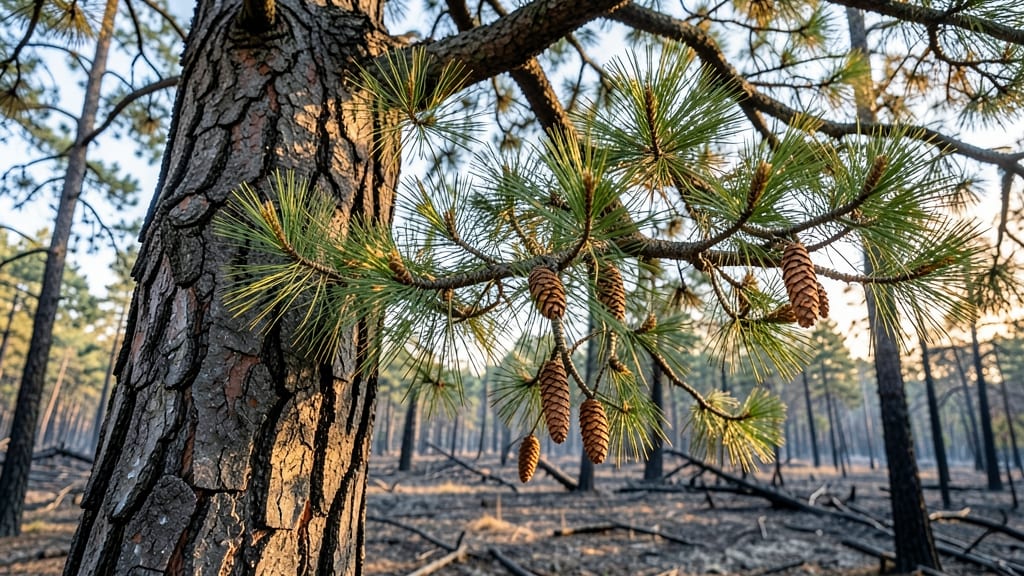
If you’re restoring a burned forest or planting in a fire-prone area, the Jack Pine is your resilient ally. Its 2-needle clusters and serotinous cones (which stay closed until heated by fire) make it uniquely adapted to survive wildfires—releasing seeds only when conditions are right for new growth.
This hardy pine thrives in poor, sandy soils and full sun, with needles that stay green for 15–20 years. The cones’ fire-resistant design ensures the species persists even after flames pass, making it ideal for ecological restoration and wildlife habitats. Its compact size (30–50 feet tall) also suits smaller landscapes.
Perfect for gardeners in dry climates or those aiming to support native ecosystems, the Jack Pine’s survival strategy is a lesson in nature’s ingenuity. 🌟
Red Pine Long Needles and Orange Bark
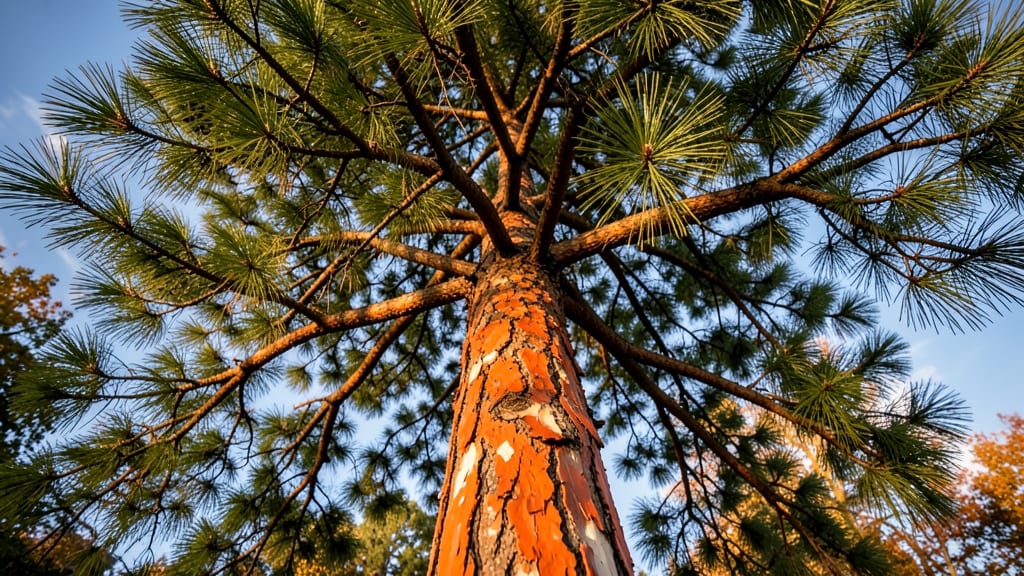
Looking for a pine tree that adds color and texture to your yard? The Red Pine (Pinus resinosa) stands out with its bright orange bark and long, stiff 5-needle clusters—a striking contrast against evergreen foliage.
Native to the northern U.S. and Canada, this tree thrives in full sun and well-drained soil, making it ideal for landscape focal points or Christmas tree farms. Its needles grow 5–8 inches long, while small, brownish cones (2–3 inches) add seasonal interest. The orange bark deepens with age, creating a warm, rustic look perfect for winter gardens.
Landscape designers and homeowners love this tree for its year-round beauty and low-maintenance nature. It’s especially prized in colder climates where its hardiness shines. 🌟
Virginia Pine Twisted Needles and Small Cones
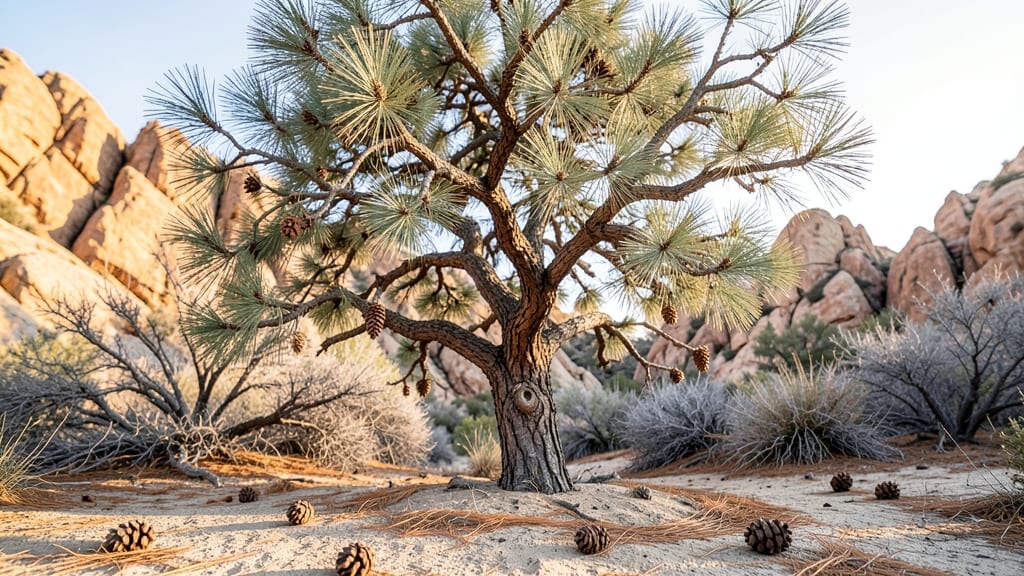
If you're looking for a pine tree that thrives where others fail, the Virginia pine (Pinus virginiana) is your answer. Its twisted 2-needle clusters and tiny cones make it stand out, but its real superpower is its ability to grow in poor, sandy, or rocky soils where many plants struggle.
Native to the southeastern U.S., this drought-tolerant tree reaches heights of 40-60 feet and spreads 15-25 feet wide, making it perfect for erosion control on slopes or disturbed sites. The needles are short (2-4 inches) and stiff, while the cones are small (1-2 inches long) and often persist on the branches for years. It’s also a favorite of wildlife, providing food and shelter for birds and squirrels.
For gardeners dealing with challenging soils or looking to restore degraded land, the Virginia pine is a low-maintenance champion. Its ability to stabilize soil and thrive in harsh conditions makes it a standout choice for both practical and ornamental landscapes. 🌱
Coulter Pine Massive Needles and Giant Cones
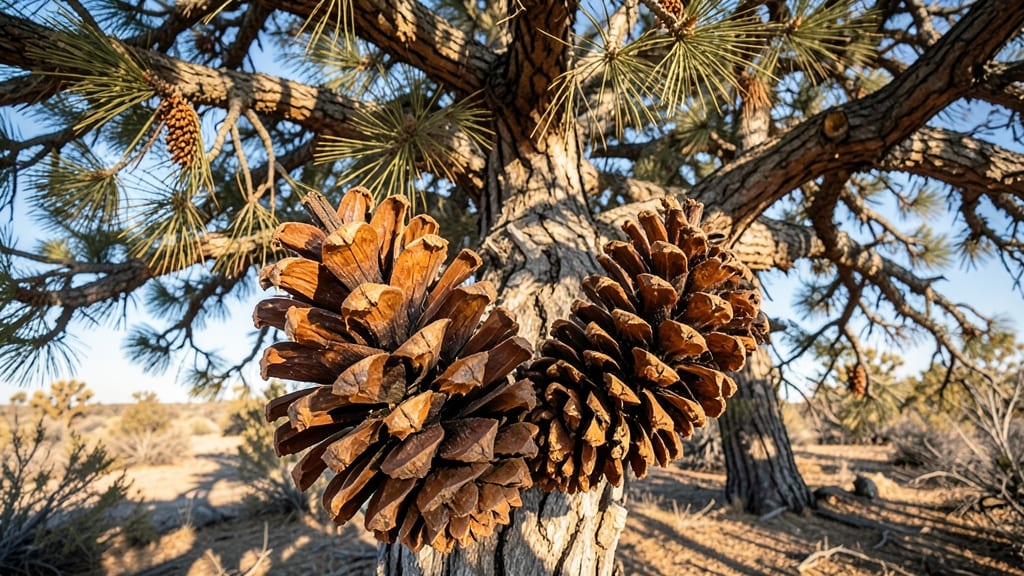
If you’ve ever spotted a pine cone the size of a dinner plate, chances are you’ve encountered the Coulter Pine (Pinus coulteri). This desert giant produces 3-needle bundles that are thicker than most pines, paired with cones that can reach 12 inches long—making them the largest of any pine species.
The thick, rigid needles (up to 18 inches long) and scaly bark help it survive arid conditions with minimal water. Native to California and Mexico’s deserts, it thrives in well-drained soils and full sun, though it grows slowly—ideal for gardeners with patience and space. The massive cones take two years to mature and release seeds, a spectacle worth waiting for.
Perfect for drought-tolerant landscapes or as a focal point in large gardens, the Coulter Pine adds drama where few other trees can. 🌟
Bristlecone Pine Tiny Needles and Ancient Growth
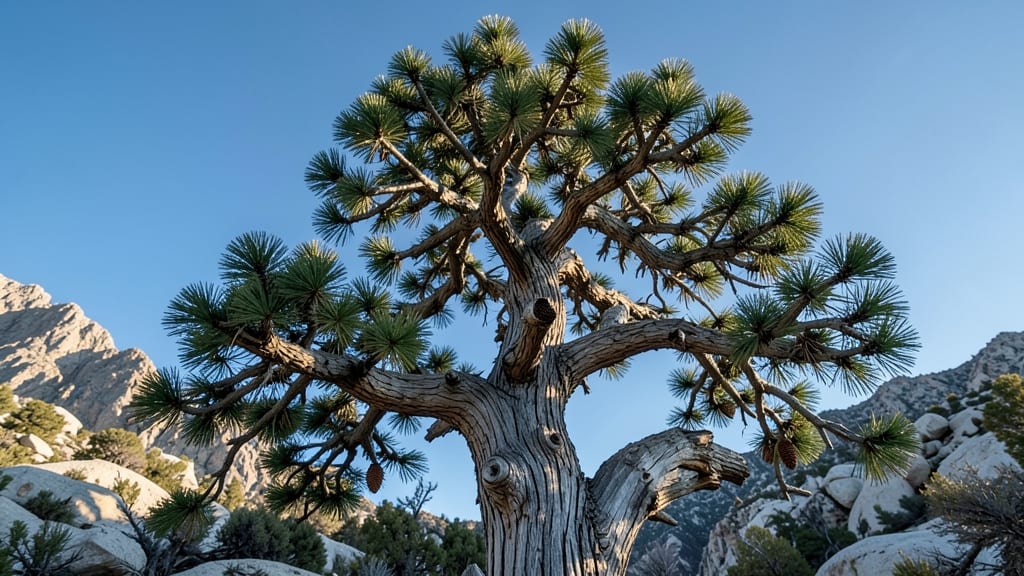
Imagine a tree that outlives entire civilizations—bristlecone pines are the oldest living organisms on Earth, with some exceeding 5,000 years old. Their tiny, dense 5-needle clusters and gnarled trunks are nature’s ultimate survivors, thriving in harsh, high-altitude deserts where few plants dare to grow.
These ancient giants grow in USDA zones 3-7, preferring rocky, well-drained soils with full sun exposure. Their slow growth (just 1-2 inches per year) makes them ideal for drought-prone landscapes, requiring minimal water once established. The small, woody cones (1-2 inches long) release seeds only after fires, ensuring new generations in disturbed ecosystems.
Perfect for gardeners seeking low-maintenance, climate-resilient trees, bristlecone pines add dramatic texture and historical intrigue to arid gardens. Their resilience makes them a living testament to nature’s endurance. 🌟
Pitch Pine Twisted Needles and Fire-Resistant Cones

If you're restoring a burned forest or pine barrens, the Pitch Pine (Pinus rigida) is your secret weapon. Its curved 3-needle clusters and serotinous cones are nature’s fireproofing—staying closed until exposed to heat, then releasing seeds to regenerate scorched landscapes.
Native to the eastern U.S., this tree thrives in poor, sandy soils and full sun, making it perfect for coastal dunes and degraded sites. The twisted needles (3-5 inches long) add texture, while its fire-resistant bark protects against wildfires. Plant it in USDA zones 4-8 for a resilient, low-maintenance conifer.
Ecologists and home gardeners alike love Pitch Pine for its adaptability—it’s the go-to choice for restoration projects where other trees struggle. Plus, its cones add winter interest to your garden. 🌟