
Container Gardens
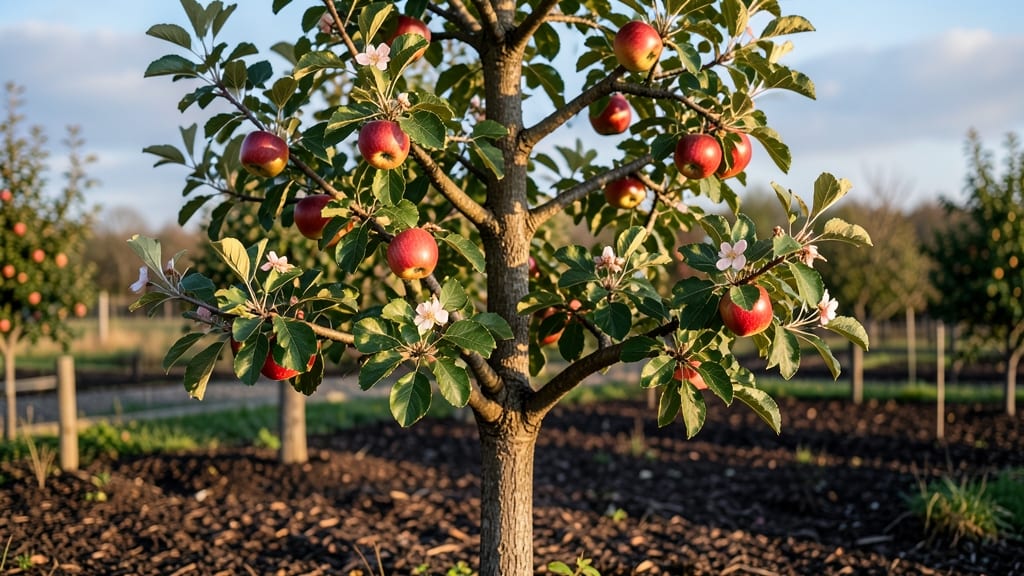
Gala apple trees grow best in USDA Hardiness Zones 4 through 8, where they endure winters down to -30°F (-34°C) while benefiting from warm summers that support fruit maturation. Choosing the right zone maximizes both tree survival and harvest quality.
Gala apples need cold winters to trigger dormancy and warm summers to ripen fruit, making Zones 4-8 ideal. 🌱 In colder areas like Zone 4, trees enter dormancy reliably, while Zone 8's milder winters prevent winter burn. Microclimates—like south-facing slopes—can extend suitability by 1-2 zones in marginal areas.
For optimal growth, plant in well-draining soil with full sun exposure (6+ hours daily). In Zone 4, use thick mulch to protect roots, while Zone 8 may require afternoon shade to prevent heat stress. Regular pruning in late winter (before buds swell) promotes airflow and fruit production.
💡 In This Article
- Understanding Gala Apple Tree Cold Tolerance by USDA Zone
- Best Planting Practices for Gala Apples by Climate Region
Understanding Gala apple tree cold tolerance by USDA Zone
Gala apple trees rely on winter chilling—a biological process where cold temperatures (32-45°F) trigger dormancy and flower bud formation. In Zone 4, trees experience 1,200-1,500 chilling hours annually, which is perfect for breaking dormancy in spring.
However, if winters stay above 45°F for extended periods (like in Zone 8), buds may swell prematurely, leading to frost damage when temperatures drop unexpectedly. 🌡️
The key mechanism is how cold stress hardens the tree's cells. At -20°F (-29°C), Gala apples enter deep dormancy, but prolonged exposure below -30°F (-34°C) risks trunk damage.
Zone 5-7 trees handle 500-800 hours of chilling, while Zone 8's milder winters (300-500 hours) may require selecting cold-hardy rootstocks like M.9 or B.9 to compensate. The tree's cambium layer (growth tissue) also thickens in colder zones, providing natural insulation.
Summer heat plays a critical role too. Zones 7-8 need 1,500+ growing degree days (GDD) (above 50°F) for fruit to mature fully. In Zone 4, shorter summers (1,200-1,400 GDD) may result in smaller apples unless you choose early-maturing Gala varieties.
Heat stress above 90°F can cause sunburn on fruit, particularly in Zone 8's intense summers. 🍏
Microclimates can shift a tree's effective zone by 1-2 degrees. A south-facing slope in Zone 5 might mimic Zone 6 conditions, while a frost pocket in Zone 6 could behave like Zone 4.
Wind exposure also matters—trees in Zone 4 need windbreaks to prevent winter desiccation, while Zone 8 trees may suffer from afternoon sunburn without shade. These nuances explain why some growers in marginal zones succeed while others struggle.
Consider these zone-specific survival thresholds:
- Zone 4: -30°F (-34°C) tolerance with 1,200+ chilling hours
- Zone 5-6: -20°F (-29°C) tolerance, 800-1,000 chilling hours
- Zone 7-8: -10°F (-23°C) tolerance, 500-800 chilling hours
What most people overlook is how spring frost timing affects fruit set. In Zone 4, late frosts after bud swell can devastate blossoms, while Zone 8 may face inconsistent pollination due to mild winters.
Choosing the right zone isn't just about winter survival—it's about aligning the tree's biological clock with your local climate patterns. ✨