
Pruning
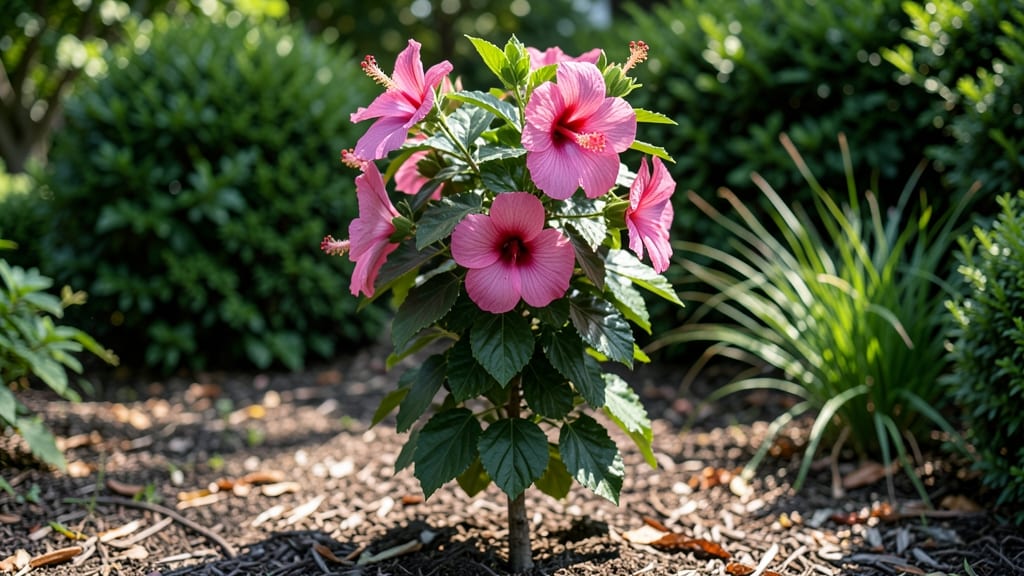
The ideal hibiscus tree temperature range spans 60°F to 90°F during the day and 50°F at night, thriving in USDA zones 4-11. Hardy varieties endure brief dips to 25°F, while tropical types need consistent warmth above freezing.
The hibiscus tree's temperature tolerance varies dramatically between hardy and tropical varieties, which explains why some survive winter in zone 5 while others bolt at the first frost. 🌡️ Hardy hibiscus (like Hibiscus moscheutos) can handle colder snaps by entering dormancy, while tropical hibiscus (such as Hibiscus rosa-sinensis) shut down completely below 32°F.
This difference stems from their native climates—hardy types evolved in temperate regions where winter dormancy is natural, while tropical hibiscus need near-constant warmth to thrive.
For gardeners in marginal zones, understanding these distinctions is key to survival. A thick layer of mulch (4-6 inches) around the base insulates roots, while wrapping the trunk with burlap or frost cloth creates a microclimate that can raise temperatures by 5-10°F.
Container-grown hibiscus offer another advantage—they can be moved indoors during cold snaps, though they'll need bright light to prevent bud drop.
💡 In This Article
- Hibiscus Tree Cold Hardiness by Variety and USDA Zone
- Protecting Hibiscus Trees in Cold Climates: Winter Care Guide
Hibiscus tree cold hardiness by variety and USDA zone
The key difference between hardy and tropical hibiscus lies in their cellular response to cold. Hardy hibiscus (like Hibiscus moscheutos) activate antifreeze proteins that prevent ice crystal formation in their cells, allowing them to survive brief exposures to 25°F.
These proteins bind to water molecules, lowering the freezing point by 3-5°F—similar to how salt melts ice on roads. Tropical varieties lack these proteins, making them vulnerable even to light frosts.
USDA zone compatibility breaks down this way: Hardy hibiscus thrive in zones 4-9, where winter dormancy becomes their survival strategy. Their roots insulate the plant, maintaining soil temperatures above freezing even when air dips below.
In contrast, tropical hibiscus (like Hibiscus rosa-sinensis) only survive in zones 10-11, where nighttime temperatures rarely fall below 50°F. The critical threshold is 32°F—below this, their cell membranes rupture from ice formation.
What most gardeners don't realize is how moisture retention factors in. Hardy hibiscus store water in their swollen roots during summer, using this reserve to maintain cellular turgor pressure during winter.
Tropical types lack this adaptation, so even a 2-day frost can cause irreversible damage. The science here mirrors how succulents survive drought—hardy hibiscus essentially "drought-proof" themselves for winter.
Temperature shifts matter too. Hardy hibiscus need gradual cooling to trigger dormancy—sudden drops below 40°F can shock them into early dormancy, stunting spring regrowth. Tropical types, meanwhile, show stress symptoms (yellowing leaves, bud drop) at 55°F, signaling they're pushing their limits.
This explains why zone 9-10 gardeners often see tropical hibiscus struggle despite daytime warmth.
Consider these variety-specific examples:
- Hardy hibiscus: Hibiscus syriacus (Rose of Sharon) survives 10°F with proper protection, while Hibiscus moscheutos (Swamp Hibiscus) handles 20°F naturally
- Tropical hibiscus: Hibiscus rosa-sinensis shows damage at 30°F, while Hibiscus pernambucensis (Scarlet Hibiscus) tops out at 35°F
For gardeners in transition zones (like zone 8-9), this means choosing varieties with proven cold tolerance. Hibiscus coccineus (Scarlet Hibiscus) often survives 15°F with mulch, while Hibiscus rosa-sinensis varieties like 'Lady Stanley' might push to 28°F with protection.
The bottom line: hardiness isn't absolute—it's about matching the right variety to your climate's coldest extremes.