
How To
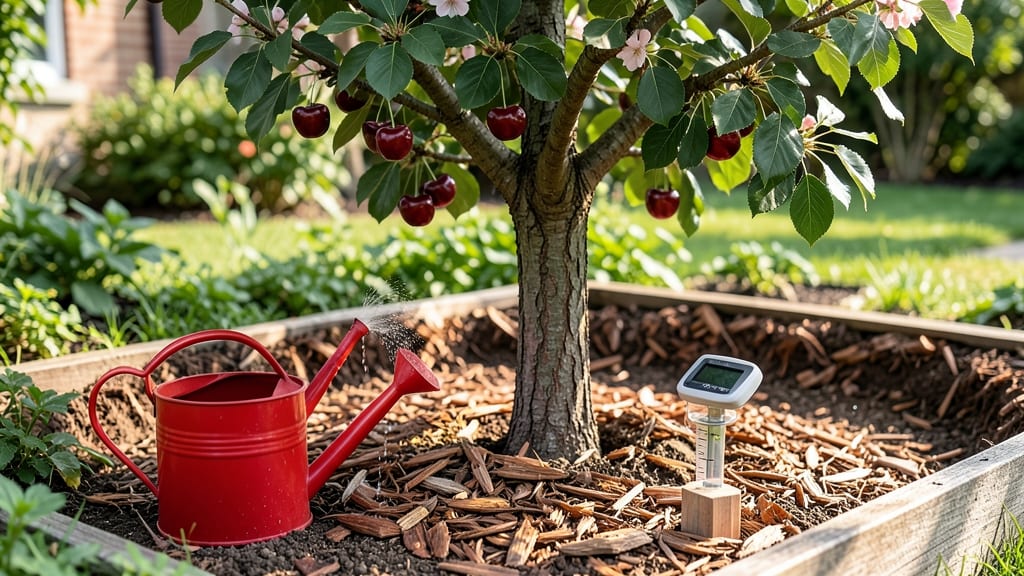
A cherry tree 🍒 needs 15-20 gallons of water every 7-10 days during its first year, but that number changes dramatically as it matures and the seasons shift.
Watering your cherry tree correctly can mean the difference between a bountiful harvest and a struggling plant—yet many gardeners overlook the subtle seasonal and age-based variations in water needs.
Young saplings soak up moisture like sponges, while mature trees develop deep roots that access water further underground. Summer’s heat demands daily checks for soil dryness, while winter’s dormancy means you can cut back to once a month.
Below, I’ll break down exactly how much water your 🍒 cherry tree needs by age, season, and soil type—plus how to spot the telltale signs of overwatering or drought stress before it’s too late.
Cherry tree water requirements by age: newly planted vs. mature trees
Watering a cherry tree isn't a one-size-fits-all task—its needs change dramatically as it grows. A newly planted sapling (0-3 years) requires frequent, shallow watering to encourage root spread, while a mature tree (8+ years) can withstand longer dry periods once established.
Understanding these stages helps prevent root rot or drought stress, both of which can kill your tree.
The key difference lies in root development. Young trees have shallow roots that dry out quickly, while mature trees develop deep taproots that access water from lower soil layers. Even experienced gardeners often overwater young trees or underwater mature ones—both mistakes lead to poor fruit production or tree decline.
Let’s break down the watering schedule for each stage, including how much water your cherry tree needs and when to adjust based on seasonal demands and soil conditions. This comparison will help you tailor your watering routine for optimal growth and harvest.
For newly planted cherry trees, the first year is critical. Their roots are delicate and spread slowly, so I recommend watering deeply 2-3 times per week during the growing season (April-August).
Use a soaker hose or drip irrigation to deliver water slowly, ensuring it penetrates 12 inches deep. Shallow watering encourages roots to stay near the surface, making them vulnerable to drought.
In their juvenile stage (4-7 years), cherry trees develop deeper roots but still need consistent moisture. Shift to weekly deep watering in summer, reducing to bi-weekly in fall. Monitor soil moisture by sticking your finger 3-4 inches deep—if it’s dry, water again.
Avoid wetting the leaves to prevent fungal diseases like cherry leaf spot, which thrives in damp conditions.
Once your tree reaches maturity (8+ years), its water needs shift dramatically. With a deep taproot system, mature trees can survive longer dry spells, but they still require 20-30 gallons of water every 10-14 days during peak growth (June-July).
In drought-prone areas, increase frequency to weekly. Always water at the base of the tree, not the canopy, to protect the trunk from rot.
One common mistake I see is overwatering mature trees in the belief they need more. Too much water suffocates roots and invites pests. Instead, focus on deep, infrequent watering to mimic natural rainfall.
Use a moisture meter to check soil conditions—aim for 60-70% moisture in the root zone during dry spells.
Seasonal adjustments are just as important as age-based changes. In spring, increase watering as new leaves emerge to support growth. During summer, prioritize morning watering to reduce evaporation.
In fall, taper off to prepare the tree for dormancy, and in winter, minimal watering is enough unless you’re in a frost-free zone.
Pro tip: Mulch around your cherry tree with wood chips or straw to retain moisture and regulate soil temperature. Keep mulch 3-4 inches deep and 6 inches away from the trunk to prevent rot.
This simple step can reduce your watering needs by up to 30% while protecting roots from extreme temperatures.
If you’re unsure whether your cherry tree is getting enough water, look for visual cues. Wilting leaves, yellowing foliage, or premature fruit drop signal underwatering, while mushy bark or fungal growth at the base indicate overwatering. Adjust your routine based on these signs and your tree’s age.
By tailoring your watering schedule to your cherry tree’s age and root development, you’ll promote healthier growth, better fruit production, and a longer lifespan for your tree.
Start with these guidelines, then fine-tune based on your local climate and soil type—your cherry tree will thank you with vibrant blooms and sweet harvests! 🍒💧
Seasonal watering guide for cherry trees: what to adjust each month
Your cherry tree's water needs change dramatically with the seasons, so a one-size-fits-all approach won't work. Spring brings root flush needs, summer demands peak hydration, and winter requires minimal care.
Even climate differences between arid and humid regions create unique challenges. Let's break down exactly how to adjust your watering routine month by month to keep your tree thriving.
Understanding these seasonal shifts helps prevent common issues like root rot from overwatering in spring or fruit drop from drought stress in summer. For example, a 3-year-old sapling needs 15 gallons weekly in summer, while a mature 20-foot tree might only require 25 gallons every 10 days.
The key is matching water volume to both the tree's age and current environmental demands.
🌱 Seasonal Watering Summary for Cherry Trees
Let's start with spring watering, which is all about establishing strong roots. After planting, give your newly planted cherry tree a deep soak weekly for the first month to encourage root spread.
In arid climates, this might mean 15-20 gallons per watering, while humid regions can stretch this to every 10 days. The goal is to saturate the soil 12-18 inches deep—use a soil probe to check.
When summer arrives, your cherry tree's fruit development becomes the priority. This is when you'll need to water most frequently—every 5-7 days in dry areas and every 7-10 days in humid zones. The key is morning watering between 6-9 AM to prevent fungal diseases.
A good rule of thumb is to provide 1-2 inches of water per week, delivered in deep, infrequent sessions rather than light daily sprinkles.
As fall approaches and harvest season winds down, gradually reduce your watering frequency to every 10-14 days. This helps prepare the tree for dormancy while still maintaining soil moisture for root carbohydrate storage.
In arid regions, a deep watering every 2 weeks works well, while humid climates may only need water every 3 weeks. Stop fertilizing by late summer to avoid encouraging new growth before winter.
Winter care is about minimal intervention. Most cherry trees enter dormancy by late fall, so reduce watering to monthly deep soaks in arid areas or every 4-6 weeks in humid climates. The exception is newly planted trees, which still need some moisture to establish roots.
Avoid watering if the ground is frozen, as wet soil can lead to root rot during cold snaps. A 3-inch layer of mulch helps insulate roots and retain moisture.
Pro tip: Install a rain gauge near your tree to track natural precipitation. If you've had 1 inch of rain in a week, you can skip your scheduled watering.
Also, watch for leaf color changes—yellowing leaves may indicate overwatering, while wilting foliage signals drought stress. Adjust your schedule accordingly to keep your cherry tree healthy year-round. 🌳