
How To
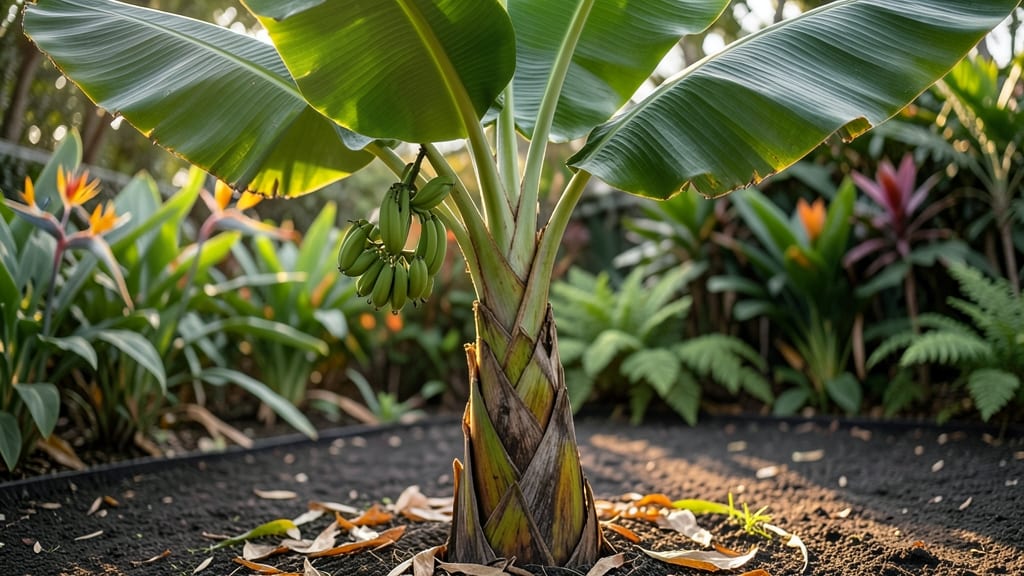
Growing a banana tree 🍌 can turn your garden into a tropical paradise—but how tall will it really get? The answer depends on the variety, your climate, and the care you provide, with heights ranging from compact 3-foot dwarfs to towering 30-foot giants.
Picture this: a banana tree reaching higher than your garage door, its broad leaves rustling in the breeze, or a petite variety thriving in a large pot on your patio.
The truth is, banana trees grow taller than most homeowners expect, but their size is far from random—it’s all about the right conditions and variety.
In this guide, we’ll break down exactly how tall different banana tree varieties grow, from the dwarf Cavendish (perfect for small spaces) to the Musa acuminata (a true giant). You’ll also learn how climate, soil, and care can either boost growth or keep your banana tree at a manageable height.
Whether you’re dreaming of a backyard jungle or just want a few bananas for your breakfast, we’ll cover everything you need to know to grow a banana tree that fits your space—and your goals.

Banana tree height by variety: from dwarf to giant species
Banana trees are famous for their impressive height, but did you know some varieties stay as short as a small shrub while others tower like skyscrapers? The height of a banana tree depends entirely on its variety and growing conditions.
Whether you're dreaming of a backyard harvest or a balcony-friendly dwarf, understanding these differences is key to choosing the right plant for your space.
From the dwarf Cavendish that fits on a patio to the Musa acuminata reaching heights of a two-story building, banana trees offer a stunning range of sizes.
The climate zone and care practices you provide will also influence how tall your banana tree grows, but the variety is the most critical factor in determining its mature height.
| Variety | Mature Height | Growth Rate | Best For |
|---|---|---|---|
| Dwarf Cavendish | 3-6 ft | Slow to Moderate | Containers, Small Gardens |
| Lady Finger (Dwarf Red) | 6-10 ft | Moderate | Balconies, Urban Gardens |
| Ice Cream Banana | 8-12 ft | Fast | Edible Flowers, Small Yields |
| Grand Nain (Dessert Banana) | 12-18 ft | Moderate | Home Gardens, Large Containers |
| Musa acuminata (Wild Banana) | 20-30 ft | Very Fast | Tropical Climates, Large Yields |
| Musa balbisiana (Plantain) | 15-25 ft | Fast | Subtropical Regions, Cooking |
The dwarf varieties like the Cavendish and Lady Finger are perfect for gardeners with limited space. These compact banana trees typically reach 3-10 feet tall, making them ideal for containers or small yards.
They produce smaller bunches of fruit but are easier to manage and harvest. If you're growing in USDA zones 9-11, these varieties thrive with minimal winter protection.
For those with more space, dessert banana varieties like the Grand Nain can grow 12-18 feet tall. These taller banana trees produce the sweet, creamy bananas we know from grocery stores. They require more room but reward you with larger fruit yields.
In tropical climates, they grow even taller, sometimes exceeding 20 feet, while in cooler subtropical zones, their growth may be slightly stunted.
At the extreme end of the spectrum, wild banana species like Musa acuminata can reach 30 feet or more. These giant banana trees are not typically grown for fruit in home gardens but are prized for their ornamental value and rapid growth.
They thrive in USDA zones 10-12 and need ample space, as their massive leaves and tall pseudostems can dominate a landscape.
Even within the same variety, the height of a banana tree can vary based on growing conditions.
For example, a Lady Finger banana might only reach 6 feet in a container with limited nutrients, but in rich, well-draining soil with plenty of water, it could grow 10 feet or taller.
Similarly, Musa balbisiana, often used for plantains, may stay shorter in cooler climates but grow significantly taller in warm, humid environments.
If you're growing banana trees in containers, expect
Climate zones that affect banana tree growth height
Banana trees thrive in warm climates, but their growth height can vary dramatically depending on your USDA zone. In tropical Zone 11-12, these plants grow 20-30 feet tall with minimal care.
However, in Zone 9b or cooler, their height may be stunted to 10-15 feet due to seasonal stress. Understanding your climate's impact helps you choose the right banana variety and adjust care practices accordingly.
Temperature, humidity, and frost exposure are the three key factors influencing banana tree height. Tropical zones provide ideal conditions with consistent warmth (75-85°F) and high humidity, allowing bananas to reach their full potential.
Subtropical zones (Zone 9-10) still support growth but may see reduced height during cooler months. Meanwhile, temperate zones (Zone 6-8) often result in dwarfed growth unless you use containers for overwintering.
In USDA Zone 11-12, banana trees grow unrestricted due to year-round warmth. Varieties like 'Musa acuminata' can reach 30 feet tall with proper care. However, in Zone 9-10, growth slows during winter months, often resulting in 12-20 feet mature height.
For example, a 'Dwarf Cavendish' in Zone 10 may only reach 8-10 feet compared to 12 feet in Zone 11.
Frost is the biggest enemy of banana tree height. Even a single light frost (28°F) can kill the leaves, forcing the plant to regrow from the base. In Zone 6-8, banana trees often grow as perennials in containers, where you can move them indoors during winter.
Without this protection, their height may never exceed 8-10 feet. In my own Zone 7 garden, I’ve seen 'Red Dacca' bananas grow to 12 feet in summer but shrink to 6 feet after winter.
Humidity also plays a role in height. Banana trees in high-humidity zones (e.g., Florida, Hawaii) grow taller because they don’t expend energy fighting transpiration stress. In dry climates (e.g., Arizona, California), their height may be 20-30% shorter unless you provide daily watering and shade cloth.
For instance, a 'Ice Cream' banana in Zone 10 with low humidity might only reach 15 feet instead of the expected 20 feet.
To maximize height in cooler zones, choose cold-hardy varieties like 'Bluggoe' or 'Red Dacca', which tolerate brief cold snaps. In Zone 6-8, grow bananas in large containers (20+ gallons) and move them to a garage or greenhouse when temperatures drop below 50°F.
With these adjustments, you can still achieve 10-15 feet of growth, even in non-tropical climates.