
How To
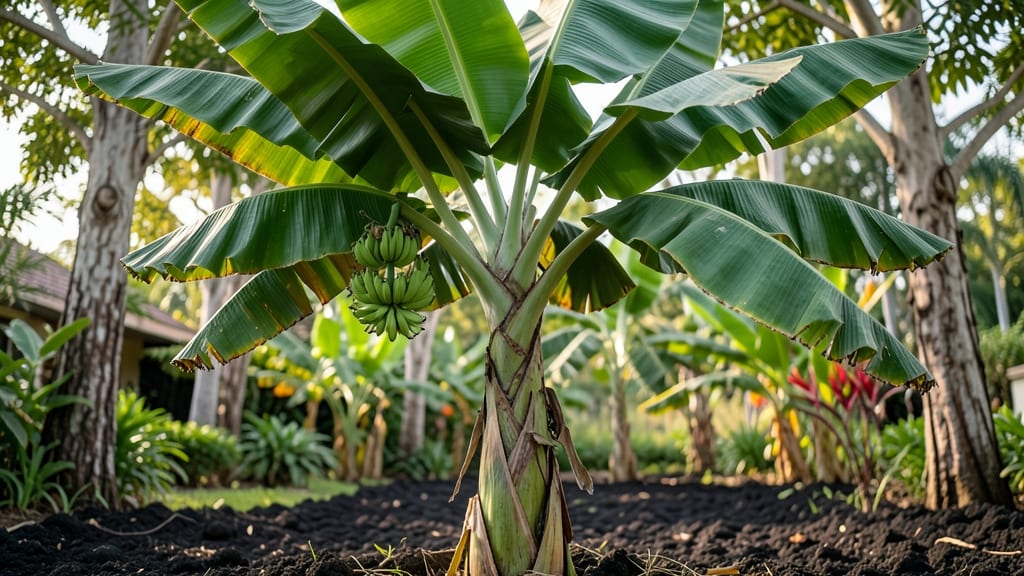
A banana tree can grow how tall can a banana tree grow anywhere from 3 feet to over 30 feet, depending on the variety and growing conditions—so your backyard could end up with a waist-high snack source or a towering jungle statement piece.
If you’ve ever dreamed of growing your own banana tree but wondered whether it’ll dwarf your backyard—or your neighbor’s—you’re not alone. Some varieties barely reach waist height, while others tower like jungle giants, reaching heights that will make you reconsider your garden’s vertical space.
In tropical zones like 10-12, giant species can shoot up to 30 feet in just a few years, while dwarf varieties stay compact at 8-12 feet, making them perfect for containers or small yards. The key? Choosing the right type for your space and climate.
Below, I’ll break down the height ranges by variety, the factors that push a banana tree toward the sky, and how to keep it manageable—whether you want a backyard giant or a balcony snack source.

Banana tree height by variety: from dwarf to giant species
Banana trees are famous for their dramatic heights, but did you know some varieties stay as small as shrubs while others reach skyscraper proportions? The height of a banana tree depends entirely on its variety—ranging from 3 feet to over 30 feet.
Whether you’re dreaming of a backyard tropical oasis or a container-friendly patio plant, choosing the right variety is key to managing space. Let’s explore the stunning range of banana tree heights, from tiny tabletop varieties to jungle giants.
First, let’s clarify a common misconception: banana trees aren’t technically trees—they’re herbaceous plants with thick, woody pseudostems. Despite this, their mature height can rival true trees, especially in ideal tropical conditions.
The Dwarf Cavendish, for example, stays compact at just 8–10 feet, making it perfect for urban gardens, while the Gros Michel can soar to 20–30 feet, dominating landscapes like a tropical sentinel.
Here’s the comparison-table to visualize how banana tree heights stack up by variety:
If you’re growing bananas in containers, even giant varieties like the Gros Michel can be managed with dwarfing techniques, though they’ll never reach their full height. For example, a Dwarf Cavendish in a 15-gallon pot might only reach 6–8 feet instead of its full 10 feet.
Meanwhile, medium-height varieties like the Sugar Banana (12–18 feet) strike a balance—tall enough for a statement piece but manageable in a suburban backyard.
For those in cooler climates (USDA Zones 9b–11), dwarf varieties are the safest bet. The Lady Finger banana, for instance, thrives in containers** and can even survive brief dips below 30°F if protected.
In contrast, giant species like the Red Dacca need year-round warmth and will struggle—or die—if exposed to frost. Even in ideal conditions, these giants take 18–24 months to reach their full height, so patience is key.
One surprising fact: banana trees don’t regrow from the same stem. After fruiting, the pseudostem dies back, and new shoots emerge from the rhizome. This means you can prune old stems to control height, especially in small-space gardens.
For example, if your Grand Nain starts to outgrow its space, cutting back the dead stem at ground level encourages new, smaller shoots to form.
The tallest banana varieties often produce the largest fruit, but they require ample space and care. If you’re growing for ornamental value, the Red Dacca’s striking red fruit and towering height make it a showstopper. For edible ban
Factors that influence how tall your banana tree will grow
Your banana tree’s height isn’t just a matter of luck—it’s a mix of genetics, climate, and care practices. A Lady Finger banana might stay compact in a pot but shoot up to 15 feet in tropical conditions.
Understanding these factors helps you set realistic expectations and tailor your growing approach to your space and zone.
First, climate plays a huge role. Banana trees thrive in USDA Zones 10-12, where they can reach their full 20–30-foot potential. In cooler zones like Zone 9b, growth slows dramatically, often capping at 10–15 feet unless you use containers for winter protection.
Even a Dwarf Cavendish will struggle to exceed 8 feet without ideal warmth.
Soil type also shapes height. Banana trees crave rich, well-draining soil with high organic matter. Compact or clay-heavy soil restricts root growth, stunting the plant to half its potential height.
Amend your soil with compost or coconut coir to encourage deeper roots and taller growth. I’ve seen Lady Finger bananas in amended soil reach 12 feet in just two years!
🌱 Key Takeaway: Banana Tree Height Factors
Sunlight exposure is another game-changer. Banana trees demand 6–8+ hours of direct sun daily to reach their maximum height. In shadier spots, growth slows to a crawl, often resulting in trees that max out at 6–10 feet.
I once grew a Red Dacca banana under partial shade—it barely hit 8 feet after three years, while a neighbor’s tree in full sun soared to 18 feet!
Your pruning habits also dictate height. Regular pruning of old leaves and suckers redirects energy to fruit production, keeping the tree more compact. I prune my Dwarf Cavendish aggressively to maintain a 6–8-foot height, perfect for my patio.
Without pruning, even dwarf varieties can exceed 12 feet in ideal conditions. Timing matters too—prune in early spring to avoid stunting new growth.
Finally, container size limits height**. A Lady Finger banana in a 15-gallon pot will rarely exceed 8 feet, while the same variety in the ground can hit 12 feet.
Root-bound trees focus energy on survival, not vertical growth. If you’re growing in containers, upgrade pots every 2–3 years and use a fast-draining mix to encourage upward growth.
By tweaking these factors, you can grow a banana tree that fits your space—whether it’s a 6-foot patio beauty or a 20-foot jungle statement. Start with the right variety for your zone, then adjust sunlight, soil, and pruning to steer its growth in the direction you want. 🌿