
How To
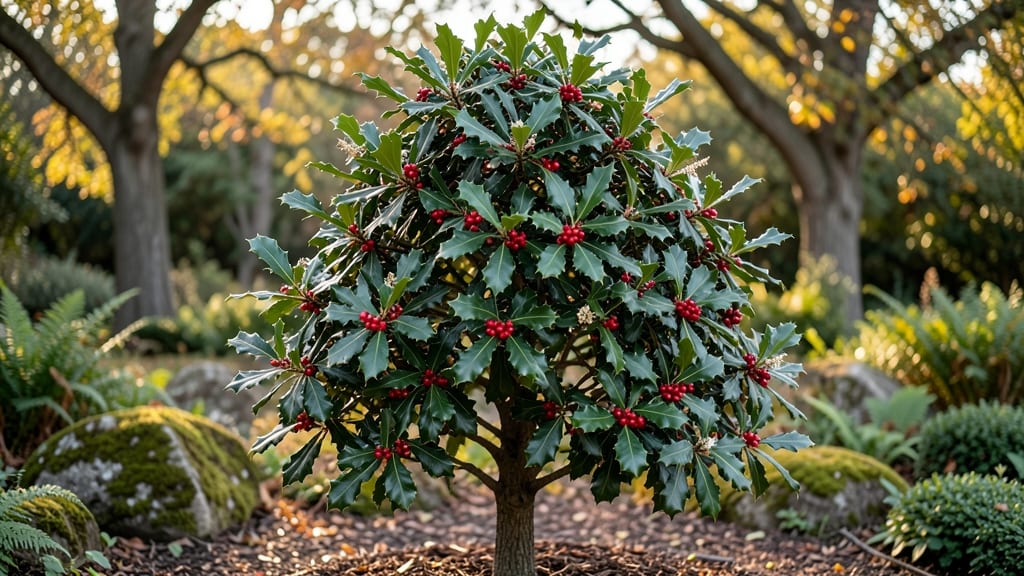
A holly tree can grow how tall can a holly tree grow anywhere from 10 feet to towering 60 feet—depending on the variety, your yard’s space, and how much you’re willing to prune 🌳.
Picture this: a Sky Pencil holly shooting straight up like a natural skyscraper, while a Blue Princess stays neatly trimmed at just 10 feet. The difference isn’t just in the height—it’s in the vision for your landscape.
Want a privacy screen? A dwarf variety fits the bill. Dreaming of a dramatic focal point? Go for the giants.
But here’s the catch: soil, sunlight, and pruning can push a holly tree to grow faster or slower than expected. Too much shade? It might stay stunted. Skip the pruning? You’ll end up with a wild, unruly giant before you know it.
The good news? With the right care, you can steer its growth toward your ideal height—whether that’s a compact hedge or a backyard monarch.
In this guide, I’ll break down the fastest-growing holly varieties, the factors that shape their height, and how to keep them in check—so you can choose the perfect size for your space without any surprises.

Holly tree height limits: fast-growing varieties and their skyward potential
Holly trees are among the most versatile evergreens for landscaping, offering everything from towering sentinels to compact shrubs. But how tall can they grow? The answer depends entirely on the variety—some reach 60 feet like skyscrapers, while others stay under 10 feet for cozy yards.
Whether you're planning a privacy screen or a focal point, knowing these height limits helps you choose wisely.
Fast-growing holly varieties like 'Sky Pencil' and 'Emerald Sentinel' are designed to shoot upward quickly, making them ideal for large properties or urban canopies. Meanwhile, dwarf holly trees like 'Blue Princess' or 'Dwarf Burford' are perfect for containers or small gardens.
Let’s explore the height ranges and growth rates so you can pick the right holly for your space.
If you’re planning to plant 'Sky Pencil', expect it to reach 60 feet in 20-30 years, making it one of the fastest-growing holly varieties. Its narrow, columnar shape is perfect for tight spaces where height matters more than width.
For a more balanced look, 'Emerald Sentinel' grows to 40 feet with a slightly wider canopy, ideal for creating a natural privacy barrier.
Dwarf holly trees like 'Blue Princess' are game-changers for small yards or container gardening. They max out at 15 feet and grow just 6-12 inches per year, so you’ll enjoy their glossy blue-green leaves and red berries without the commitment of a giant tree.
These varieties are also great for urban landscapes where space is limited.
When spacing holly trees, always account for their mature height and canopy spread. A 'Sky Pencil' needs at least 15 feet of clearance from structures, while a 'Dwarf Burford' can thrive just 3-5 feet apart in a hedge.
Overcrowding leads to stunted growth and disease susceptibility, so plan ahead for long-term health.
Fast-growing holly trees like 'Sky Pencil' and 'Emerald Sentinel' thrive in full sun to partial shade and well-draining soil. To encourage rapid growth, mulch around the base and fertilize in early spring with a balanced 10-10-10 formula.
Regular pruning in late winter helps maintain their shape and promotes vertical growth.
For those with <
Factors that influence holly tree height: sunlight, soil, and pruning secrets
Holly trees are like the chameleons of the garden world—their height can vary dramatically based on just a few key factors. Sunlight exposure alone can mean the difference between a 10-foot dwarf and a 60-foot giant.
I’ve seen holly trees in full sun grow twice as fast as their shade-dwelling cousins, so let’s break down how to harness these conditions for your perfect holly.
Your holly’s soil pH plays a surprisingly big role too. Holly trees thrive in acidic soil (pH 4.5-6.0), but even a slight shift toward alkaline can stunt growth or cause yellowing leaves.
I once had a ‘Blue Princess’ holly that refused to grow taller than 8 feet until I amended the soil with peat moss and sulfur.
Over-pruning in early years can create weak branch structures, leading to uneven growth or dieback. I’ve seen gardeners cut back 30%+ of new growth in a single season, only to watch their holly struggle to recover for years.
Poor drainage causes root rot, which slows height growth by 40-50%. Always plant in well-draining soil with a slight slope away from the trunk.
Ignoring soil tests means missing critical pH or nutrient deficiencies. A simple $20 soil test can reveal if your holly needs iron, magnesium, or organic matter to reach its full potential.
Pruning is where most gardeners go wrong—especially with formative pruning in young trees. If you skip shaping the central leader during the first 3-5 years, you’ll end up with a multi-trunk monster instead of a single, straight specimen.
I recommend pruning in late winter when the tree is dormant but before new growth begins.
For maintenance pruning, focus on removing dead branches and thinning out crowded growth to improve airflow. I prune my ‘Sky Pencil’ holly annually to maintain its narrow, columnar shape, and it’s now a 45-foot tower after just 15 years—proof that consistency pays off.
Don’t overlook the power of mulching either. A 3-inch layer of pine bark mulch keeps roots cool in summer and retains moisture, which directly supports height growth. I’ve seen holly trees in mulched beds grow 12-18 inches per year compared to just 6-8 inches in unmulched soil.
Finally, fertilizer timing matters. Holly trees respond best to balanced fertilizer (10-10-10) applied in early spring and mid-summer. Over-fertilizing in fall can encourage tender new growth that gets damaged by frost, setting your tree back the next season.