
How To
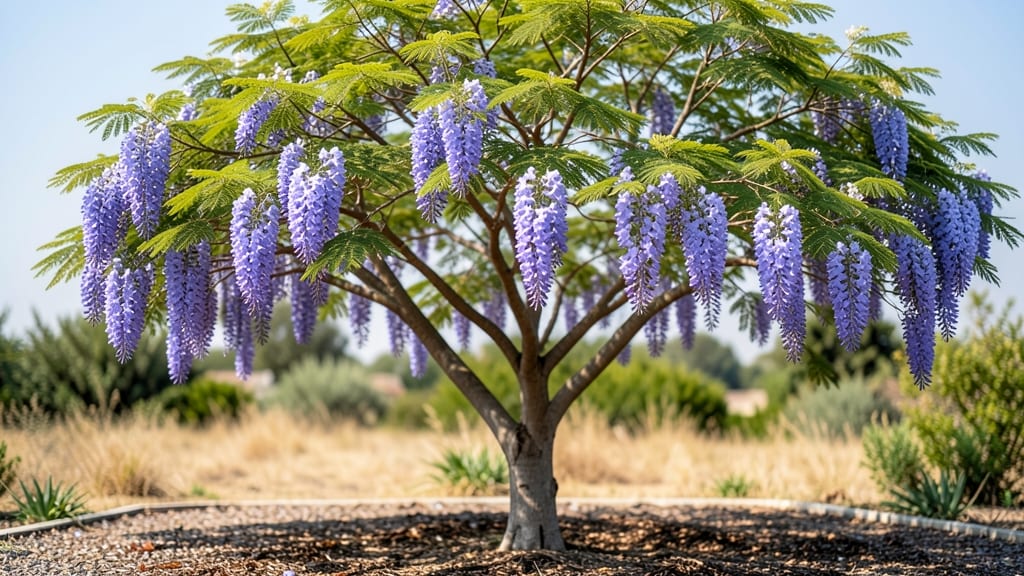
A jacaranda tree grows to a stunning 30 to 50 feet tall—that’s taller than most two-story homes—when planted in ideal conditions 🌳. The thought of those lavender clouds of flowers overhead makes it easy to overlook how much space they’ll need as they mature.
If you’re dreaming of a jacaranda in your yard, knowing its mature height is the first step to planning where it belongs.
A tree this size isn’t just for sprawling landscapes—with the right pruning and placement, it can thrive in urban spaces too, as long as you account for its canopy spread.
Fast-growing cultivars like Jacaranda mimosifolia can reach 3 feet in their first year and double that by year two, so early planning pays off. Below, I’ll break down how height varies by cultivar, when to prune for control, and whether a jacaranda is even feasible in your garden’s layout.
You’ll also learn how to balance its dramatic height with your space, whether that means choosing a smaller yard spot or committing to regular pruning. Let’s get started.

Jacaranda tree height by cultivar: fastest-growing varieties and their mature sizes
Jacaranda trees are prized for their stunning purple blooms and rapid growth, but their mature height varies dramatically by cultivar. If you're dreaming of a quick landscape impact, some varieties grow 30+ feet tall in just 10 years, while others take decades to reach full size.
Understanding these differences helps you choose the perfect tree for your space and climate.
For gardeners with limited space, the growth rate is just as important as the final height. Some jacarandas can add 3-5 feet per year in ideal conditions, making them perfect for creating instant shade and visual drama.
However, their canopy spread (often 15-30 feet) requires careful planning to avoid overcrowding nearby plants or structures.
Jacaranda mimosifolia, the most popular cultivar, typically reaches 30-50 feet tall with a spread of 25-40 feet. Its fast growth makes it a favorite for large gardens and urban landscapes where quick results are desired. Other varieties, like Jacaranda caroba, grow slightly slower but still offer impressive height and drought tolerance.
Here’s a quick comparison of the fastest-growing jacaranda cultivars and their mature sizes to help you plan your landscape:
The Jacaranda mimosifolia is the fastest-growing option, often reaching 10 feet in just 3 years and flowering within 5-7 years. This makes it ideal for gardeners who want quick shade and color.
However, its large size means it’s best suited for properties with ample space or where it can be pruned regularly to control its height.
If you’re working with a smaller yard or urban garden, consider Jacaranda acutifolia, which matures at a more manageable 20-35 feet tall. This variety also has a slightly slower growth rate, making it easier to maintain with minimal pruning.
Its smaller stature doesn’t compromise its beauty—it still produces abundant purple blooms in spring.
For tropical or subtropical climates, Jacaranda caroba is a standout choice, though it grows taller (40-60 feet) and wider (30-50 feet). Its slower growth rate means it’s better suited for long-term landscapes where you can accommodate its eventual size.
This cultivar thrives in USDA zones 9-11 and is drought-tolerant once established.
If you’re planting in a container or small space, the 'Little Leaf' variety of Jacaranda mimosifolia is a game-changer. While it still reaches 20-30 feet tall, its compact growth habit and smaller leaves make it more adaptable to urban environments.
With proper pruning, you can keep it even smaller, making it perfect for patios or balconies.
When planting any jacaranda, consider your local climate and soil conditions. These trees thrive in full sun and well-draining soil, and their growth rate accelerates in warm, dry climates.
In cooler regions, growth may slow slightly, but they remain hardy once established. Always plant in a location where the tree’s mature size won’t cause issues with power lines or nearby structures.
For the fastest results, pair your jacaranda with compatible plants like bougainvillea or hibiscus, which also love full sun and add to the tropical vibe. Mulch around the base to retain moisture and encourage root growth, especially in the first few years when the tree is establishing itself.
How to control jacaranda tree height: pruning tips for small yards or urban gardens
Managing a jacaranda tree's height is essential, especially in small yards or urban gardens where space is limited. These trees can reach 30–50 feet tall, but with the right pruning techniques, you can keep them at a manageable size without sacrificing those stunning purple blooms.
The key is timing, tools, and technique—let’s dive into how to do it right.
First, understand that jacarandas grow rapidly, especially in warm climates like USDA Zones 9–11.
If you live in cooler areas (like Zone 8), growth may slow, but they’ll still need pruning to control shape. Dwarf varieties don’t exist naturally, so pruning is your best tool for height management. Start early—young trees respond best to shaping, while mature trees require more aggressive cuts.
- 📅 Best Time to Prune: Late winter or early spring (just before new growth starts) to avoid removing next year’s flower buds. Never prune during blooming season (spring).
- ✂️ Tools Needed: Sharp bypass pruners for small branches, loppers for thicker limbs, and a pruning saw for large cuts. Sterilize tools with rubbing alcohol to prevent disease.
- 🌿 Step 1: Remove Dead or Weak Wood – Start by cutting out any dead branches or those crossing the center of the tree. This improves airflow and reduces disease risk.
- 🌿 Step 2: Thin the Canopy – Focus on selective branch removal to open up the center. Remove branches growing inward to encourage a bushier shape and better light penetration.
- 🌿 Step 3: Control Height – To reduce height, cut back the uppermost branches just above a leaf node or outward-facing bud. Avoid cutting back more than 25% of the tree’s height in one year.
- 🌿 Step 4: Shape for Balance – Use the third-branch method: When two branches grow from the same point, keep the strongest one and prune the others to maintain a natural, balanced silhouette.
- 🌿 Step 5: Root Pruning (Containers Only) – If growing in a large container, gently prune outer roots every 2–3 years to encourage a root-bound tree that stays smaller. Do this in early spring.
For urban gardens, consider container growth—jacarandas can thrive in 15–20 gallon pots with proper root pruning. Use a well-draining potting mix and a pot with drainage holes to prevent root rot. Remember, container-grown jacarandas will still need pruning to control height, but they’re easier to relocate if needed.
One common mistake is over-pruning, which can stress the tree and reduce flowering. Jacarandas bloom on new wood, so avoid heavy cuts in late summer or fall—this removes next year’s flower buds.
Instead, focus on light shaping during these months. If you’re unsure, start with small cuts and observe how the tree responds over a few seasons.
Finally, mulch around the base after pruning to retain moisture and protect roots. Use 2–3 inches of organic mulch, like wood chips, and keep it 6 inches away from the trunk to prevent rot.
With consistent care, your jacaranda will stay healthy, bloom beautifully, and fit perfectly in your space—no matter how small!