
How To
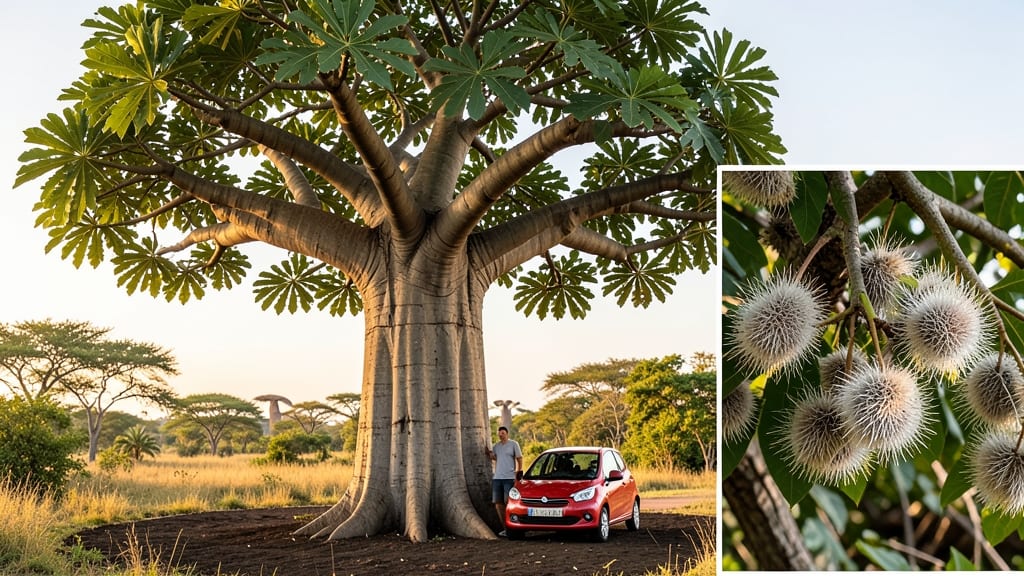
Kapok tree height by region: from tropical rainforests to urban landscapes
The kapok tree (Ceiba pentandra) is one of nature’s most impressive giants, with its height ranging from 60 feet in urban settings to over 165 feet in prime tropical conditions. These dramatic differences aren’t random—they’re shaped by climate, soil quality, and sunlight exposure.
In the Amazon basin, where kapok trees thrive, they often reach their maximum potential, while subtropical zones like Florida or Hawaii see slightly shorter specimens. Understanding these regional variations helps gardeners and landscapers make informed decisions about where—and how—to grow this majestic tree.
In Southeast Asia, particularly in countries like Thailand and Indonesia, kapok trees frequently exceed 120 feet due to the region’s high humidity and nutrient-rich soils. The combination of year-round warmth and abundant rainfall creates ideal conditions for rapid vertical growth.
Meanwhile, in urban landscapes with limited space, these trees often max out at 40–60 feet, demonstrating how environmental constraints can dramatically alter growth patterns. Even within the same region, individual trees can vary by 20–30 feet depending on local microclimates.
Here’s how environmental factors directly influence kapok tree height:
The Amazon basin holds the record for the tallest kapok trees, with specimens reaching 165 feet in Brazil’s Iquitos region. The secret? 200+ inches of annual rainfall and nutrient-rich floodplain soils that provide all the resources these trees need to shoot skyward.
In contrast, urban kapok trees in Miami or Singapore rarely exceed 60 feet due to soil compaction and air pollution, which stunt root development and limit sunlight exposure. Even small differences in sunlight hours can reduce height by 10–20 feet over a decade.
Soil fertility plays a critical role in kapok tree height. In the wild, these trees thrive in well-drained, slightly acidic soils with high organic matter. When planted in urban environments with poor soil, their growth slows significantly.
For example, a kapok tree in Hawaii’s volcanic soils might reach 95 feet, while one in compacted city soil could struggle to pass 50 feet.
Gardeners can mimic these ideal conditions by amending soil with compost and nitrogen-rich fertilizers, though even this won’t fully replicate the tropical rainforest ecosystem where kapok trees reach their peak.
Competition for sunlight is another major factor. In dense rainforests, kapok trees grow tall to outcompete neighboring species for light, often developing straight, unbranched trunks for the first 50–60 feet. In open landscapes, like suburban yards, they may branch lower and wider, reducing their overall height.
This is why isolated kapok trees in parks often grow taller than those in crowded urban forests. If you’re planting one in your garden, ensure it has full sun exposure and plenty of vertical space to avoid stunted growth.
Climate also affects growth speed. In the tropics, kapok trees can add 3–5 feet per year during their first 20 years, while in subtropical zones, growth slows to 1–2 feet annually after maturity.
This means a tree in Thailand might reach 100 feet in 25 years, while one in Florida could take 40 years to achieve the same height. For gardeners in cooler climates, choosing fast-growing varieties or providing winter protection can help maximize height potential.
Even within the same region, microclimates can create surprising variations. For instance, kapok trees near coastal areas in Southeast Asia often grow 10–15 feet taller than those inland due to higher humidity and salt-enriched soils. Similarly, trees
Fastest-growing kapok varieties: which reach 100+ feet in 20–30 years?
The kapok tree (Ceiba pentandra) isn’t just a towering giant—it’s a growth powerhouse in the right conditions. While most varieties take 30–50 years to reach 100+ feet, some fast-growing cultivars hit this mark in just 20–30 years.
These include Ceiba pentandra var. guineensis and hybrid strains bred for rapid vertical expansion, making them exciting options for large gardens or tropical landscapes.
If you’re dreaming of a skyline-defining kapok, focus on these high-growth varieties and their ideal conditions. The fastest growers can add 3–5 feet per year when given optimal sunlight, fertile soil, and consistent moisture. Let’s break down the top performers and how to nurture their explosive growth.
Among the fastest growers, Ceiba pentandra var. guineensis stands out with annual height gains of 3–5 feet when planted in tropical climates. This variety thrives in USDA Zones 10–12 and benefits from rich, well-draining soil with high organic matter.
Hybrid strains, often crossbred with Ceiba aesculifolia, can push these growth rates even higher, though they require expert cultivation.
For urban gardeners or those in subtropical zones, Ceiba aesculifolia offers a slightly slower but still impressive growth rate of 2–4 feet per year. While it won’t reach 165 feet as quickly, it’s more adaptable to drier climates and moderate rainfall.
Choose this variety if you prioritize drought tolerance over speed.
To maximize growth, prioritize full-sun exposure (6+ hours daily) and deep, frequent watering during the first 3 years. Avoid waterlogged soil, as kapok roots are sensitive to root rot.
A nitrogen-rich fertilizer applied in early spring can boost vertical growth by 20–30%, but avoid over-fertilizing, which can stunt development.
While kapok trees are stunning, they’re not ideal for small yards. Their massive root systems and towering canopies make them best suited for large estates, parks, or tropical landscapes. If you’re committed to growing one, plan for long-term space management and potential municipal height restrictions in urban areas.
For the fastest results, combine the right variety with optimal care. With patience and the right conditions, your kapok tree could be a 100-foot skyline sentinel in just a few decades—worth the wait for any gardener chasing vertical grandeur! 🌳