
How To
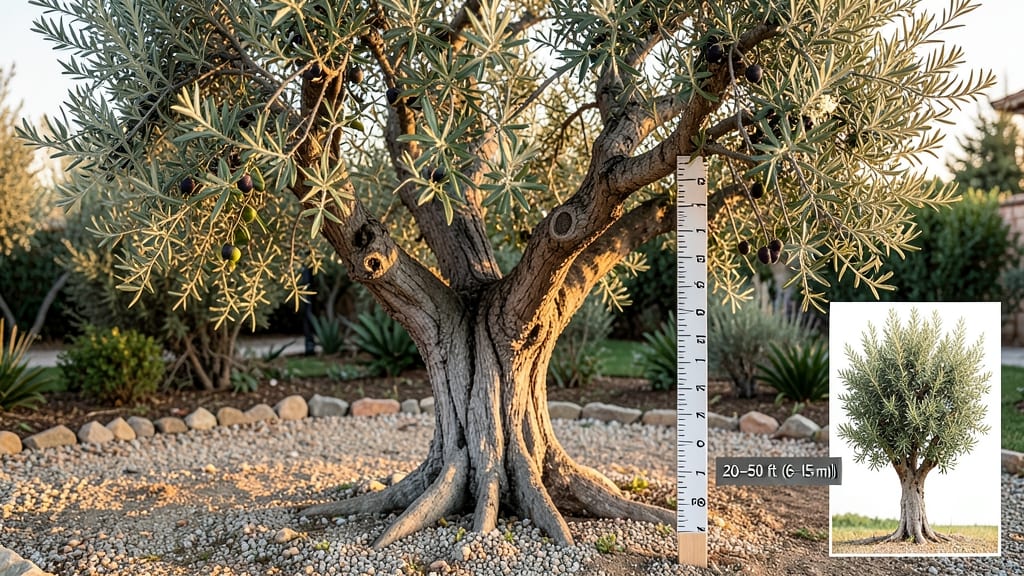
How tall can an olive tree grow? 🫒 It can range anywhere from 8 feet to a towering 80 feet, depending on the variety, care, and where you plant it.
If you’ve ever dreamed of growing your own olive tree but wondered whether it’ll stretch toward the sky or stay manageably compact, you’re not alone—olive tree height can vary dramatically depending on variety, care, and pruning.
Standard varieties like ‘Frantoio’ or ‘Mission’ reach their full 30- to 80-foot potential when planted in the ground with no height restrictions, while dwarf cultivars like ‘Arbequina’ or ‘Little Ollie’ top out at a more manageable 8 to 15 feet, making them perfect for containers or small yards.
In this guide, I’ll break down how to choose the right variety for your space, the pruning secrets that keep trees in check, and how climate and soil can push a tree toward the sky or keep it neatly trimmed. Ready to pick the perfect size for your garden?

Olive tree height by variety: dwarf vs. standard vs. monumental sizes explained
Choosing the right olive tree variety depends entirely on your space and vision. Some varieties stay under 6 feet, perfect for containers, while others reach 40+ feet, dominating landscapes like ancient Mediterranean groves.
The difference? Genetics, pruning, and growing conditions. Let’s break down the three main height categories so you can pick the perfect fit for your garden.
Dwarf olive trees are the compact champions of the olive world, ideal for patios, balconies, or small urban yards. These varieties top out at 8–15 feet with proper care, making them manageable even in containers.
Standard varieties, the most common in commercial groves, can soar to 30–50 feet—think towering shade trees or rustic Mediterranean backdrops. Then there are the monumental varieties, reaching 60–80 feet, reserved for large estates or historic landscapes.
📊 Comparison Table: Olive Tree Heights by Variety
If you’re growing olives in containers, dwarf varieties like ‘Arbequina’ or ‘Little Ollie’ are your best bet—they thrive in 15–25 gallon pots and rarely exceed 10 feet with pruning. For ground planting, semi-dwarf varieties like ‘Frantoio’ strike a balance, offering fruit production without requiring a acre of space.
Standard varieties, such as ‘Manzanillo’, need room to spread their branches—plan for at least 20 feet of clearance in all directions.
Monumental olive trees, like the ‘Mission’ variety, are statement pieces that demand respect. They’re not for the faint of heart—these giants need regular professional pruning to manage their weight and shape. Without care, their branches can become dangerously heavy, risking structural damage or even falling.
If you’re drawn to their majesty, invest in strong supports and consult an arborist early in their growth.
One factor often overlooked is growth rate. Dwarf varieties grow 2–4 feet per year in ideal conditions, while standard varieties can shoot up 6–10 feet annually when young.
This rapid growth is why many gardeners start pruning early—even in the first year—to shape the tree and control its trajectory. Without intervention, a 3-year-old standard olive tree could already be 10 feet tall, making future pruning a Herculean task.
Your climate zone also plays a role in height management. Olive trees in USDA Zones 9–10 grow faster and larger due to longer growing seasons, while those in Zone 8 (the northern limit for outdoor planting) may stay slightly shorter.
Cold snaps can stunt growth, but with proper winter protection, even standard varieties can reach their full potential over time. In colder zones, dwarf varieties are the safest bet for reliable fruit production.
For urban gardeners, the key is choosing a variety that matches your space and your patience. A 6-foot ‘Arbequina’ in a pot will give you olives in 3–5 years, while a 40-foot ‘Manzanillo’ planted today might take 10+ years to mature.
Think about your long-term goals: Do you want a low-maintenance shrub or a grand old tree for future generations? The choice is yours—but now you know the heights to expect!
Pro tip: If you’re torn between varieties, start with a semi-dwarf. They offer a middle-ground height (15–25 feet) and adapt
How pruning and care affect olive tree height (and when to start)
Pruning is the single most powerful tool for controlling your olive tree height. Without it, even dwarf varieties can sprawl into unruly shapes, while standard types may grow 40+ feet if left unchecked.
The key lies in timing, technique, and consistency—starting pruning in the first growing season sets the foundation for a tree that stays within your desired height limits.
Olive trees respond best to structured pruning during their dormant season (late winter to early spring) when they’re not actively growing. This approach minimizes stress while encouraging compact growth. For container-grown trees, you’ll need to prune more frequently—sometimes every 6–8 weeks—to maintain their shape and prevent legginess.
Here’s how to manage your olive tree’s height through step-by-step pruning and seasonal care:
One common mistake gardeners make is over-pruning in a single session, which can shock the tree and slow its growth. Instead, aim for gradual reductions—never remove more than 25% of the canopy in one year.
For container-grown olives, prune more aggressively to keep them under 6–8 feet, as root-bound conditions stunt growth.
Environmental factors also play a role in height control. Olive trees grown in cooler climates (USDA Zone 8) tend to grow slower than those in warmer zones (Zone 9–10).
If you’re in a cooler area, pair pruning with winter protection (like burlap wraps) to prevent frost damage that can weaken the tree’s structure.
With consistent pruning and care, you can keep even standard olive varieties under 15 feet—perfect for backyard gardens. The key is patience: it takes 3–5 years of disciplined pruning to see dramatic height control.
Start early, and your olive tree will reward you with manageable size and bountiful harvests! 🌳