
Pruning
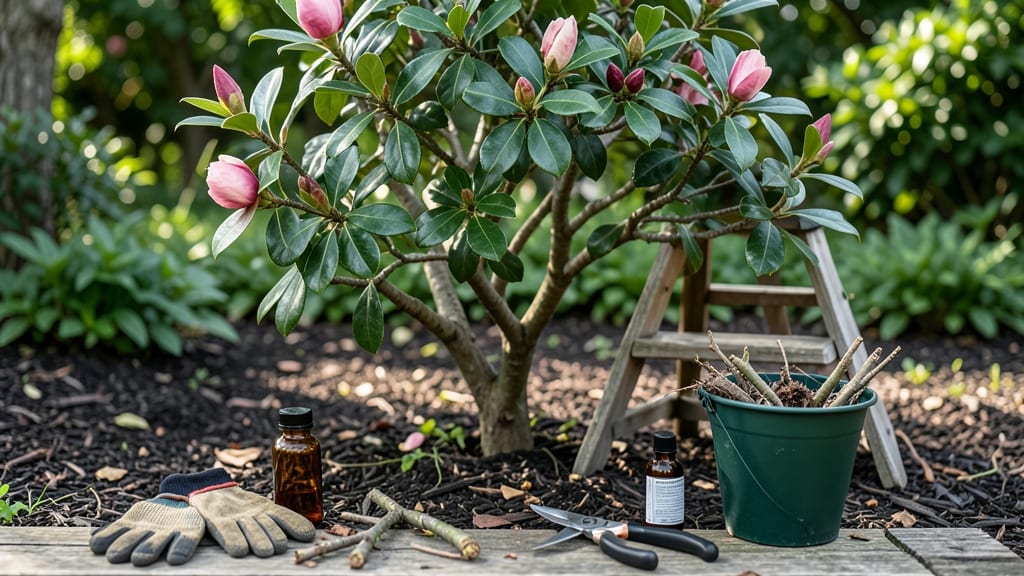
Pruning camellia trees requires careful timing in late winter or early spring before new growth emerges, as this removes dead branches and shapes the plant without harming its delicate blooms. Always use sterilized tools and cut just above outward-facing buds for optimal results.
Timing is everything with camellias because they bloom on old wood—meaning last year's growth produces this year's flowers. 🌸 When you prune too late, you risk cutting off next season's buds. I've seen gardeners accidentally reduce bloom production by 50% just by pruning in summer.
The key is to wait until after the last frost but before buds swell, giving your plant a clean slate while preserving its natural shape.
For tools, I recommend bypass pruners for small branches and loppers for thicker stems—never use dull tools, as they tear rather than cut cleanly. Always sterilize your blades with rubbing alcohol between cuts to prevent disease spread.
The 45-degree angle cut just above a bud ensures new growth emerges in the right direction, and I've found this simple technique keeps camellias looking full and healthy for years.
💡 In This Article
- Best Camellia Pruning Seasons and Why Timing Matters
- Step-by-Step Camellia Pruning Techniques for Beginners
Best camellia pruning seasons and why timing matters
Camellias bloom on last year's growth, so their pruning window is tied directly to bud formation. During late winter or early spring, the plant enters dormancy, which means it's not actively growing but has already formed flower buds. Pruning at this stage removes dead branches without sacrificing next year's blooms.
The ideal timing is after the last frost but before buds begin to swell—typically between February and March in most U.S. growing zones, though this shifts 2-4 weeks later in warmer southern climates.
Here's why summer pruning is a big mistake: when you cut in summer, you're removing potential flower buds that may not have fully formed yet. I've seen gardeners accidentally reduce bloom production by 30-50% by pruning too late.
The plant's energy shifts from blooming to healing wounds, and new growth often lacks the strength to support flowers.
Even light trimming during the growing season can stress the plant, making it more vulnerable to pests and diseases. 🌿 The key is to let the plant focus on its natural cycle rather than forcing it into an unnatural pruning schedule.
Climate zones play a huge role in timing. In colder regions (USDA zones 6-7), late winter pruning gives the plant time to recover before spring growth. In warmer zones (8-10), you might extend this window until early spring.
The goal is always the same: prune when the plant is dormant but before new growth starts. This ensures you're cutting only what's necessary without disrupting the delicate balance of flower production and foliage growth.
One common misconception is that camellias need heavy pruning to stay compact. In reality, most varieties grow naturally at a manageable size, and over-pruning can actually stimulate excessive new growth that may not produce flowers.
The exception is Sasanqua camellias, which bloom on new wood and can handle light pruning in late summer. For standard varieties, stick to 10-20% of the plant's total volume per year to maintain health without sacrificing blooms.
Frost sensitivity is another critical factor. Pruning too early in cold climates risks exposing fresh cuts to freezing temperatures, which can introduce disease. Always check your local frost dates and wait until temperatures stabilize above 32°F for at least a week.
This gives the plant time to heal properly before spring growth begins. The right timing isn't just about the calendar—it's about reading your plant's natural rhythms.
For those in tropical or subtropical regions, the window might extend into early spring, but the principle remains: prune when the plant is dormant. In these areas, you'll often see camellias blooming in both winter and spring, which means their growth cycle operates on a slightly different schedule.
Pay attention to when your specific variety typically blooms—this is your best indicator of when to prune. 🌸