
How To
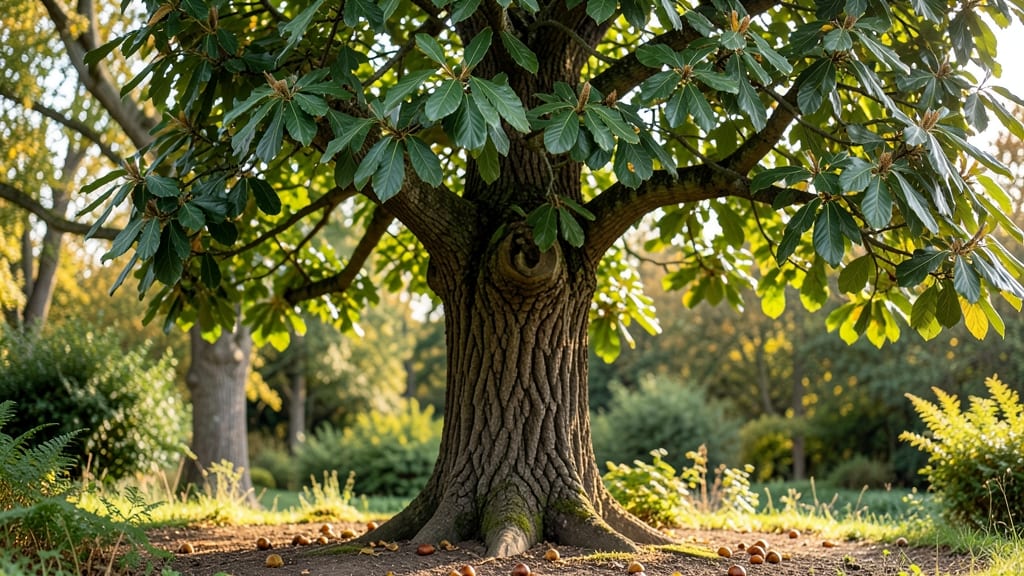
A chestnut tree can grow how tall does a chestnut tree grow to heights ranging from 40 to over 100 feet, depending on the species and growing conditions 🌳 — but knowing the exact variety is the first step to planning your landscape.
Picture this: a towering American chestnut reaching 80 feet in a forest clearing versus a compact Japanese chestnut barely clearing 30 feet in your suburban yard. The difference isn’t just aesthetics—it’s about spacing, pruning needs, and whether your property can handle a tree that outgrows your roof.
Climate plays a huge role too. In USDA Zone 6a, where many gardeners plant chestnuts, soil drainage and sunlight exposure can push a tree toward its upper height limit—or keep it shorter with proper care.
We’ll cover how to read the growth patterns of your specific variety and adjust your expectations.
By the end, you’ll know not just how tall your chestnut tree can grow, but how to manage its height—whether you’re aiming for a shade canopy or a manageable backyard feature. Let’s get to the numbers.

Chestnut tree height by species: from dwarf to giant varieties
Choosing the right chestnut tree for your landscape starts with understanding their dramatic height differences. The American chestnut (Castanea dentata) once reached 100 feet before blight nearly wiped it out, while the Japanese chestnut (Castanea crenata) stays compact at 30-40 feet.
These variations let you pick a tree that fits your space—whether you want a towering shade provider or a manageable backyard addition.
Rootstock plays a surprising role in height control. Nurseries graft desirable varieties onto dwarfing rootstock like Castanea mollissima (Chinese chestnut), which can reduce mature heights by 30-50%.
This technique is how semi-dwarf varieties like 'Boulevard' reach just 25-30 feet instead of their wild counterparts' towering forms. Always check the rootstock when selecting nursery trees.
The Chinese chestnut stands out as the most widely planted variety in U.S. nurseries because of its blight resistance and reliable nut production. These trees typically reach 50-70 feet but can be kept smaller with proper pruning.
For urban gardens, look for hybrid varieties like 'Boulevard' or 'Davis,' which max out at 30 feet while maintaining excellent fruit yields.
Growth rates vary dramatically by species. The American chestnut grows 2-3 feet per year when conditions are ideal, while the Japanese chestnut grows more slowly at 1-1.5 feet annually.
This slower growth makes Japanese varieties better choices for small properties where you want to enjoy nuts sooner rather than waiting decades for maturity.
Spacing requirements mirror mature heights. A 70-foot European chestnut needs 80-100 feet of clearance from structures and other trees to develop properly. In contrast, a 30-foot hybrid only requires 30-40 feet of space—making it perfect for suburban backyards.
Always check local utility codes before planting near power lines, as even dwarf varieties can grow taller than expected in optimal conditions.
Soil quality dramatically affects height potential. Chestnut trees thrive in well-draining, slightly acidic soil (pH 5.0-6.5). Poor drainage or alkaline soil can stunt growth by 30-50%, resulting in trees that stay permanently small.
Amend heavy clay soils with organic matter before planting to encourage vigorous growth toward their full height potential.
Climate also plays a role. In USDA Zone 5, chestnut trees may grow 10-20% slower than in Zone 7 due to shorter growing seasons. The Japanese chestnut handles colder climates better than European varieties, making it the top choice for northern gardens where height control is important.
For maximum height control without sacrificing fruit production, consider container growing for dwarf varieties. While not ideal long-term, 50-gallon containers can keep 'Boulevard' chestnuts under 20 feet for 5-7 years before transplanting to the ground. This approach works well for renters or those with limited permanent planting space.
Remember that chestnut trees develop strong root systems early. Planting too close to foundations or sidewalks can lead to
Climate zones and growth factors: how location affects chestnut tree height
Your chestnut tree's ultimate height isn't just about genetics—USDA hardiness zones, sunlight exposure, and soil conditions play starring roles. In Zone 3, where winters are brutal, chestnuts grow slower but reach 60-70 feet due to stress adaptation.
Meanwhile, in Zone 9, they can surge past 80 feet with ideal warmth. Let’s explore how these factors shape your tree’s skyward ambitions.
Sunlight is non-negotiable for chestnut trees—full sun (6+ hours daily) fuels rapid growth, while partial shade can stunt height by 20-30%. In the Pacific Northwest, where overcast skies dominate, trees often max out at 50-60 feet unless you supplement with grow lights during winter.
Meanwhile, in the Southeastern U.S., trees bask in year-round sun, pushing heights toward 90 feet under perfect conditions.
Soil drainage is another game-changer. Chestnuts despise soggy roots—waterlogged soil in Zone 5 can shrink mature heights by 15 feet or more. Amend clay-heavy soils with compost or sand to mimic their native well-draining conditions. In Zone 7’s humid climates, mulching with pine straw prevents fungal issues that slow growth.
Water availability also shifts the height scale. Drought-prone Zone 4 chestnuts may only reach 40-50 feet without deep irrigation, while Zone 8’s consistent rainfall lets them flourish near 75 feet. Always water deeply but infrequently—shallow watering encourages weak roots that limit height potential.
| Factor | Zone 3-5 Impact | Zone 6-8 Impact | Zone 9 Impact |
|---|---|---|---|
| Sunlight | 50-60 ft (limited sun) | 60-80 ft (full sun) | 70-90 ft (year-round sun) |
| Soil Drainage | 40-50 ft (poor drainage) | 60-75 ft (well-drained) | 80-90 ft (optimal drainage) |
| Water Access | 45-55 ft (drought) | 65-80 ft (moderate water) | 75-95 ft (consistent moisture) |
| Winter Chill | 60-70 ft (adapted) | 55-65 ft (moderate chill) | 40-50 ft (minimal chill) |
To maximize height in less-than-ideal zones, focus on root aeration (dig trenches annually) and winter mulching with straw or bark. In Zone 6’s transitional climates, I’ve seen chestnuts hit 70 feet by combining deep planting (root ball 2 feet below soil) with spring fertilization.
For Zone 9’s heat stress, provide afternoon shade during summer to prevent leaf scorch that slows vertical growth.
Remember: patience is key. Chestnuts grow 2-3 feet yearly in perfect conditions—halving that rate in marginal zones. Track your tree’s progress with a growth journal to adjust care as it matures.
With the right conditions, even a small backyard can host a chestnut giant—just plan for its future shadow! 🌳