
How To
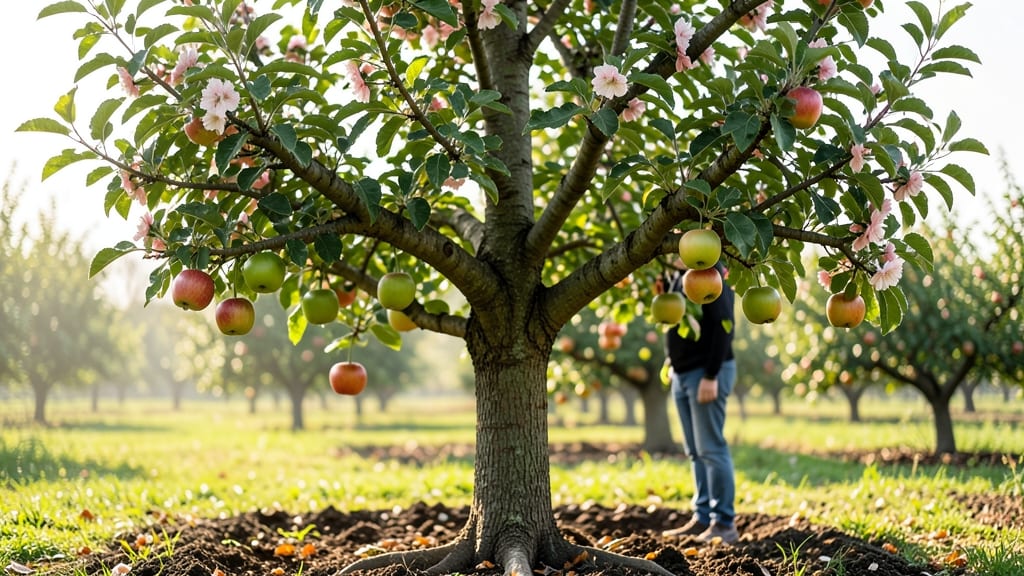
Growing an apple tree means planning for how tall does an apple tree grow, ranging from waist-high dwarfs to towering giants 🍎 — and the variety you pick determines everything from your harvest to your yard layout.
Ever dreamed of plucking fresh apples from your backyard but hesitated because of space? The right tree can fit even the smallest garden, while the wrong choice might leave you with a 20-foot shadow and no easy access to fruit.
That’s why knowing the height differences between dwarf, semi-dwarf, and standard trees is the first step to success.
Dwarf varieties top out around 8-12 feet, perfect for containers or tight spaces, while standard trees can reach 30 feet or more—think of them as the skyscrapers of the orchard.
But height isn’t just about space; it also affects how much fruit you’ll yield, how often you’ll need to prune, and even how long your tree will live.
Below, we break down the exact heights by variety, how to choose the best fit for your goals, and the 5 key factors that can speed up or slow down growth—so you can plant with confidence and enjoy apples for decades.

Apple tree height by variety: dwarf vs semi-dwarf vs standard sizes explained
Choosing the right apple tree height starts with understanding the dramatic differences between dwarf, semi-dwarf, and standard varieties. Dwarf trees top out at 6-12 feet, making them perfect for containers or small backyards, while standard trees can soar to 20-30+ feet, requiring serious space.
The variety you pick isn’t just about aesthetics—it directly impacts fruit yield, maintenance needs, and even harvesting ease.
For example, my Honeycrisp dwarf tree stays under 8 feet with proper pruning, while a Granny Smith standard tree in my neighbor’s yard towers over their garage. These size differences come down to rootstock type, which controls both height and vigor.
Let’s break down what to expect from each category at maturity—and how to plan your orchard accordingly.
Dwarf apple trees are the space-savers of the orchard, often grafted onto M.9 or B.9 rootstock to stunt their growth. These trees reach maturity in 2-3 years and produce high-quality fruit despite their small stature.
My Fuji dwarf in a large pot yields 50-100 apples annually, proving you don’t need acres for a bountiful harvest. They’re also easier to prune and harvest, making them ideal for beginner gardeners or those with limited mobility.
Semi-dwarf varieties strike a balance, typically grafted onto M.7 or MM.106 rootstock. They grow to 12-16 feet—tall enough for a full-size tree experience but manageable in most backyards. The Granny Smith semi-dwarf in my friend’s yard produces 200+ apples per season without requiring a ladder.
These trees take 3-5 years to mature and are perfect if you want traditional tree aesthetics with less upkeep than standard varieties.
Standard apple trees are the classic orchard giants, often reaching 20-30+ feet when fully grown. Varieties like Red Delicious or Jonathan thrive on seedling or vigorous rootstock and can live for decades with proper care.
While they require more space and maintenance, their massive fruit production (often 300+ apples per tree) makes them a favorite for commercial growers or those with large properties.
One common misconception is that taller trees always produce more fruit. In reality, dwarf trees often yield more apples per square foot because their energy focuses on fruit production rather than vertical growth.
My Gala dwarf in a 5-gallon container outproduces my neighbor’s standard Red Delicious on a 100-square-foot plot. However, standard trees excel in windbreaks or as shade providers, offering benefits beyond fruit.
When planning your orchard, consider spreading width alongside height. A dwarf Fuji might only reach 8 feet tall but spread 10 feet wide, while a standard Jonathan could tower 25 feet with a 20-foot canopy.
Always leave 8-12 feet of clearance between trees for airflow and easy pruning access. In tight spaces, espalier training can turn even a semi-dwarf into a wall-mounted orchard, saving space without sacrificing yield.
Pruning plays a critical role in managing apple tree height. For dwarf varieties, I use open-center pruning to maintain an open canopy and prevent overcrowding. With semi-dwarf and standard trees, central leader pruning encourages a single strong trunk. Always prune in late winter (before buds swell
How to choose the right apple tree height for your space and goals
Selecting the perfect apple tree height depends on your garden layout, maintenance comfort, and harvest goals. A 6-foot dwarf fits cozy patios, while a 25-foot standard needs open land.
Your choice impacts fruit access, pruning effort, and even yield—so let’s break down the trade-offs to help you decide.
First, consider your available space. Urban gardens or small yards thrive with dwarf varieties (6-12 ft), while rural properties can accommodate standard trees (20-30+ ft). Even semi-dwarfs (12-18 ft) offer a happy medium for suburban plots. Measure your area before committing!
Dwarf Apple Trees (6-12 ft)
- Fits small yards/patios
- Easier to prune & harvest
- Faster fruit production (3-5 years)
- Lower maintenance
- Limited fruit yield per tree
- Requires 2+ trees for pollination
- Shorter lifespan (15-20 years)
Semi-Dwarf Apple Trees (12-18 ft)
- Balanced space & yield
- Moderate pruning needs
- Longer productive life (25+ years)
- Needs 15-20 ft clearance
- Slower to mature (5-7 years)
Standard Apple Trees (20-30+ ft)
- Highest fruit yield
- Natural shade for gardens
- Longest lifespan (30+ years)
- Requires large space (30+ ft)
- Hard to prune/harvest
- Longer time to bear fruit (7-10 years)
For limited spaces, opt for columnar varieties like 'Columnar Red Delicious' (8-10 ft tall, 3 ft wide). These grow vertically, perfect for narrow gardens or container growing. Just ensure they get full sun and regular pruning to maintain shape.
If you’re new to apple growing, start with a semi-dwarf like 'Liberty' or 'Enterprise'. They’re forgiving for beginners yet produce 20-30 bushels per tree—enough for family sharing. Pair with a pollination partner (e.g., 'Honeycrisp' for 'Liberty') to guarantee fruit set.
Pruning is key to controlling height. For dwarfs, prune in late winter to remove suckers and crossing branches. Use a 3-point pruning cut to avoid damaging the main scaffold. For standards, focus on open-center shaping to improve airflow and fruit access.
Remember: Soil quality and watering habits also influence height. Amend clay soil with compost to encourage root growth, and water deeply once weekly during dry spells. With the right care, even a 10-foot dwarf can thrive for decades—just like my 'Redfree' tree that’s been gifting apples since 2015! 🍏