
How To
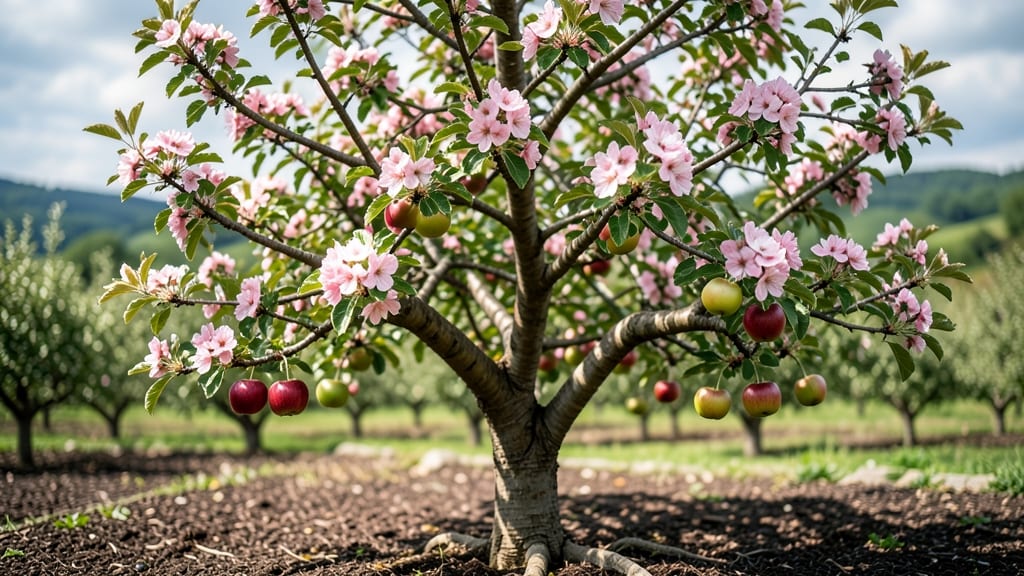
How tall can an apple tree grow? A single 🍎 can range from a modest 8 feet to a towering 30 feet, depending on the variety and the care you provide.
If you’ve ever dreamed of growing your own apples but worried about space, understanding an apple tree’s height potential is the first step to success—whether you’re planting in a backyard or a tiny urban garden.
Dwarf varieties stay compact, making them perfect for small spaces, while standard trees reach their full height over decades. The right choice depends on your garden’s layout, sunlight, and how much pruning you’re willing to do.
Below, I’ll break down the height ranges for dwarf, semi-dwarf, and standard apple trees, plus tips to manage growth so you get the best harvest without overcrowding your yard.

Apple tree height variations: dwarf, semi-dwarf, and standard explained
Choosing the right apple tree height depends entirely on your garden space and maintenance goals. Standard apple trees can reach 20-30 feet, while dwarf varieties stay under 8 feet.
The difference comes down to rootstock—the underlying tree onto which the desired apple variety is grafted. Understanding these variations helps you pick the perfect tree for your yard, balcony, or orchard.
Most home gardeners struggle with the same question: "How tall can my apple tree grow?" The answer varies wildly between 3 feet and 16 feet depending on the rootstock. Dwarf trees mature quickly and produce fruit in just 2-3 years, making them ideal for small spaces.
Meanwhile, standard trees take 6-10 years to bear fruit but can dominate your landscape with their towering height.
Rootstock determines not just height but also growth rate, fruit size, and cold hardiness. For example, the M.9 rootstock produces dwarf trees that rarely exceed 6-8 feet, while MM.111 creates semi-dwarf trees reaching 12-16 feet. Even within these categories, environmental factors like sunlight exposure and soil quality can influence final height by up to 20%.
Here’s how the three main height categories compare in terms of mature height, ideal spacing, and fruit production:
Dwarf apple trees are the best choice for urban gardens or container growing because their compact size makes them manageable with basic pruning. Varieties like Gala or Fuji on M.9 rootstock rarely exceed 6 feet, making them perfect for patios or small yards.
Their rapid fruiting time means you’ll enjoy homegrown apples in just a few years.
Semi-dwarf trees strike a balance between space efficiency and long-term productivity. With heights of 8-12 feet, they fit well in medium-sized backyards while still producing high yields. Rootstocks like MM.111 are popular because they combine disease resistance with moderate growth, reducing the need for aggressive pruning.
These trees often bear fruit in 3-5 years, making them a great middle-ground option.
Standard apple trees are the traditional choice for large orchards or rural properties, where space isn’t a constraint. Their towering height (often 20+ feet) means they require wide spacing—at least 20 feet apart—to avoid shading and competition.
While they take longer to mature, their long lifespan (50+ years) and abundant fruit production make them a favorite for commercial growers.
One critical factor often overlooked is pruning impact. Even dwarf trees can grow taller if not pruned regularly. I recommend annual pruning in late winter to shape the tree and remove dead wood.
For semi-dwarf and standard trees, structural pruning in early spring helps maintain an open canopy, improving air circulation and fruit quality. Without proper pruning, a dwarf tree might reach 10 feet instead of its ideal 6 feet.
If you’re planting multiple apple trees, consider pollination needs. Most varieties require cross-pollination, so pairing a dwarf Honeycrisp with a semi-dwarf Granny Smith ensures better fruit set. The height difference won’t affect pollination, but spacing between trees should account for their mature sizes.
For example, a dwarf tree 8 feet tall needs 6 feet of clearance, while a standard tree requires 20+ feet of open space.
For container growing, stick to dwarf varieties on M.9 or B.9 rootstock. A 5-gallon pot can support a 4-foot-tall tree for a few years before upgrading to a 15-gallon container. Use a
How to choose the right apple tree height for your space
Choosing the right apple tree height depends on your garden space and maintenance preferences. A standard apple tree can reach 20-30 feet, while dwarf varieties stay between 6-12 feet.
Your decision impacts fruit production, pruning effort, and even harvesting convenience. For small yards, dwarf or semi-dwarf trees are ideal, while larger properties can accommodate full-sized trees for maximum yield.
Your climate zone also plays a role. In warmer regions, trees grow faster and taller, while cooler climates may slow growth. For example, Honeycrisp on a semi-dwarf rootstock might hit 12-15 feet in USDA Zone 5, but only 10-12 feet in Zone 7.
Always check rootstock compatibility with your local nursery for accurate predictions.
- Fits small spaces
- Easier pruning/maintenance
- Faster fruit production
- Lower wind damage risk
- Needs staking support
- Shorter fruit lifespan
- Less shade coverage
- Longer lifespan
- More fruit production
- Natural shade provider
- Requires more space
- Harder to harvest fruits
- Needs regular pruning
- Balanced size/space
- Moderate maintenance
- Good for medium yards
- Limited space options
- Needs professional pruning
- Higher water needs
If you're working with limited space, consider columnar apple trees, which grow just 6-8 feet tall but produce fruit along their entire length. These are perfect for urban gardens or patio plantings.
For backyard orchards, semi-dwarf trees offer a happy medium—12-18 feet tall—while still being manageable with regular pruning.
Pruning is key to controlling apple tree height. Use the open-center method for dwarf trees to encourage horizontal branching, making fruit easier to reach. For standard trees, central leader pruning keeps the trunk dominant.
Always prune in late winter or early spring before new growth begins. Remove suckers (shoots at the base) and water sprouts (vertical shoots) to redirect energy upward.
Don’t forget about soil health—rich, well-draining soil with organic matter promotes slower, stronger growth. Amend clay soil with compost or sand to prevent root rot, which can stunt growth.
Mulch around the base with wood chips to retain moisture and regulate temperature, helping your tree stay within your desired height range.
For container growing, choose dwarf rootstocks like M.9 or B.9, which thrive in large pots (20+ gallons). These trees stay 8-12 feet tall even in containers, making them ideal for balconies or rooftops.
Just ensure the pot has drainage holes and use a balanced fertilizer every 4-6 weeks during the growing season.