
How To
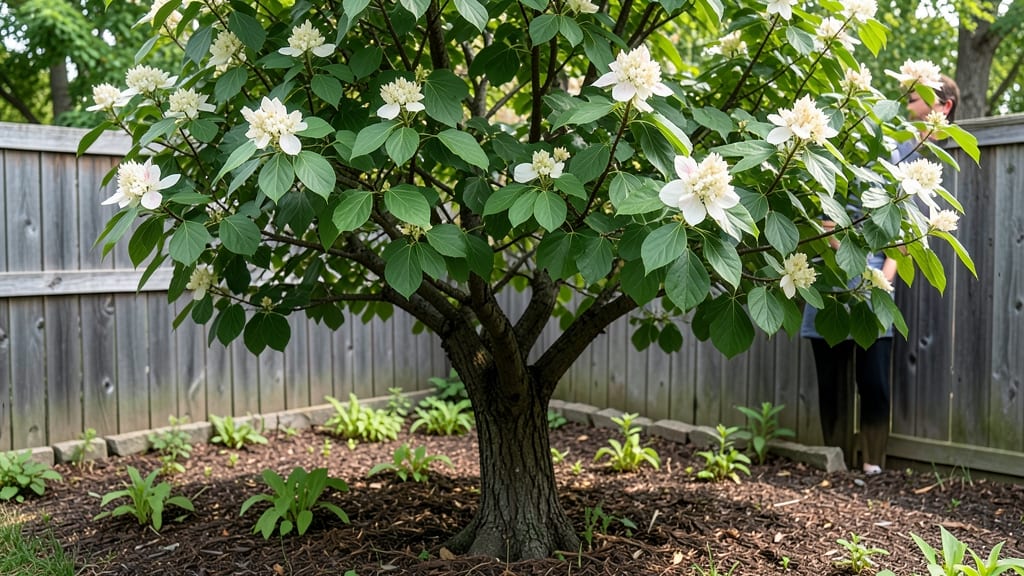
A dogwood tree grows anywhere from 10 to 40 feet tall at maturity, depending on the variety and growing conditions—so knowing the exact height range is key before you plant.
Picture this: a vibrant spring blooms 🌳 that matures into a graceful shade provider, but suddenly your backyard feels too small. That’s why understanding height ranges—whether you’re choosing a compact cultivar for a patio or a towering specimen for a privacy screen—saves you from costly mistakes.
Some dogwoods stay under 12 feet, perfect for small yards, while others stretch toward 40 feet, making them ideal for large landscapes. The difference comes down to species, soil, and sunlight—factors we’ll break down to help you pick the right fit.
Inside, you’ll find a quick-reference guide to mature heights by variety, pruning tips to control growth, and space-saving tricks for urban gardens. Let’s get your landscape planning right the first time.

Dogwood tree height by variety: mature size ranges for common species
Dogwood trees are beloved for their stunning spring blooms and graceful form, but their mature height can vary dramatically depending on the species and cultivar. Understanding these differences is key to selecting the perfect tree for your landscape—whether you're aiming for a compact accent or a towering shade provider.
I’ll break down the height ranges for popular varieties, including dwarf options that fit tight spaces and larger species that make bold statements in your yard.
Most dogwoods fall into three height categories: dwarf (8-12 feet), semi-dwarf (12-20 feet), and standard (20-40 feet). The Cornus florida, or flowering dogwood, is the most common species and typically reaches 20-35 feet at maturity, making it ideal for medium to large landscapes.
Meanwhile, Cornus kousa, or Korean dogwood, often grows slightly taller, with some cultivars exceeding 30 feet.
Here’s a quick reference table to visualize the mature height ranges and ideal spacing for the most popular dogwood varieties. Use this as your guide when planning where to plant—remember to account for spread (width), which is often 20-30 feet for standard varieties.
The Cornus alternifolia, or pagoda dogwood, is a standout for smaller yards due to its 12-20 foot mature height and distinctive horizontal branching. This variety thrives in partial shade and is often used as a focal point in woodland gardens or near patios.
For a compact option, the 'Cherokee Brave' cultivar stays under 12 feet tall, making it ideal for containers or urban gardens where space is limited.
If you’re planting near power lines or sidewalks, prioritize dwarf or semi-dwarf varieties like 'Golden Glow' or 'Cherokee Brave'. These cultivars mature at 15-20 feet or less, reducing the risk of overgrowth issues.
Always check local regulations before planting near utilities—some areas require minimum clearance of 15 feet for mature trees.
For larger landscapes, standard varieties like 'Stellar Pink' or Cornus kousa create dramatic focal points. These trees can reach 30 feet or taller, so plant them at least 25 feet from structures, fences, or other trees to allow for proper airflow and root expansion.
Pro tip: Mulch around the base to retain moisture and suppress weeds, which is especially important for young dogwoods still establishing their root systems.
One common mistake I see is underestimating the spread of dogwood trees. While height is often the focus, the width can be just as critical—especially for varieties like Cornus florida, which can spread 20-30 feet at maturity.
Always measure your planting area and leave ample space for the tree’s mature size to avoid future pruning headaches.
Climate also plays a role in height. Dogwoods grown in warmer USDA zones (7-9) may reach their mature height faster than those in cooler zones (5-6).
In colder regions, growth can be slower, but with proper care—like seasonal pruning and consistent watering—your dogwood will still thrive and reach its expected height over time.
For a quick visual, imagine a standard dogwood at maturity as tall as a two-story house (20-35 feet),
How to control dogwood tree height: pruning tips and growth habits
Dogwood trees (Cornus spp.) are prized for their stunning spring blooms and year-round foliage, but their mature height can vary dramatically—from 8 feet in dwarf varieties to 40 feet in standard types.
Understanding how to manage their growth ensures your landscape stays balanced without sacrificing beauty. The key lies in pruning timing, growth habits, and adapting to your tree’s specific needs.
Most dogwoods grow 1-2 feet per year under ideal conditions, but factors like sunlight exposure, soil quality, and climate zone can accelerate or slow growth.
For example, a Cornus florida in full sun may reach 25 feet faster than one in partial shade, where it might stay around 15-20 feet. Knowing these variables helps you set realistic expectations and plan pruning strategies accordingly.
⚠️ Critical Height Warning
Dogwoods grow unpredictably—over-pruning can stunt blooms, while neglect lets them tower 30+ feet. Standard varieties (e.g., Cornus florida) can reach 25-40 feet if unchecked, while dwarf types (like 'Cherokee Brave') max out at 8-12 feet. Always verify your variety’s mature height range before planting!
To control height, prune after flowering (late spring to early summer) when the tree has finished blooming. This timing prevents removing next year’s flower buds, which form on old wood.
Use sharp, clean pruners to make cuts just above a bud or branch collar, avoiding jagged edges that invite disease. For dramatic height reduction, remove up to 25% of the canopy in one session, but never exceed 30% annually to avoid stress.
Soil and sunlight play critical roles in height control. Dogwoods thrive in well-draining, slightly acidic soil (pH 5.0–6.5) with partial shade. If planted in full sun, they may grow taller but require more frequent watering (deep soaks 1-2 times per week in dry spells).
Conversely, shady conditions slow growth but can reduce height by 30-50%, making them ideal for smaller yards.
Common pruning mistakes include cutting into old wood (which removes blooms) or over-thinning the canopy, which weakens the tree. Avoid "heading back" (cutting stems to stubs), as this encourages suckering and weak growth.
Instead, focus on structural pruning: remove dead, crossing, or inward-growing branches first, then shape the outer canopy. Mulch around the base with 2-3 inches of organic matter to retain moisture and regulate root growth.
For fast-growing varieties (like Cornus kousa), consider root pruning if you notice excessive height—gently trim roots 12 inches deep in early spring to redirect energy to lateral branches. Pair this with balanced fertilization (10-10-10 NPK) in early spring to support controlled growth.
With patience and precision, you can keep your dogwood at your desired height while maintaining its health and blooming potential.