
How To
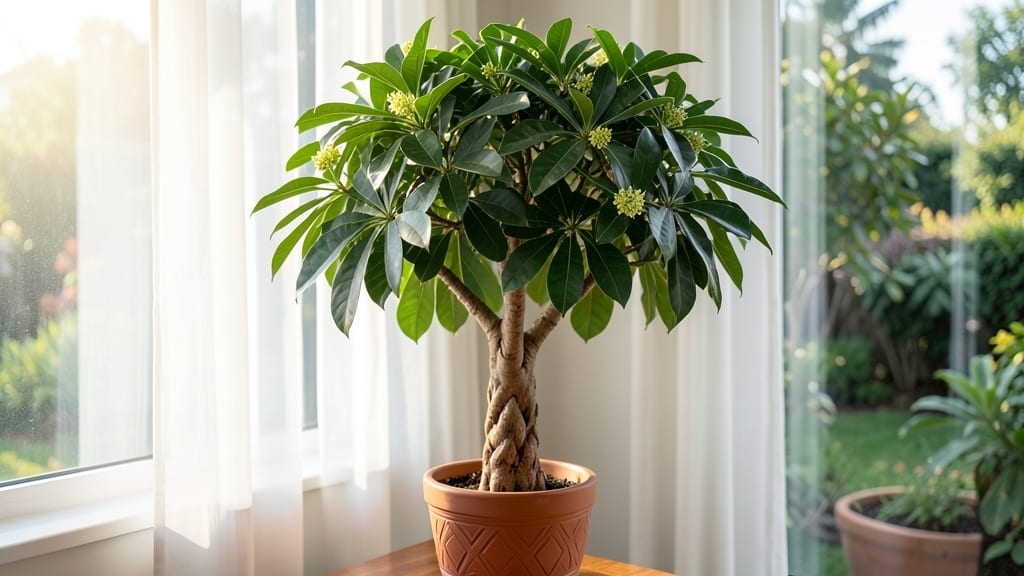
The Money Tree 🌿 can grow up to 10 feet tall indoors with the right care—but most people never see it reach that height.
If you’ve ever dreamed of a lush, money-attracting plant that grows tall enough to rival your ceiling lights, the Pachira aquatica might be your perfect indoor companion—but how high can it really climb?
The answer depends on care, pruning, and a few surprising growth secrets most gardeners overlook. Whether you want a compact tabletop plant or a towering statement piece, understanding its growth habits is the key to controlling its size.
Some Money Trees stay under 3 feet, while others stretch toward the ceiling with the right conditions.
Light exposure, pot size, and even the variety you choose all play a role in how tall your Money Tree grows. For example, a plant in bright, indirect light will grow faster than one tucked in a dim corner.
Meanwhile, pruning techniques can keep it bushy or encourage vertical growth—so your care choices directly impact its height.
In this guide, I’ll break down the factors that influence your Money Tree’s growth, share 5 care secrets to control its height, and debunk common myths about its size.
By the end, you’ll know exactly how to nurture a Money Tree that fits your space—whether you want it to stay small or reach for the sky.

Money Tree height limits: how tall can it grow indoors?
The Money Tree (Pachira aquatica) is famous for its striking braided stems and symbolic luck—but its height can vary dramatically indoors. While some gardeners swear their plants reach ceiling heights (10+ feet), others struggle to get past 3 feet.
The difference? A mix of genetics, care habits, and environmental factors. Understanding these will help you control whether your Money Tree stays compact or stretches toward the sky.
In ideal conditions, a Money Tree indoors typically grows between 3 to 10 feet, with most mature plants landing in the 6-8 foot range. However, this isn’t set in stone.
Your plant’s final height depends on light exposure, pot size, pruning practices, and even the specific variety you’ve chosen. Let’s break down what influences your Money Tree’s vertical ambitions—and how to steer its growth in the right direction.
| Factor | Impact on Height | How to Control |
|---|---|---|
| Light Exposure | Low light = 3-5 ft (stunted growth). Bright indirect = 6-10 ft (fast vertical growth). | Place near east/west windows; avoid direct sun. |
| Pot Size | Small pots (6-inch diameter) = 3-4 ft. Large pots (12+ inches) = 8-10 ft. | Repot every 2-3 years to limit root spread. |
| Pruning | No pruning = uncontrolled height. Regular pruning = bushier, controlled growth. | Trim top 2-3 inches in spring to encourage branching. |
| Variety | Standard = 6-10 ft. Dwarf varieties = 3-5 ft. | Choose Brachiaria hybrids for slower growth. |
| Fertilizer | Over-fertilizing = rapid but weak growth. Balanced feeding = strong, steady growth. | Use 10-10-10 NPK every 4-6 weeks in spring/summer. |
One of the biggest misconceptions about Money Trees is that they’ll naturally stay small. In reality, left unchecked, they’ll grow aggressively upward—especially in bright conditions. If your plant is already towering over your furniture, don’t panic.
You can prune it back to encourage bushier growth, or simply top it to maintain a manageable height. I’ve seen Money Trees rebound beautifully after pruning, often producing thicker stems and more leaves within months.
The light conditions in your home play a crucial role in determining how tall your Money Tree will grow. Place it near a bright, indirect light source, like an east- or west-facing window, to encourage healthy vertical growth.
If your space is dim, your plant will likely stay shorter and leggier. To test light exposure, rotate your pot quarter-turns weekly—this ensures even growth and prevents one side from stretching toward the window.
Pot size is another often-overlooked factor. Money Trees thrive in well-draining pots, but if you keep them in a too-large container, they’ll focus energy on filling the extra space rather than growing upward.
For a compact Money Tree, choose a pot that’s only 2-3 inches larger in diameter than the root ball. If you want a taller plant, opt for a larger pot (12+ inches) and provide plenty of light.
Not all Money Trees are created equal. The standard Pachira aquatica variety can reach 10 feet indoors, while dwarf hybrids (like the Brachiaria 'Money Tree') max out around 3-5 feet.
When shopping, check the plant’s stem thickness and leaf size—thinner stems and smaller leaves often indicate a slower-growing variety. If you’re gifting a Money Tree, a dwarf variety is the safest bet for maintaining a manageable size.
Fertilizer choices also impact height. Over-fertilizing with high-nitrogen mixes can lead to fast but weak growth, causing your Money Tree to become top-heavy and prone to falling. Instead, use a balanced 10-10-10 NPK fertilizer during the growing season (spring and summer).
Reduce feeding in fall and winter to slow growth and encourage a rest period, which can help control height over time.
If your Money Tree is already too tall for your space, don’t despair—pruning is your best friend. To encourage bushier growth, cut back the top 2-3 inches of the main stem in late winter or early spring.
This will trigger the plant to produce new side shoots, creating a fuller, more compact shape. For dramatic height reduction, you can top it multiple times, but space out pruning sessions by at least 3-4 weeks to avoid stressing the plant.
Finally, remember that patience is key with Money Trees. A young plant may only grow 6-12 inches per year, while a mature one can add 2 feet annually under ideal conditions. Track your plant’s growth by marking its height on a measuring tape or stick near the pot.
Over time, you’ll learn how your specific Money Tree responds to your care routine—and adjust accordingly to keep it at your desired height.
With the right balance of light, pruning, and pot size, you can grow a Money Tree that’s the perfect height for your home—whether you prefer a compact desk companion or a statement ceiling plant.
5 Care secrets to control your Money Tree’s height growth
Your Money Tree (Pachira aquatica) can grow anywhere from 3 to 10 feet indoors, but its height isn’t set in stone. With the right care, you can encourage a bushier shape or keep it compact—without sacrificing its health.
The key lies in understanding how light exposure, pruning techniques, and pot constraints influence growth patterns. Many gardeners accidentally create leggy, top-heavy plants by overlooking these simple adjustments.
If you’ve noticed your Money Tree stretching toward the ceiling or developing sparse foliage, it’s likely reacting to insufficient light or root-bound conditions. The good news? You can reverse this with targeted care.
Whether you want a tabletop-sized tree or a floor-filling statement plant, these five secrets will help you take control of its growth trajectory while keeping it thriving.
- 🌱 Prune strategically by cutting back 1/3 of the stem just above a leaf node to encourage bushier growth.
- ☀️ Place your plant in bright indirect light (east or west windows) to prevent leggy growth.
- ✂️ Use topping techniques to limit height—cut the main stem at desired height and propagate cuttings.
- 🪴 Repot every 2-3 years into a slightly larger pot to prevent root-bound stress that stunts growth.
- 💧 Water deeply but avoid soggy soil—overwatering causes root rot, which weakens the plant’s structure.
One of the most effective ways to control your Money Tree’s height is through pruning. When you prune at the right spots—just above a leaf node—you stimulate new growth from that area, creating a fuller, more compact shape.
For example, if your plant is stretching too tall, cut back the main stem by one-third and watch as side branches fill in within weeks. This method also works wonders for revitalizing mature plants that have become sparse.
Avoid the mistake of pruning too close to the base or removing too much foliage at once. Your Money Tree can handle light pruning every few months, but aggressive cuts can shock the plant and lead to stunted growth.
Always use sterilized scissors to prevent disease, and never prune more than 25% of the plant in a single session. Pair this with balanced fertilization (10-10-10 NPK) during spring and summer to support robust regrowth.
Light plays a crucial role in determining whether your Money Tree grows tall and leggy or short and bushy. If your plant is reaching for the light, it’s a clear sign it needs more bright indirect sunlight.
Move it to an east or west-facing window where it can receive 4-6 hours of filtered light daily. Avoid south-facing windows, which can scorch the leaves, or dim north-facing spots, which encourage weak, elongated stems.
A simple rotating schedule (turn the pot ¼ turn weekly) ensures even growth on all sides.
For those who prefer a low-maintenance, compact Money Tree, pot constraints are your best friend. Choose a smaller pot (just 1-2 inches larger in diameter than the root ball) to limit upward growth. Root-bound conditions naturally slow height progression while encouraging the plant to branch out horizontally.
Just be sure to repot every 2-3 years to refresh the soil and provide slight room for root expansion. Over-potting can lead to excessive water retention, which harms the plant’s health.
Finally, watch out for these common mistakes that sabotage your Money Tree’s growth: overwatering (which causes root rot), neglecting to dust leaves (reducing light absorption), and using poor-quality soil without drainage.
A well-draining cactus or African violet mix combined with morning watering (before 10 AM) keeps your plant happy and encourages steady, controlled growth. With these secrets, you’ll have a Money Tree that’s not only lucky for your wallet but also perfectly sized for your space! 🌿