
Pruning
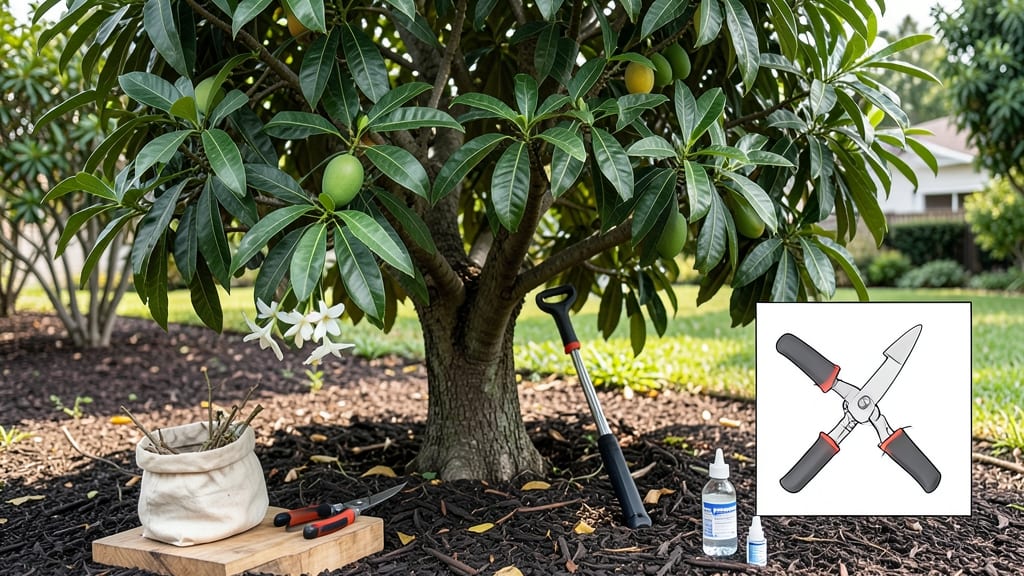
Pruning a mango tree for fruit isn't just about cutting branches—it's about unlocking a year-round harvest your neighbors will envy. 🌱 I learned the hard way that skipping pruning means fewer, smaller fruits and more disease trouble.
The right cuts at the right time transform a struggling tree into a heavy-bearing powerhouse. You'll need sharp pruners, gloves, and a clear day to see the branches properly. Focus on removing deadwood first, then thin crowded areas to let sunlight reach the center.
Mango trees reward precise cuts—never take more than 25% of the canopy in one session, or you'll shock the tree. After pruning, you'll notice new growth within weeks, with fruit setting more aggressively by next season.
The tree becomes easier to harvest, and those prized mangoes develop sweeter flavors with better exposure. Just avoid pruning during heavy fruit production—save that for the dormant season. This method works for both young trees establishing structure and mature trees needing rejuvenation.
The key is consistency—prune properly each year, and you'll enjoy heavier harvests with less effort. Let's get those branches shaped right!
📚 In This Guide
- What you need
- Instructions
- Tips and common mistakes
- Wrapping up and next steps
What you need
- ● Pruning shears: Bypass pruners (8-10 inches) for small branches (up to ½-inch thick). Opt for high-quality, sharp blades to avoid tearing.
- ● Pruning saw: A curved-tooth pruning saw (10-12 inches) for thicker branches (½-inch to 2 inches). Look for a comfortable grip and durable metal.
- ● Loppers: Bypass loppers (12-16 inches) for medium branches (2-4 inches thick). Choose ones with a long handle for leverage.
- ● Gloves: Heavy-duty gardening gloves (waterproof, cut-resistant) to protect your hands from thorns and rough bark.
- ● Disinfectant: 70% isopropyl alcohol or a 10% bleach solution (mix 1 part bleach with 9 parts water) to sterilize tools between cuts and prevent disease.
- ○ Sealing wax or pruning paste: (Optional but helpful) To coat larger cuts (over ½-inch) and prevent infection or pests from entering.
- ● Ladder or step stool: Sturdy and tall enough to reach the upper branches safely. Ensure it’s rated for your weight.
- ● Bucket or trash bag: For collecting pruned branches and debris. A 5-gallon bucket or large bag works well.
- ● Sharpie or permanent marker: To label branches you plan to prune later or mark areas for future reference.
- ● Safety gear: Safety glasses (to protect from debris) and closed-toe shoes (to avoid stepping on thorns).
- ● Extension pole pruners: For high branches that are difficult to reach without a ladder.
- ● Tree climbing spikes (with caution!): Only for experienced climbers—use with extreme care on mango trees!
- ● Rope or harness: If climbing, ensure it’s rated for arboriculture and used with a buddy system.
- ● Camera or phone: To document your pruning progress or take notes for future reference.
- ● Pruning guide or ruler: A small measuring tool to ensure you’re making clean cuts at the right angles.
Step-by-Step guide to pruning a mango tree for maximum fruit
Here’s the method I use to transform wild, unproductive mango growth into a tree that bears fruit year after year.
✂️ Step 1: Time Your Pruning for Peak Productivity
Prune your mango tree during its dormant season, which in most tropical climates falls between late winter and early spring (just before new growth begins). This timing ensures the tree focuses energy on fruit production rather than repairing cuts. I wait until at least 2 weeks after flowering—cutting too early can remove potential fruit buds.
If you’re in a subtropical zone with cooler winters, prune right after harvest season when the tree naturally slows growth. Avoid pruning during heavy fruit set or extreme heat—stress weakens the tree and invites pests. You’ll know you’ve timed it right when the tree shows fresh, green leaves but hasn’t yet burst into rapid growth.
🌿 Step 2: Remove Dead, Diseased, or Crossing Branches First
Start by eliminating dead or diseased wood—these branches drain energy and spread rot. Look for brown, brittle limbs or those with blackened spots, oozing sap, or fungal growth. Cut these back to the main trunk or a healthy lateral branch, using clean, sharp pruners to avoid tearing the bark.
Next, remove crossing or rubbing branches—these create wounds that invite infection and weaken the tree’s structure. You’ll spot these as limbs growing toward each other, creating a V-shaped intersection. Cut the smaller branch at its base, or if both are equal, remove the one growing upward to improve airflow and sunlight penetration.
☀️ Step 3: Open the Canopy for Sunlight and Airflow
Mango trees fruit best when sunlight reaches all branches, so thin the canopy to let light penetrate to the inner third of the tree. Focus on removing 20-30% of the foliage—this might sound aggressive, but trust me, it pays off. Start with overcrowded branches growing inward or downward, cutting them back to a strong outward-facing lateral branch or the main trunk.
Leave 3-4 main scaffold branches evenly spaced around the trunk—these will support the bulk of your fruit. Avoid "lion’s tailing" (cutting everything back to a stub), which stresses the tree. Instead, make cuts just above a leaf node or outward-facing bud so new growth has a clear path. You’ll see healthier, more vigorous regrowth within weeks.
🍈 Step 4: Shape for Fruit Production (The Secret Move)
This is where most gardeners miss out—prune to encourage flowering. Mango trees fruit on new wood, so you want to stimulate balanced growth. Cut back vigorous, vertical shoots (called "water sprouts") to a side branch or bud, redirecting energy toward horizontal branches that bear fruit.
For established trees, shorten last year’s growth by 1/3 on non-fruiting branches. This trick forces the tree to produce more flowering laterals next season. Avoid heavy pruning on fruit-bearing branches—just remove excessive leaves or weak growth to keep energy focused on ripening fruit. You’ll notice more blossoms and smaller, but heavier crops the following year.
⏰ Step 5: Clean Up and Monitor for Recovery
After pruning, sterilize your tools with rubbing alcohol to prevent spreading disease. Rake up and dispose of all clippings—don’t compost them, as fungal spores can linger. Seal larger cuts (over ½ inch thick) with pruning sealant to protect against pests, but skip this for small cuts—mango bark heals quickly on its own.
Water the tree deeply after pruning to help it recover, but avoid overwatering—soggy soil invites root rot. Watch for new shoots emerging from cut areas within 4-6 weeks. If you see yellowing leaves or wilting, you’ve pruned too aggressively. Adjust next year by removing less foliage and focusing on structural shaping instead.
Tips & tricks for pruning a mango tree for maximum fruit
Here’s what nobody tells you about transforming a wild mango tree into a fruit-bearing powerhouse—these tricks make all the difference.
Timing is Everything: The two-week waiting period after flowering in Step 1 is non-negotiable. I learned this the hard way after cutting too early and losing potential fruit buds. If you're unsure whether your tree has finished flowering, check for any remaining blossoms—if they're all gone and new leaves are emerging, you're good to go. For subtropical climates, prune immediately after harvest when the tree naturally slows its growth cycle. This timing ensures the tree puts all its energy into next year's fruit production rather than recovering from cuts.
The 20-30% Rule in Step 3: When thinning the canopy, resist the urge to go lighter on foliage—this is where most gardeners underestimate what their mango tree needs. That 20-30% removal might seem drastic, but it's essential for sunlight penetration to the inner third of the tree. I recommend starting with the most crowded branches first, as these are the ones blocking light from reaching the center. You'll notice a dramatic difference in fruit quality and quantity after just one proper pruning session.
Cutting Technique Matters: In Step 2 and Step 4, always make clean cuts just above a leaf node or outward-facing bud. This creates an ideal surface for new growth to emerge. I use sharp pruners and make a slight downward angle on the cut to prevent water from pooling on the wound. For larger branches, make the cut just outside the branch collar—the swollen area where the branch meets the trunk—to promote faster healing. This technique reduces the risk of disease and helps the tree recover more quickly after pruning.
Recovery Monitoring: The 4-6 week window for new shoots in Step 5 is your best indicator of success. If you don't see new growth emerging from the cut areas within this timeframe, you may have pruned too aggressively. Watch for fresh green leaves and small shoots—these are signs your tree is recovering well. If you notice yellowing leaves or wilting, it's a clear signal to scale back your pruning efforts next time and focus more on structural shaping rather than heavy foliage removal.
Pro Tips for Prune A Mango Tree For Fruit
- Here’s what nobody tells you about transforming a wild mango tree into a fruit-bearing powerhouse—these tricks make all the difference.
- Timing is Everything: The two-week waiting period after flowering in Step 1 is non-negotiable.
- The 20-30% Rule in Step 3: When thinning the canopy, resist the urge to go lighter on foliage—this is where most gardeners underestimate what their mango tree needs.
Frequently asked questions
Got questions about pruning your mango tree? You’re not alone! Here are answers to the most common concerns—so you can prune with confidence and enjoy a bountiful harvest.
When is the best time to prune a mango tree for fruit?
The ideal time is late winter or early spring (before new growth starts), but light pruning can happen year-round. Avoid heavy pruning during flowering or fruiting seasons—this can stress the tree and reduce yields. For tropical climates, prune after the rainy season for best results.
How much should I prune my mango tree?
Start conservatively! Remove no more than 20-30% of the tree’s foliage in a single session. Focus on dead, diseased, or crossing branches first, then thin out excess growth to improve airflow. Over-pruning weakens the tree and may delay fruiting.
Will pruning hurt my mango tree’s fruit production?
Not if done right! Pruning actually boosts fruit quality by redirecting energy to fewer, healthier branches. However, avoid aggressive cuts during flowering—this can drop blossoms. Pro tip: Prune lightly in the first 2-3 years to establish structure before heavy fruiting.
What if my mango tree isn’t bearing fruit after pruning?
Several factors could be at play:
- Age: Young trees (under 3-5 years) need time to mature.
- Climate: Mangoes thrive in warm, tropical conditions—ensure your tree gets enough sun (6+ hours/day).
- Pollination: Hand-pollinate with a soft brush if bees are scarce.
- Soil/Nutrients: Test soil pH (ideal: 6.0–7.5) and fertilize with potassium-rich compost.
Can I prune a mango tree too much?
Absolutely!
Over-pruning leads to:
- Weakened branches (more prone to breakage).
- Reduced flowering/fruiting the following season.
- Stress that invites pests or disease.
Wrapping up and next steps
Pruning your mango tree isn’t just about shaping—it’s the secret sauce for a bountiful harvest! 🌱 By following the right techniques, timing, and tools, you’ll encourage stronger growth, better fruit production, and a healthier tree. Remember, consistency is key, so stay patient and observe your tree’s response.
Ready to transform your mango tree into a fruit-bearing powerhouse? Start by scheduling your next pruning session—whether it’s for seasonal adjustments or correcting mistakes. Happy pruning, and may your tree reward you with juicy, sweet mangoes all year round! 🍈✨