
Pruning
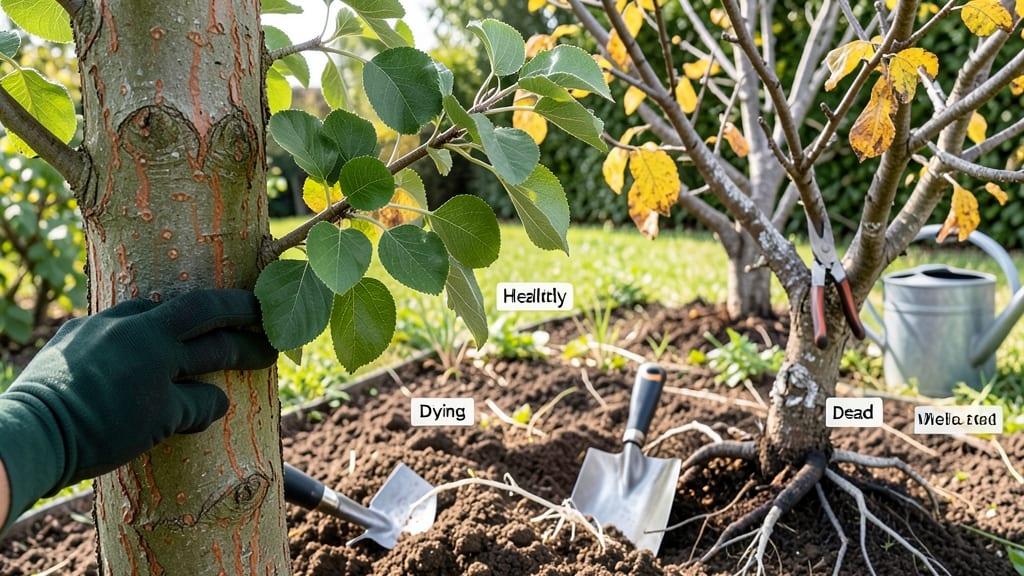
Determining whether your apple tree is dead requires checking for green leaf buds in spring or fresh growth after pruning, while also inspecting for bark cracks, dying branches, and signs of pest infestation. If your tree remains completely bare with no new growth for multiple years, it's most likely dead.
Apple trees are surprisingly resilient, and even if they look lifeless in winter, they often hide signs of life beneath the surface. 🌱 The key is understanding what to look for beyond just the absence of leaves—healthy bark, flexible branches, and even root activity can all indicate your tree might still recover.
I’ve seen trees with 90% dead branches come back to life after proper care, so don’t rush to dig it up just yet.
Seasonal timing matters too: early spring is the best time to assess your tree’s health, as that’s when dormant buds begin to swell. If you notice any green tips emerging from the buds or even a single new leaf, your tree is likely still alive and worth saving.
The worst-case scenario is a tree that’s been completely neglected for years with no signs of recovery—even then, it’s worth trying a few revival techniques before giving up.
💡 In This Article
- 5 Critical Signs Your Apple Tree Is Still Alive
- How to Revive a Stressed Apple Tree Before It Dies
5 Critical signs your apple tree is still alive
Apple trees have a remarkable ability to hide their vitality beneath winter’s bare branches. The first clue lies in the bark: healthy bark should feel firm and slightly rough to the touch, with a consistent color ranging from gray-brown to reddish hues.
If you scrape away a small section of outer bark (about 1/8-inch deep), you’ll expose green or white tissue underneath—this living cambium layer is your tree’s lifeline. In contrast, dead bark appears dark, sunken, or crumbly, often with a hollow sound when tapped with a small tool.
Bud health is another critical indicator. In late winter or early spring, inspect the buds along the branches. Live buds appear plump, firm, and greenish-brown when cut open, while dead buds feel shriveled and hollow inside.
A single healthy bud cluster can signal the tree’s survival system is still active. 🌱 What’s fascinating is how these buds can remain dormant for years before sprouting—some apple varieties even produce new shoots from old wood if the roots stay alive.
Even if 90% of the tree looks dead, those hidden buds might be your saving grace.
Branch flexibility offers surprising insight. Bend a small branch (about 1/4-inch thick)—if it snaps cleanly with a brittle sound, it’s dead. But if it bends slightly before springing back, the vascular system is still transporting water.
This test works best in late winter when branches are dormant but not frozen. For larger branches, look for green shoots emerging from the base or cracks in the bark—these are signs of internal regrowth.
Root vitality often determines whether a tree can recover. While you can’t see roots directly, dig a small hole (about 6-8 inches deep) near the base. Healthy roots appear white or light tan and feel firm when touched.
If you find only dark, mushy roots, the tree’s nutrient transport system has failed. However, even seemingly dead roots can regenerate if the tree’s crown remains alive—this is why early intervention matters.
Seasonal timing plays a crucial role in diagnosis. In summer, check for new leaf growth along branches that appeared dead in winter.
Some apple varieties produce secondary shoots even if the main branches are damaged. 🍏 Another telltale sign is the presence of aphids or other pests—while annoying, their existence proves the tree is still metabolizing sugars.
Conversely, a tree with no pests and no new growth for three consecutive years is likely beyond revival.
Finally, consider the tree’s history. Apple trees can survive droughts, frost damage, and even partial root loss if the crown remains intact. I’ve seen trees with only 20% viable branches produce fruit within two seasons after proper care.
The key is patience—what seems dead in winter might just be resting, waiting for the right conditions to rebound.