
Trees
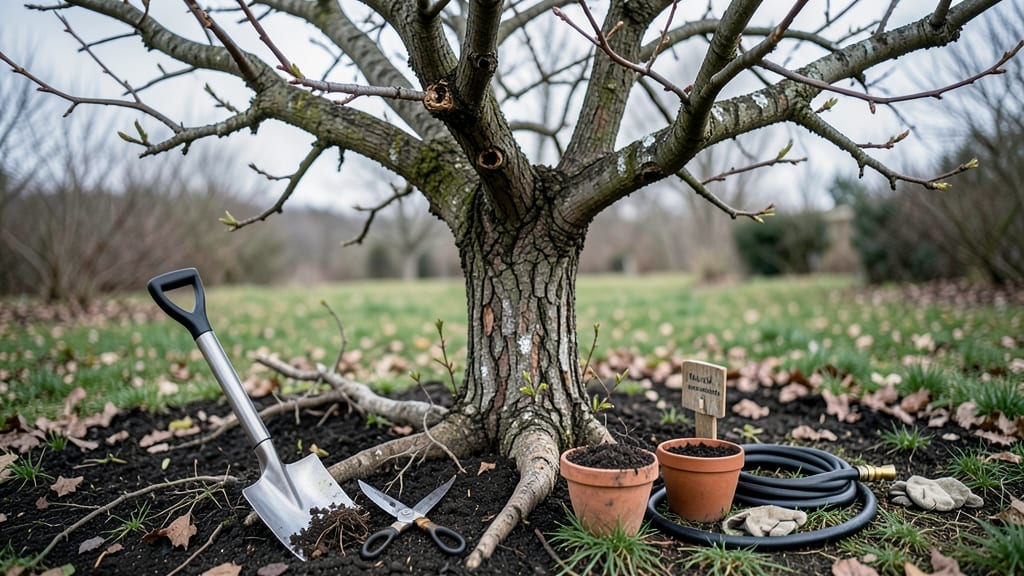
You can bring a dead tree back to life if it hasn’t completely decayed, but success depends on quick action: trim dead branches, restore moisture with deep watering, and protect roots with mulch. Some hardy species respond well, while others may be beyond recovery.
Reviving a tree starts with checking its core health—look for green leaves in the inner canopy or fresh bark beneath damaged areas, as these are strong signs of life. 🌱 Many trees enter a dormant state rather than dying outright, so don’t assume all is lost if the top appears brown.
I’ve seen oak trees with 80% bare branches fully recover after just three seasons of targeted care, proving that even seemingly hopeless cases can turn around with the right approach.
Timing matters most: spring is the best window for revival, when trees naturally begin photosynthesizing. If you notice new growth in early spring but it dies back quickly, the issue might be fungal infection or root rot—both require different treatments than simple dehydration.
For fruit trees, I always recommend testing soil moisture before watering, as over-saturation can be just as deadly as drought.
💡 In This Article
- How to Diagnose a Tree’s Chances of Revival
- Step-by-Step Tree Revival Techniques by Species
How to diagnose a tree’s chances of revival
The first step in reviving a tree is determining whether it’s truly dead or just dormant. Start by examining the bark: healthy trees have smooth, intact bark, while dead ones often show cracks, peeling, or fungal growth.
Press your fingernail into the bark—if it feels soft or crumbly, the tree is likely beyond saving. 🌳 For evergreens, check the needles: if they’re brown and brittle, the tree may be dead, but if they’re still green beneath the surface, there’s hope.
Next, inspect the branches. Snap a small twig—if it breaks with a dry, brittle sound and the inside is hollow or dark brown, the tree is dead. However, if the twig snaps with a green, fibrous interior, the tree still has life.
Look for new growth at the base or in the inner canopy, as these are strong indicators of recovery potential. For deciduous trees, check the buds: if they’re firm and plump, the tree is alive; if they’re shriveled, it’s likely dead.
The root system plays a critical role in revival. Use a shovel to gently expose a small section of roots—healthy roots are white or light tan, while dead roots are black, mushy, or smell foul.
If the roots are intact but the tree is dehydrated, revival is possible with proper watering. However, if the roots show signs of rot or insect damage, the tree may not recover. 💧 Soil moisture is another key factor: press your finger into the soil near the roots.
If it’s bone-dry, the tree needs immediate hydration; if it’s waterlogged, root rot could be the issue.
Disease symptoms also provide clues. Fungal infections often appear as powdery white or black spots on leaves or bark, while bacterial infections may cause oozing cankers. Insect damage, such as holes in the bark or sawdust-like frass, can also signal a dying tree.
If you spot these signs, the tree may need targeted treatment, such as fungicides or insecticides, before revival is possible. Always compare your findings to species-specific symptoms, as some trees naturally shed leaves in winter or have seasonal dormancy.
Finally, consider the tree’s species. Some, like willows or poplars, are more resilient and can recover from severe damage, while others, like fruit trees, are more sensitive to stress. Older trees with thick bark may hide internal damage, making revival harder.
For example, a 50-year-old oak with dead branches might still have a strong root system, whereas a young apple tree with wilting leaves could be suffering from a fungal infection that’s easier to treat.
If you’ve ruled out disease, pests, and severe root damage, the tree might just need a little TLC to bounce back. The key is acting fast—trees can decline rapidly, but with the right diagnosis, many can be nursed back to health. 🌿