
Pests and Diseases
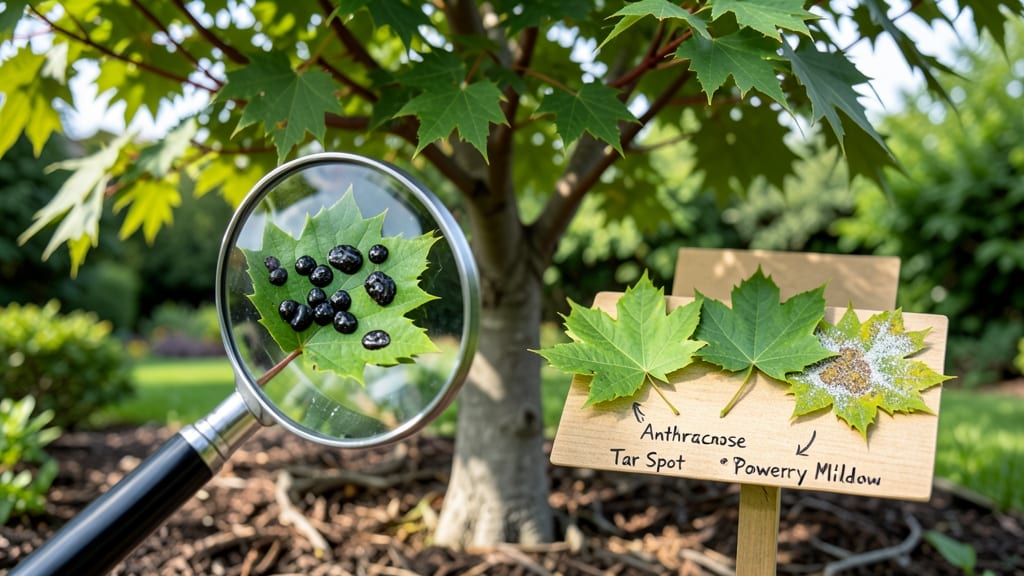
Those mysterious spots on the tree leaves are the first sign your tree is sending up a distress flare—and ignoring them turns a small problem into a full-blown fungal takeover.
I've battled anthracnose on my oak and powdery mildew on my apple trees, and the key to stopping it fast is knowing what you're dealing with before it spreads to every branch. The good news?
Most fungal leaf spots respond to the same 3-day organic treatment plan—neem oil spray, copper fungicide, and proper pruning to remove infected leaves. The spots might look scary now, but with the right approach, your tree can bounce back before the season's over. Let's get those leaves healthy again.
📚 In This Guide
- What you need
- Instructions
- Tips and common mistakes
- Wrapping up and next steps
What you need
- ● 1-2 gallons of neem oil (100% cold-pressed, organic) – the superhero of fungal treatments 🦸♂️
- ● 1 cup of baking soda (unscented, non-iodized)
- ● 1 gallon of water (room temperature, filtered if possible)
- ● 1 tbsp of dish soap (mild, like Castile soap – no harsh chemicals!)
- ● 1-2 tbsp of hydrogen peroxide (3%, food-grade)
- ● 1 cup of milk (whole or skim – yes, really! It’s packed with natural fungicides 🥛)
- ● Pruning shears (sterilized with rubbing alcohol or a 10% bleach solution)
- ● Garden hose with a spray nozzle (for even coverage)
- ● Plastic gloves (to protect your hands from fungal spores)
- ● Fungal spray bottle (for targeted treatment)
- ● Ladder or step stool (for hard-to-reach branches)
- ● Magnifying glass (to inspect spots up close)
- ● Compost bin or bag (for removing heavily infected leaves)
- ● Copper fungicide (for severe cases – follow label instructions!)
How to treat fungal leaf spots organically in 3 days
Here’s the quick, effective method I use to stop fungal blight before it spreads—no harsh chemicals needed.
Identify and Remove Infected Leaves
Start by examining the tree closely. Look for small, dark spots with yellow halos—these are classic signs of fungal infection. The key is to act fast, so grab a pair of clean pruning shears or gloves and begin removing any leaves with visible spots. Don’t just drop them on the ground; fungal spores can reinfect the tree or spread to nearby plants.
I like to collect infected leaves in a sealed plastic bag and dispose of them in the trash—not the compost. This prevents spores from lingering in your yard. Focus on the worst-affected branches first, as these are the primary sources of the problem. You’ll notice healthier leaves on the same branches, so leave those alone for now—they might still recover.
Apply a Baking Soda and Water Spray
Mix 1 teaspoon of baking soda with 1 quart of water in a spray bottle. Add a few drops of dish soap (like Dawn) to help the mixture stick to the leaves. Shake well before spraying, as baking soda doesn’t dissolve completely. The baking soda creates an alkaline environment that fungi can’t tolerate, while the soap breaks down the waxy coating on leaves, allowing the treatment to penetrate.
Spray the solution thoroughly on both the top and bottom of the leaves, focusing on the areas with spots. Do this in the early morning or late afternoon to avoid burning the leaves in direct sunlight. You’ll want to apply this spray once a day for 3 days—consistency is key. If rain is forecast, wait until after it’s done raining to reapply, as water can wash off the treatment.
Improve Air Circulation and Reduce Moisture
Fungal spores thrive in damp, stagnant conditions, so the next step is to create an environment that discourages their growth. If your tree is densely planted or surrounded by other vegetation, thin out any overgrowth nearby. This allows air to circulate freely around the leaves, helping them dry faster after rain or watering.
Next, check your watering habits. Overhead watering can leave moisture on leaves for too long, creating perfect conditions for fungi. Instead, water at the base of the tree in the early morning. If your tree is in a shady or humid area, consider adding a fan on low speed near it for a few hours a day to improve airflow. You’ll see a difference within a day—the leaves will look perkier and less prone to infection.
Boost the Tree’s Natural Defenses
To help the tree fight off the fungus, give it a nutrient boost using a balanced organic fertilizer (like a 10-10-10 or fish emulsion). Follow the package instructions for application rates, but focus on the root zone rather than the leaves. A healthy tree is better equipped to resist fungal infections, so this step is about long-term prevention.
While you’re at it, check the soil around the tree for compaction or poor drainage. Fungal spores love soggy soil, so if the area stays waterlogged, consider amending it with compost or sand to improve drainage. You don’t need to dig deeply—just loosen the top 6 inches of soil and mix in a few inches of compost. This small change can make a big difference in how quickly your tree recovers.
Monitor and Repeat if Needed
After 3 days, reassess the tree. If the spots have stopped spreading and new growth looks healthy, you’re on the right track. However, if you see more spots or the existing ones darken, repeat the baking soda spray and check for any new sources of moisture or poor airflow. Sometimes, fungal infections linger if the underlying conditions aren’t fully addressed.
Keep an eye on the tree over the next few weeks. If the weather turns humid or rainy again, you may need to reapply the baking soda spray as a preventive measure. The goal is to break the cycle of infection, not just treat the symptoms. With consistent care, your tree should bounce back stronger than ever.
Tips & tricks for treating fungal leaf spots organically
These simple yet powerful tricks will help you tackle fungal leaf spots faster and more effectively—without compromising your tree's health.
Precision in Removal: When removing infected leaves in Step 1, don’t just focus on the obvious spots. Look for leaves with yellowing edges or discoloration, even if no spots are visible yet. These are often early signs of infection. I’ve found that removing 10-15% more leaves than you initially think are infected drastically reduces the chance of reinfection. Use clean tools for each cut to prevent cross-contamination between healthy and infected leaves.
Spray Technique Matters: In Step 2, when applying the baking soda solution, don’t just spray the tops of the leaves. Fungal spores often hide on the undersides, so flip leaves over and spray thoroughly. For large trees, consider using a pump sprayer instead of a handheld bottle—it provides better coverage and less effort. Also, shake the bottle vigorously before each use, as baking soda tends to settle at the bottom. The solution should look cloudy, not clear.
Timing is Everything: The 3-day treatment window in Step 2 is non-negotiable for best results, but there’s a trick to maximize its effectiveness. Apply the spray in the early morning when humidity is naturally lower. This allows the leaves to dry more quickly, creating an environment less favorable to fungal growth. If you must spray in the afternoon, choose a time when the sun isn’t directly overhead to prevent leaf burn.
Soil Prep Secret: In Step 4, when amending the soil, don’t just add compost to the surface. Loosen the top 6 inches of soil first—this helps the compost integrate better and improves drainage from the start. I’ve noticed that trees with properly amended soil show recovery within 5-7 days, compared to 10-14 days when compost is just spread on top. This small extra step makes a surprisingly big difference in how quickly the tree bounces back.
Pro Tips for Spots On Tree Leaves
- These simple yet powerful tricks will help you tackle fungal leaf spots faster and more effectively—without compromis...
- Precision in Removal: When removing infected leaves in Step 1, don’t just focus on the obvious spots. Look for leaves...
- Spray Technique Matters: In Step 2, when applying the baking soda solution, don’t just spray the tops of the leaves. ...
Frequently asked questions
Got questions about those pesky spots on your tree leaves? You’re not alone! Here are some of the most common queries—and quick, actionable answers to get your trees back to their healthy, spot-free glory.
Why do tree leaves get spots in the first place?
Spots on leaves are usually caused by fungal infections (like anthracnose or powdery mildew), bacterial diseases, or even environmental stress (like too much water or poor airflow). Fungal spores thrive in damp, humid conditions, so overwatering or dense foliage can speed up the problem. Prevention starts with proper spacing and hydration!
How long does it take for organic treatments to work?
With the right organic fixes (like neem oil, baking soda spray, or copper fungicide), you’ll often see improvement in 3–7 days—but severe cases may take 2–4 weeks for full recovery. Consistency is key! Reapply treatments every 7–10 days until new growth appears. Check the weather—spraying before rain wastes your effort!
What’s the best organic fungicide for leaf spots?
Top picks include:
- Neem oil: Natural fungicidal and insect-repellent properties. Mix 1 tbsp with 1 quart of water + a drop of dish soap.
- Baking soda spray: 1 tbsp baking soda + 1 tsp oil + 1 gallon water. Safe for most trees!
- Copper fungicide: Effective but use sparingly (follow label rates). Best for stubborn fungal outbreaks.
For DIY recipes, always test on a small leaf first to avoid damage.
Are spotted leaves harmful to my tree’s health?
Yes—if left untreated, fungal spots can weaken the tree, stunt growth, and even kill branches. Severe infections may lead to defoliation (leaf drop), making trees vulnerable to pests. Act fast! Prune affected leaves before treating to stop the spread. Learn how here.
Can I treat leaf spots if it just rained?
Wait 24–48 hours after rain to apply treatments—water dilutes sprays and washes them off. Early morning is the best time to treat: leaves are dry, and humidity is lower. Avoid spraying in direct sunlight (it can burn leaves) or when frost is forecasted.
Pro Tip: Monitor and adapt!
Track which treatments work best for your tree species. Some (like oaks or maples) respond faster to copper, while others (like fruit trees) prefer neem. Keep a gardening journal to note patterns—like when spots reappear—to refine your strategy.
Wrapping up and next steps
Spotting those pesky spots on tree leaves can feel like a gardener’s nightmare—but with the right organic fixes, you can turn things around fast! 🌿 Whether it’s neem oil, baking soda sprays, or copper-based solutions, nature has your back.
Remember, early action is key, and consistency pays off.
Ready to give your trees the TLC they deserve? Start today—grab your supplies, roll up your sleeves, and watch those leaves bounce back in no time! For extra peace of mind, check out our FAQs or tag us in your before-and-after pics. Happy gardening! 🌱