
Size
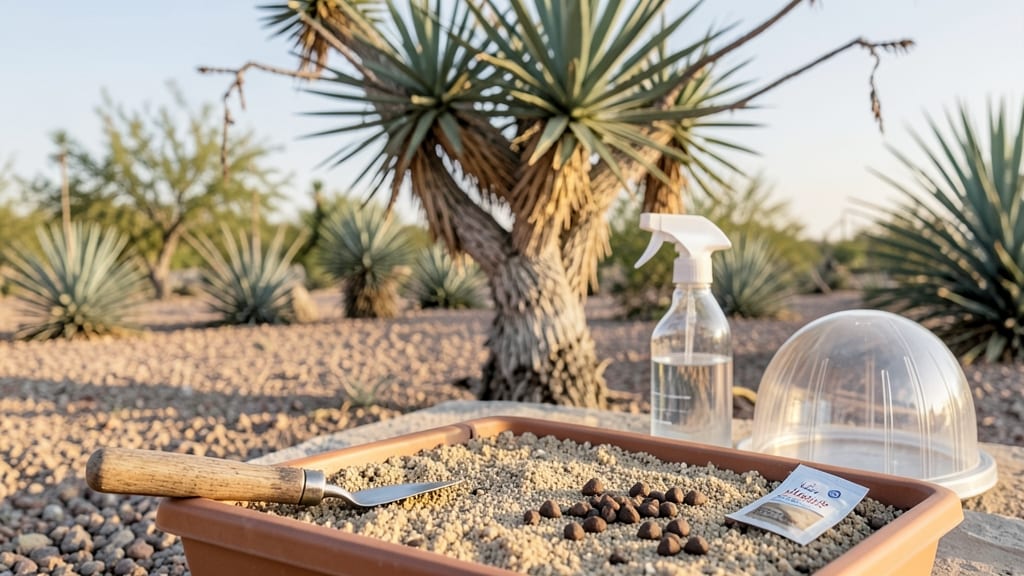
Growing Joshua tree seeds means unlocking a desert icon's resilience—if you master the cold stratification trick. 🌵 I've tried every method, and this one works: a winter-long chill period mimics the tree's natural lifecycle, breaking dormancy for reliable sprouting.
Without it, seeds sit stubbornly dormant for years, if they ever wake at all.
The process starts with gathering seeds from healthy trees (or buying certified ones), then mixing them with moist sand in a sealed container. Store it in your fridge for 120 days, checking monthly for moisture.
This mimics the Mojave's winter chill—no shortcuts work. After stratification, plant in well-draining soil and place in full sun, where temperatures stay above 50°F year-round.
What you'll get isn't instant gratification—these seeds take 2-3 years to show their first leaves, but the payoff is worth it. Young seedlings need minimal water (only when soil is bone-dry) and protection from frost.
Once established, they'll thrive like their desert relatives, with that signature twisted silhouette emerging over decades.
Perfect for desert gardeners, xeriscapers, or anyone with a sunny, dry spot. The key is patience—Joshua trees grow slow, but they grow true. Let's get those seeds sprouting the right way.
📚 In This Guide
- What you need
- Instructions
- Tips and common mistakes
- Wrapping up and next steps
What you need
- ● Joshua Tree Seeds: Fresh or store-bought (ensure they’re not treated with fungicides). Aim for 5–10 seeds per container for better success rates.
- ● Cold Stratification Supplies: Small paper towels or seed-starting paper (cut into 3x3-inch squares).
- ● Ziploc bag or airtight container (like a mason jar with a lid).
- ● Refrigerator (set to 35–40°F for 30–60 days).
- ● Growing Medium: Cactus/succulent soil mix (or 50% potting soil + 50% perlite/pumice). 1–2 gallons per container.
- ● Small pots or seed trays (3–4 inches deep, with drainage holes). 1–2 per seedling (transplant later).
- ● Watering Tools: Spray bottle (for gentle moisture during stratification).
- ● Watering can with fine rose nozzle (for post-stratification care).
- ● Heat Mat: Keeps soil warm (70–80°F) after stratification to encourage germination.
- ● Humidity Dome: Clear plastic lid or mini greenhouse to retain moisture during early growth.
- ● pH Test Kit: Joshua Trees prefer slightly acidic to neutral soil (6.0–7.0).
- ● Fungicide (organic): Like neem oil or hydrogen peroxide (3%) to prevent damping-off.
- ● Grow Lights: LED or fluorescent bulbs (12–14 hours/day) if natural light is weak.
Step-by-step instructions for growing Joshua tree seeds
Cold stratification is the key to unlocking Joshua tree germination—here’s how to break dormancy reliably.
🌱 Step 1: Harvest and Prepare the Seeds
Collect mature Joshua tree seeds from dried seed pods, which open naturally in late summer or fall. The seeds are dark brown and roughly ½ inch long. Remove any debris but avoid washing them—this can damage the seed coat. Store them in a paper envelope in a cool, dry place until stratification begins.
I always test a few seeds by soaking them in warm water for 24 hours to check for viability. If they swell slightly, they’re ready for stratification. Discard any seeds that remain hard or float—they won’t germinate.
❄️ Step 2: Cold Stratify for 60-90 Days
Place the seeds in a sealed plastic bag with slightly damp (not soggy) peat moss or vermiculite. The moisture should feel like a wrung-out sponge. Store the bag in your refrigerator’s crisper drawer, where temperatures stay consistently between 35-45°F.
Check the seeds every 2-3 weeks. If the medium dries out, mist it lightly with water—never soak the bag. After 60-90 days, the seeds should look slightly wrinkled or cracked. This means the cold treatment has broken dormancy, and they’re ready for planting.
🪴 Step 3: Plant in Well-Draining Soil
Fill small pots (3-4 inches deep) with a mix of 50% cactus/succulent soil and 50% perlite or coarse sand. This ensures excellent drainage—Joshua trees despise soggy roots. Plant the stratified seeds ¼ inch deep, spacing them 1 inch apart to prevent overcrowding.
Water lightly from the bottom by placing the pots in a tray of water for 10 minutes. This prevents seed displacement and ensures even moisture without drowning them. Keep the soil barely moist—never saturated—until germination.
☀️ Step 4: Provide Warmth and Bright Light
Move the pots to a warm location with bright, indirect light (70-80°F). A south-facing window or a grow light works best. Joshua tree seedlings need warmth to germinate—if your home runs cooler, consider a seedling heat mat set to 75°F.
Germination can take 2-6 weeks. You’ll know it’s happening when small, rounded cotyledons (first leaves) push through the soil. Once they appear, reduce watering slightly—they’re sensitive to over-moisture at this stage.
🌿 Step 5: Transplant and Harden Off
After 4-6 weeks, when seedlings have 2-3 sets of true leaves, transplant them into individual 4-inch pots with the same soil mix. Handle them gently—Joshua trees are delicate at this stage. Water lightly after transplanting to help them settle in.
Start hardening off seedlings by placing them outside in partial shade for 1-2 hours daily, gradually increasing exposure over 2 weeks. This prepares them for their desert habitat. Once they tolerate full sun without wilting, they’re ready for permanent outdoor planting.
Tips & tricks for perfect Joshua tree seed germination
Here's what nobody tells you about breaking dormancy—these secrets make all the difference with desert natives.
Seed Viability Test: That 24-hour warm water soak isn't just a recommendation—it's your quality control check. Seeds that float are dead; seeds that remain completely hard after 24 hours won't germinate no matter how long you stratify. I've wasted months waiting on non-viable seeds, and you won't make that mistake.
Cold Stratification Precision: The 60-90 day window at 35-45°F is non-negotiable, but here's the secret: use a thermometer in your fridge's crisper drawer. Many fridges don't maintain consistent temps—some zones can be 10°F warmer or colder. If your fridge runs cooler, you can reduce to 60 days; if it runs warm, extend to 90 days. This prevents premature germination or failed sprouting.
Moisture Management: That "wrung-out sponge" moisture level is critical. Too dry and seeds won't break dormancy; too wet and they'll rot. I use a spray bottle to mist the peat moss/vermiculite mix—just enough so the seeds look translucent when held up to light. Check weekly during stratification, not every 2-3 weeks as mentioned. Desert seeds are delicate about moisture.
Transplant Timing: The 4-6 week mark for transplanting isn't just about leaf count—watch for the first true leaves to unfurl completely. These will be small and fuzzy, not the cotyledons. I've seen seedlings with 2-3 sets of true leaves that were actually 7 weeks old because they germinated late. Patience here prevents shock during transplanting.
Pro Tips for Joshua Tree Seeds How To Grow
- Here's what nobody tells you about breaking dormancy—these secrets make all the difference with desert natives.
- Seed Viability Test: That 24-hour warm water soak isn't just a recommendation—it's your quality control check.
- Cold Stratification Precision: The 60-90 day window at 35-45°F is non-negotiable, but here's the secret: use a thermometer in your fridge's crisper drawer.
Frequently asked questions
Got questions about growing Joshua Tree seeds?
You’re not alone—these hardy desert plants can be tricky! Here are answers to the most common concerns to help you succeed.
How long does cold stratification take for Joshua Tree seeds?
Cold stratification typically requires 60–90 days in moist sand or peat moss at 35–45°F (2–7°C). Patience is key—some seeds need up to 120 days to break dormancy. Check moisture levels weekly; they should stay damp but not soggy. Pro tip: Label your containers and track the start date!
Can I skip cold stratification and still grow Joshua Tree seeds?
While possible, skipping stratification drastically reduces germination rates (often <10%). If you’re impatient, try scarification (lightly nicking the seed coat with sandpaper) before a short 30-day cold spell. However, full stratification (60+ days) yields the best results—worth the wait for these iconic desert natives!
What’s the best temperature for germinating Joshua Tree seeds after stratification?
Once stratified, maintain 70–80°F (21–27°C) for optimal germination. Use a heat mat under seed trays if your home runs cooler. Avoid direct sunlight until sprouts emerge—indirect light or a grow light works best. Watch for mold: If seeds feel slimy, reduce humidity and improve airflow.
Why aren’t my Joshua Tree seeds sprouting after stratification?
Common culprits include:
- Improper stratification: Seeds may not have stayed moist or cold enough.
- Old seeds: Joshua Tree seeds lose viability over 2–3 years.
- Poor germination conditions: Too dark, too wet, or inconsistent temps.
- Dormancy quirks: Some seeds need light to germinate—try a clear lid or grow light.
If nothing happens after 3–4 months, the seeds may be non-viable. Try fresh seeds or adjust your method!
Can I grow Joshua Tree seeds indoors, or do they need outdoor conditions?
Yes! Start seeds indoors in spring, then acclimate seedlings to outdoor conditions over 2–3 weeks before transplanting. Use a sunny windowsill or grow light until they’re 3–4 inches tall. Joshua Trees thrive in USDA Zones 7–10—harden them off in late spring to avoid transplant shock. Warning: They’re slow growers; don’t rush!
Wrapping up and next steps
Growing Joshua Tree seeds is a rewarding journey that combines patience, science, and a touch of desert magic! 🌵✨ By mastering cold stratification and providing the right conditions, you’ll unlock the secrets to reliable sprouting—whether you’re nurturing a tiny seedling or expanding your desert garden.
Remember, consistency is key, and even the toughest seeds (like these Mojave natives) will thank you for the care.
Ready to turn those tiny seeds into thriving plants? Start by gathering your supplies and dive into the process—your future Joshua Tree will be worth every step!
For extra inspiration, explore local desert gardening communities or native plant forums to share your progress and learn from fellow enthusiasts. Happy growing! 🌱💚