
Pruning
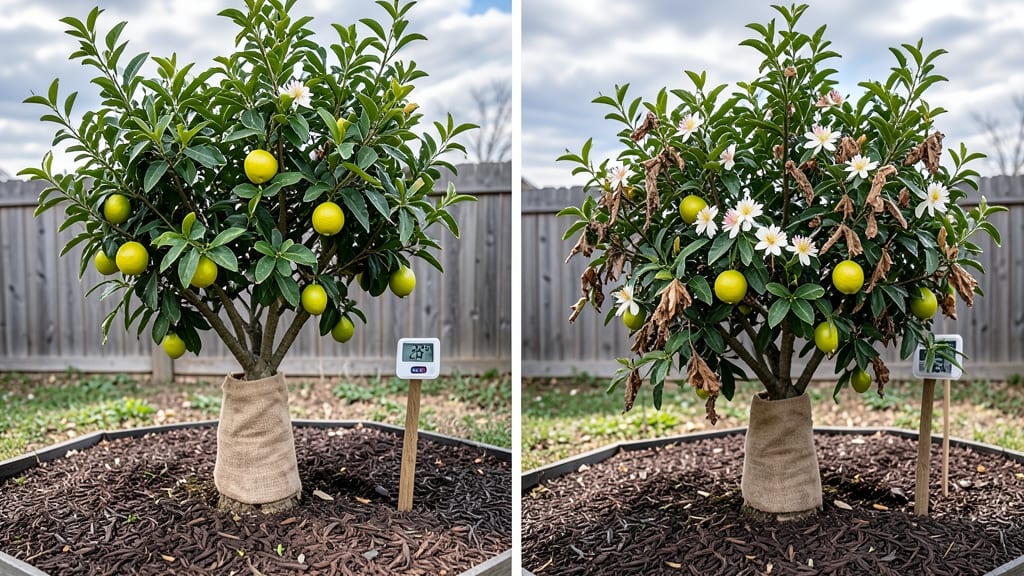
Lemon trees can survive brief exposure to temperatures as low as 20–25°F (-6 to -4°C), but freezing below 32°F (0°C) for extended periods will likely harm or kill them, especially young plants. Protecting them with mulch or coverings is essential during winter.
Understanding why lemons struggle in cold weather helps you prepare better. 🌱 The real danger isn't just the temperature itself but how quickly it drops—sudden freezes cause ice crystals to form inside plant cells, rupturing them like a frozen balloon.
Young trees are particularly at risk because their root systems are still developing and can't absorb enough moisture to protect against frost. Even mature trees need extra care if they're in containers, as potted plants lose heat much faster than those planted in the ground.
For practical protection, focus on insulating the roots first—this is where most damage starts. A thick layer of straw or wood chips keeps the soil warmer, while wrapping the trunk with burlap adds an extra barrier against wind chill.
If a hard freeze is forecasted, consider moving potted lemons to a garage or covered porch, but avoid heating sources that could dry out the soil. Monitoring local frost warnings and acting quickly can save your tree from irreversible damage.
💡 In This Article
- Lemon Tree Cold Hardiness: Science Behind Freeze Damage
- Winter-Proofing Lemon Trees: Step-by-Step Protection Guide
Lemon tree cold hardiness: science behind freeze damage
When temperatures dip below 32°F (0°C), lemon trees experience cellular damage through a process called ice nucleation. Water inside plant cells begins to freeze, forming sharp ice crystals that pierce cell membranes—similar to how a frozen balloon bursts when thawed.
This rupture disrupts the tree's ability to transport water and nutrients, leading to browning leaves and stem dieback. 🔥 The most vulnerable parts are the new growth and flower buds, which contain delicate tissues that freeze at even slightly higher temperatures (28°F (-2°C)).
Root systems are particularly sensitive because they lack the protective bark of stems. Soil insulates roots better than air protects foliage, which is why 20–25°F (-6 to -4°C) is the survival threshold for mature trees—roots can tolerate colder temps if insulated, while leaves and branches may still suffer damage.
Varieties like the Meyer lemon (hardier than true lemons) can handle brief dips to 15°F (-9°C), but this is rare and requires exceptional care. 💫
Sudden temperature drops are far more destructive than gradual cooling because plants can't acclimate quickly. A slow freeze allows the tree to produce antifreeze proteins that lower the freezing point of cell fluids, but rapid changes bypass this defense.
For example, a tree that survives 28°F (-2°C) overnight might die if temperatures plummet to 20°F (-7°C) within hours. This explains why frost warnings often specify both temperature and rate of change.
USDA hardiness zones provide a useful guideline: most lemon trees thrive in zones 9–11, where winters rarely drop below 20°F (-7°C). In colder zones (8 or below), growers must choose hardier varieties like 'Ponderosa' or 'Improved Meyer' and implement protective measures.
The key difference between zones isn't just the lowest temperature but the duration of cold exposure—a brief freeze to 25°F (-4°C) may cause minor leaf damage, while weeks below 30°F (-1°C) can kill the entire tree.
Even in mild climates, wind chill exacerbates damage by accelerating heat loss. A calm night at 28°F (-2°C) might be survivable, but the same temperature with 15 mph winds can drop the effective temperature to 15°F (-9°C) at the tree's surface.
This is why windbreaks—like burlap screens or evergreen hedges—are a critical part of winter protection. 🌬️
What most gardeners overlook is the post-thaw recovery phase. After a freeze, lemon trees often appear dead but may still be alive beneath damaged tissue. Prune back only the clearly dead wood (blackened, mushy stems) and wait 2–3 weeks to assess full damage.
Delaying pruning gives the tree time to redirect energy to surviving buds, which can sprout new growth even after severe cold exposure.