
Trees
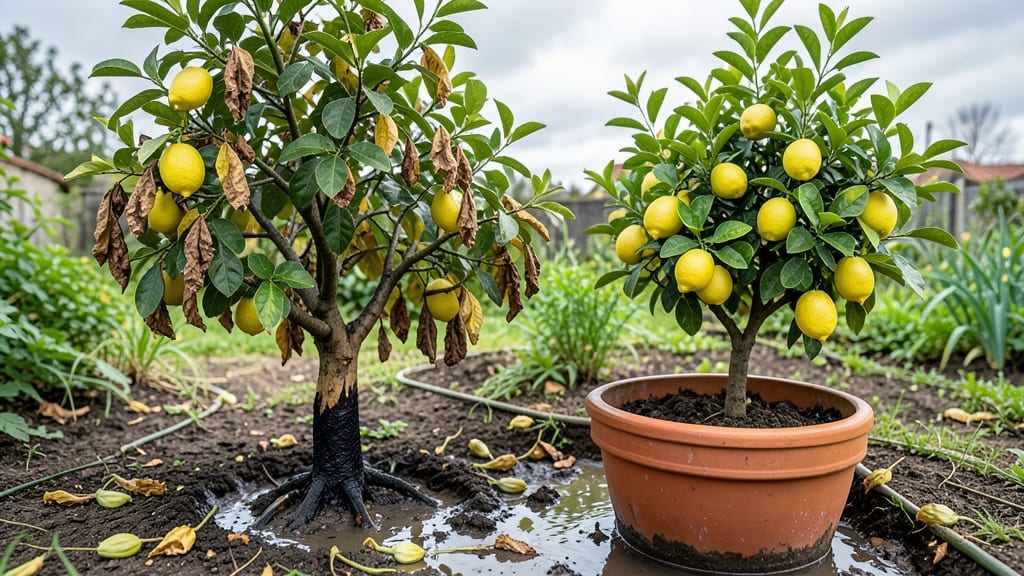
Your overwatered lemon tree’s drooping leaves aren’t just sad—they’re screaming for help. 🌿 Overwatering smothers roots, turns soil soggy, and drains nutrients right out of your plant’s system. The good news? With three targeted fixes, you can bring it back to life faster than you think.
First, stop watering until the top 3-4 inches of soil feel dry to the touch. Then, improve drainage by mixing in perlite or coarse sand to the top 6 inches of soil—this prevents future waterlogging.
Root rot? Trim any mushy, dark roots with sterilized scissors and repot if the soil stays compacted.
Within 2-3 weeks, you’ll see new growth as the roots recover. Keep the soil lightly moist (not wet) and move the tree to brighter light—overwatered trees often suffer from weak stems that need extra support.
The key is balance: water deeply but infrequently, and always check the soil before you pour.
Prevent relapse by watering only when the top 2 inches are dry, and choose a pot with drainage holes. Lemon trees hate soggy feet—once you reset their routine, they’ll bounce back stronger than ever. Here’s how to keep them thriving long-term.
Root Causes Of Overwatering
Overwatering a lemon tree isn’t just about giving it too much water—it’s a cascade of environmental, soil, and human factors working together to drown its roots. Understanding these causes helps you fix the problem before it’s too late.
Let’s break down the science behind why your citrus tree might be getting soggy love instead of a balanced drink.
Lemon trees (Citrus × limon) are Mediterranean natives, meaning they thrive in well-draining soil that mimics rocky, sandy terrain. When drainage fails, excess water pools around roots, cutting off oxygen and inviting root rot (a fungal infection caused by Phytophthora or Pythium).
Why it happens:
- Clay-heavy soil acts like a sponge, holding water tightly and suffocating roots.
- Compacted soil from foot traffic, construction, or heavy rainfall blocks water flow.
- Missing or clogged drainage holes in pots trap moisture, turning the root zone into a swamp.
Actionable fix: Test your soil’s drainage by filling a pot with water, then timing how long it takes to drain. If it’s slower than 30 minutes, amend with perlite, pumice, or coarse sand.
Watering on a schedule—rather than by need—is a common pitfall. Lemon trees in pots dry out faster than in-ground trees, while those in heavy soil may stay soggy for days.
Why it happens:
- Automatic timers or "every other day" rules ignore humidity, temperature, and season.
- Overhead watering (like sprinklers) wets leaves, promoting fungal diseases while not reaching roots efficiently.
- Ignoring weather changes—rainy seasons or high humidity trick you into thinking the tree needs less water.
Actionable fix: Stick your finger 2 inches into the soil. If it’s damp, wait. If dry, water deeply until it runs out the drainage holes. Adjust frequency based on:
- Summer: Every 3–5 days (or daily in extreme heat).
- Winter: Every 7–10 days (growth slows).
Potted lemon trees face a double whammy: limited soil volume and faster evaporation. Without proper care, their roots become trapped in a cycle of wet-and-dry stress.
Why it happens:
- Small pots restrict root spread, so water evaporates quickly—but the roots can’t absorb it fast enough, leading to uneven moisture.
- Cheap plastic pots retain moisture longer than breathable fabric or terracotta.
- No mulch layer accelerates evaporation, making the topsoil dry while roots stay waterlogged.
Actionable fix: Upgrade to a pot 12–18 inches wide (roots need space to breathe). Use a well-aerated mix (60% potting soil, 20% perlite, 20% compost). Add a 2-inch mulch of bark or straw to regulate moisture.
Moving a lemon tree to a larger pot without adjusting watering habits is like giving it a bigger bathtub—it’ll overfill faster.
Why it happens:
- More soil = more water retention (especially in heavy mixes).
- New roots take time to adapt, so they’re vulnerable to rot before establishing.
- Fertilizer shock (if added post-potting) increases root sensitivity to moisture.
Actionable fix: When repotting, reduce watering by 30–50% for the first 2 weeks. Monitor soil moisture closely—larger pots dry out slower!
Hot, humid days can make a lemon tree’s leaves look thirsty, but the roots might already be drowning.
Why it happens:
- High humidity slows evaporation, keeping soil wet longer.
- Cold nights reduce root activity, so they can’t process excess water.
- Sudden temperature drops (like after a heatwave) shock the tree, making it less resilient to overwatering.
Actionable fix:
- In hot climates: Water early in the morning to reduce evaporation.
- In humid areas: Space waterings 5–7 days apart and improve airflow with pruning.
- In winter: Reduce water by half—roots hibernate!
Reviving Your Overwatered Lemon Tree
If your lemon tree is looking sad with yellowing leaves, soft stems, or even root rot, don’t panic—it’s often a sign of overwatering, and you can turn things around with the right care.
Below are practical, step-by-step solutions tailored to the most common causes of an overwatered lemon tree, plus tips to keep it thriving long-term.
Cause: Overwatering (the obvious one!) Fix: Let the soil dry out completely before watering again.
- Check the soil: Stick your finger 2–3 inches deep into the soil. If it’s damp or cool, wait. If it’s dry, it’s time to water—but only lightly. - Avoid standing water: If your pot has drainage holes, ensure water isn’t pooling at the bottom.
If it is, empty the saucer and let excess water drain away. - Water deeply but less often: Instead of daily light watering, give your lemon tree a slow, thorough soak once the top 1–2 inches of soil are dry. This encourages deep root growth.
💡 Pro Tip: If your tree is in a container, lift it—if it feels heavy, it’s likely overwatered. Wait until it feels lighter before watering again.
Cause: Poor drainage (compacted soil, no holes, or waterlogged pots) Fix: Upgrade your tree’s home to prevent soggy roots.
- Repot if needed: If your lemon tree has been in the same pot for years, its roots may have outgrown it. Choose a terracotta pot (breathable material) with drainage holes and fresh, well-draining soil. - Amend the soil: Mix in perlite, sand, or coconut coir (20–30%) to improve aeration.
Lemon trees hate soggy feet! - Raise the pot: Place it on pot feet or a tray to allow airflow underneath and prevent water from sitting against the container.
✨ Prevention Tip: Always use a well-draining potting mix designed for citrus trees. Avoid garden soil—it compacts and holds too much moisture.
Cause: Ignoring environmental factors (humidity, rain, temperature) Fix: Water smarter by adapting to your local conditions.
| Season | Watering Frequency | Extra Care Needed |
|---|---|---|
| Spring/Fall | Every 5–7 days | Moderate watering; roots are active but not overzealous. |
| Summer | Every 3–5 days | More frequent but shallow watering (evaporation is high). |
| Winter | Every 10–14 days | Reduce watering—growth slows, and roots need less moisture. |
| Rainy Season | Skip watering | Let nature do the work; check soil before adding more water. |
💡 Pro Tip: If you’re unsure, water in the morning—this gives leaves time to dry, reducing fungal risks like root rot.
Cause: Advanced root rot or leaf fungus from prolonged soggy conditions Fix: Prune affected parts to help the tree recover.
- Trim yellow/brown leaves: Use sterilized pruning shears to snip off any leaves that are mushy, black, or falling off. This redirects energy to healthy growth. - Check for root rot: Gently remove the tree from its pot and inspect the roots.
If they’re black, mushy, or smell foul, trim away the rotten parts with clean shears. Replant in fresh, dry soil. - Disinfect tools: Wipe shears with rubbing alcohol between cuts to prevent spreading disease.
⚠️ Warning: Only do this if the tree is severely affected. Mild cases can recover with better watering alone.
Cause: Weakened tree from stress (nutrient deficiency, lack of light) Fix: Give your lemon tree the support it needs to bounce back.
- Move to bright, indirect light: Lemon trees need 6–8 hours of sunlight daily. A south- or west-facing window is ideal. If outdoors, avoid harsh midday sun until fully recovered. - Fertilize lightly: Wait 4–6 weeks after repotting before fertilizing.
Use a balanced citrus fertilizer (like 6-6-6) once a month in growing season (spring–fall). - Monitor humidity: If your home is dry, mist leaves occasionally or place a humidity tray nearby (but avoid soggy soil).
🎯 Long-Term Tip: Mulch the soil surface with gravel or bark to reduce evaporation and keep roots cool in summer.
- ✅ Water only when the top 1–2 inches of soil are dry.
- ✅ Use pots with drainage holes and well-draining soil.
- ✅ Adjust watering for season and climate (less in winter, more in summer).
- ✅ Prune regularly to improve airflow and remove dead leaves.
- ✅ Keep your tree in bright, indirect light.
With these steps, your lemon tree should perk up within 2–4 weeks—just be patient and consistent! 🍋💚
Frequently asked questions
How do I know if my lemon tree is truly overwatered?
Check for these key signs: yellowing leaves (especially lower ones), mushy stems, or soil that smells sour or rotten. If the pot feels heavy when lifted, it’s likely waterlogged. Also, look for root rot—black, slimy roots when you gently remove the tree from its pot.
Can I save a lemon tree with root rot?
Yes, but act fast! Trim away all black, mushy roots with sterilized scissors, then repot in fresh, dry soil mixed with perlite or sand. Reduce watering by 50% for 2-3 weeks to help roots recover. Keep the tree in bright, indirect light and avoid fertilizing until new growth appears.
What's the best way to water a lemon tree after it's recovered?
Use the "finger test": stick your finger 2 inches into the soil. Water only when it feels dry. In summer, water every 3-5 days (morning only), and reduce to every 10-14 days in winter. Always water until it drains from the bottom—never let it sit in standing water.
Why does my lemon tree keep getting overwatered even after fixes?
Common causes include using non-breathable pots (like plastic), compacted soil, or ignoring seasonal changes. Switch to terracotta pots with drainage holes, add perlite to soil, and adjust watering based on temperature/humidity. Also, check if your tree needs a larger pot—roots outgrow containers quickly!
How long does it take for an overwatered lemon tree to recover?
With proper care, you’ll see improvement in 2-4 weeks. New leaves should appear within 3-6 weeks if roots are healthy. Be patient—severely damaged trees may take up to 3 months to fully bounce back. Monitor soil moisture closely during recovery to avoid relapse.