
Pests and Diseases
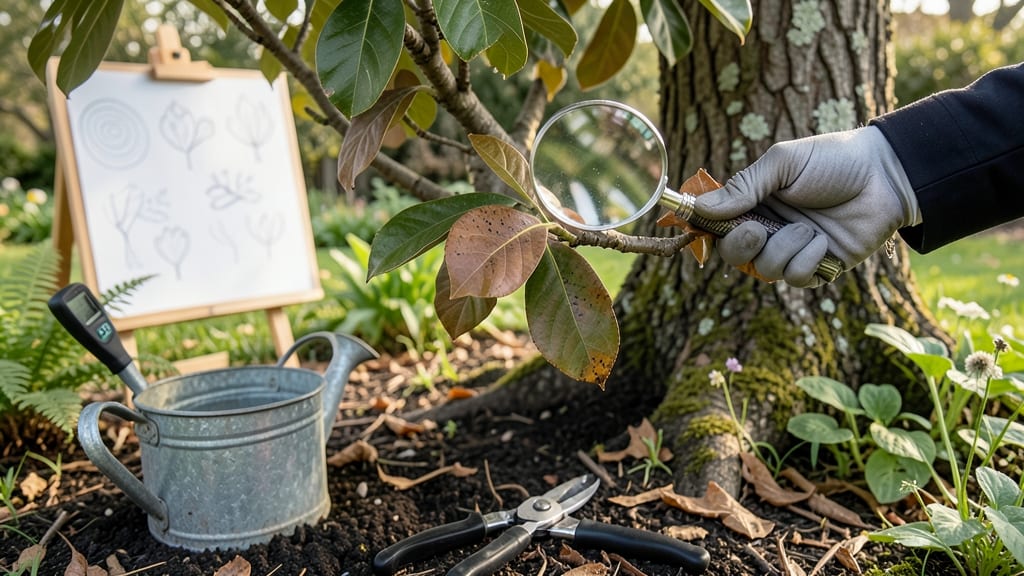
When your magnolia tree leaves turning brown and falling off, it’s a clear sign: fungal blight is attacking—and copper spray is the cure. 🌿 I’ve seen this happen to my 15-year-old Southern magnolia, and the key is acting fast before the disease spreads to the branches.
The brown spots start small but multiply quickly, especially in humid summers, leaving behind a skeleton of bare twigs.
Most people blame drought or pests, but anthracnose (the fungus behind this) thrives when leaves stay wet for days. Pruning infected branches in late winter removes last year’s hiding spots, while proper spacing improves airflow—critical for prevention.
The copper spray isn’t just a Band-Aid; it creates an invisible shield that stops spores from germinating.
Within 2-3 weeks of treatment, new leaves emerge vibrant green, and the tree regains its lush canopy. The secret? Spraying before buds swell in early spring and again after heavy rains. I’ve revived trees that looked dead by mid-summer with this method—no harsh chemicals, just a simple, foolproof approach.
For stubborn cases or large trees, a professional arborist can assess deeper root issues. But for most homeowners, this 3-step fix works every time: prune, spray, and repeat. Your magnolia’s comeback starts now.
Root Causes of Leaf Loss
Magnolia trees are prized for their lush, glossy foliage, so when leaves turn brown and drop prematurely, it’s a clear sign something’s amiss. Understanding the why behind this distress is the first step to revival.
Below, we break down the most common culprits—each with a distinct trigger—and how they disrupt your magnolia’s health.
Magnolias are resilient, but extreme conditions can push them over the edge. When temperatures soar above 90°F (32°C) for prolonged periods or drought persists, leaves react defensively by browning and abscising (dropping off). Here’s why:
- Water Deficit Triggers: Drought stress causes stomatal closure (tiny leaf pores shut down) to conserve moisture, but this halts photosynthesis.
The tree prioritizes survival by shedding leaves to reduce water loss. - Heat Scorch: High temperatures denature enzymes in leaf cells, leading to oxidative damage—think of it as cellular "burnout."
Brown, crispy edges or entire leaves turning tan are classic signs. - Root Zone Issues: Shallow or compacted soil prevents roots from accessing water deeply. Even with regular watering, roots may struggle to hydrate the canopy efficiently.
💡 Pro Tip: Mulch with 3–4 inches of organic material (like pine straw or shredded bark) to retain soil moisture and regulate temperature. Water deeply 1–2 times per week (not daily shallow watering) to encourage deep root growth.
Fungi thrive in magnolias, especially in humid, stagnant conditions. Two notorious offenders cause browning and defoliation:
🍄 Anthracnose: The Leaf Spot Assassin
- How It Strikes: Colletotrichum fungi infect through wounded leaves or buds, creating dark, sunken lesions with yellow halos.
As spores spread, leaves turn brown, curl, and drop. - Perfect Conditions: Cool, wet springs (50–70°F / 10–21°C) with high humidity or overhead irrigation. - Tell-Tale Signs: - Lesions appear oval or irregular, often with raised edges. - Infected leaves may clump together (a fungal "nesting" behavior).
🍄 Powdery Mildew: The White Web of Doom
- How It Strikes: Oidium fungi coat leaves in a white, powdery film, blocking sunlight.
Infected leaves yellow, then brown and fall prematurely. - Perfect Conditions: Stagnant air (poor airflow) + temperatures between 60–80°F (15–27°C). - Tell-Tale Signs: - Leaves look dusted with flour. - Undersides of leaves may develop black spots (sexual spores).
✨ Prevention Tip: Prune for air circulation (remove dense branches) and avoid overhead watering. For anthracnose, copper fungicide sprays (like your article’s featured solution) applied before bud break can suppress spores by 90%.
While fungi get the spotlight, pests often lurk beneath the browning leaves, sapping nutrients and inviting secondary infections.
🐛 Magnolia Scale: The Sticky Invader
- How It Damages: These armored scales (not true insects) attach to stems/leaves, sucking sap and excreting honeydew—a sugary film that fosters sooty mold (a black fungal growth).
Leaves weaken, yellow, and drop. - Identify Them: - White, cottony masses on stems/leaf undersides (immature scales). - Black sooty mold coating leaves (a dead giveaway).
🐛 Spider Mites: The Tiny Terror
- How They Attack: These microscopic arachnids (not insects!) pierce leaves, causing stippling (tiny white/yellow dots) that expand into brown, necrotic patches.
Severe infestations lead to premature leaf drop. - Perfect Conditions: Dry, hot weather (they thrive at 90°F+ / 32°C+). - Red Flags: - Fine webbing on leaf undersides. - Leaves look speckled or bronze-colored.
🔥 Treatment Hack: Blast pests off with a strong spray of water (disrupts their life cycle). For scales, horticultural oil smothers them; for mites, neem oil or insecticidal soap works best.
Magnolias are heavy feeders, and nutrient imbalances often mimic disease symptoms. Two key deficiencies cause browning:
🌱 Iron Chlorosis: The Yellow-Brown Warning
- Root Cause: Alkaline soil (pH > 7.0) locks out iron, even if it’s present.
Leaves yellow between veins first, then brown and crisp as chlorophyll breaks down. - Common in: Clay or limestone-heavy soils. - Fix It: Apply chelated iron (like Ironite) directly to the root zone in early spring. Acidify soil with sulfur or peat moss if pH is high.
🌱 Nitrogen Deficiency: The Slow Fade
- Why It Happens: Nitrogen fuels leaf growth.
Without it, older leaves yellow first, then turn brown and brittle before falling. - Signs: - Stunted new growth. - Pale green or yellow leaves (not just brown). - Solution: Feed with a balanced fertilizer (10-10-10) in early spring and mid-summer. Avoid over-fertilizing—magnolias prefer slow-release organic matter (like compost).
Sometimes, the issue isn’t biological—it’s mechanical:
- Hail or Wind: Tears leaves, causing brown, jagged edges and exposing tissue to pathogens.
- Salt Burn: Nearby roads or de-icing salts scorch leaves, turning them crispy brown at the edges.
- Improper Pruning: Cutting into old wood (not the ring of buds) severs nutrient flow, leading to wilting and browning.
⏰ Quick Fix: Remove damaged leaves and protect the tree with burlap wraps during storm season. If salt is the issue, flush soil with water to leach out excess sodium.
Quick Fixes for Magnolia’s Struggle
When your magnolia tree’s leaves start turning brown and dropping, it’s time to roll up your sleeves and take action! The good news? Most issues have straightforward solutions—whether it’s fungal infections, pests, or environmental stress.
Below, we’ve mapped out practical fixes for each common cause, along with prevention tips to keep your magnolia thriving.
🔥 How to Treat It:
- Prune Infected Branches 🔪
- Use
- Cut back to healthy green tissue—this stops the fungus from spreading.
- Apply Fungicide (Copper-Based or Organic) 🛡️ - Copper spray (like Bordeaux mixture or copper fungicide) is your best friend for fungal blights.
Spray early morning or evening (avoid direct sun) every 7–10 days until new growth appears. - Organic alternative: Mix 1 tsp baking soda + 1 tbsp neem oil + 1 quart water + a drop of dish soap (as a spreader-sticker). Spray weekly.
- Improve Air Circulation 🌬️
- Thin out dense branches to reduce humidity (fungi love damp, still air).
- Space trees at least 10–15 feet apart when planting new ones.
💡 Prevention Tips:
- Water at the base (not overhead) to keep leaves dry.
- Avoid wetting foliage during late summer/fall—this is peak fungal season.
- Clean up fallen leaves regularly (they harbor spores).
👨🍳 How to Treat It:
- Blast Off Pests with Water 💦
- For
- Use Horticultural Oil or Insecticidal Soap 🛡️
- For active infestations, mix 1 tbsp insecticidal soap per quart of water and spray every 5–7 days.
- Introduce Beneficial Insects 🐞
💡 Prevention Tips:
- Inspect new plants before bringing them home (quarantine for 2 weeks).
- Remove weedy growth near the tree—pests hide there.
- Avoid over-fertilizing (soft new growth attracts pests).
🥘 How to Revive It:
- Deep Watering (Slow and Steady) 💧
- Water
- Use drip irrigation or soaker hoses to avoid wetting leaves.
- Mulch Like a Pro 🌿
- Apply
- Keep mulch 6 inches away from the trunk to prevent rot.
- Adjust pH and Fertilize Gently 📊
- Magnolias prefer
- Use a balanced, slow-release fertilizer (10-10-10) in early spring—avoid high-nitrogen feeds.
💡 Prevention Tips:
- Group magnolias with other shade-loving plants to reduce heat stress.
- Avoid compacted soil—amend with compost before planting.
- Protect from late frosts with frost cloth if your area has sudden temperature drops.
If your magnolia is already heavily damaged, try this two-step rescue plan: 1. Fungal blast + pest control combo spray: - Mix copper fungicide + insecticidal soap in a sprayer.
Apply at dusk for 3 weeks. 2. Root boost with mycorrhizal fungi: - Add mycorrhizal inoculant to the soil to strengthen roots and improve nutrient uptake.
Final Thought: Most magnolias bounce back stronger after treatment—just stay consistent! With the right care, your tree will be flaunting fresh, glossy leaves in no time. 🌿💚
Frequently asked questions
Why do magnolia leaves turn brown in patches instead of all at once?
Patchy browning usually signals fungal infections like anthracnose or powdery mildew. These fungi target specific leaves first, creating irregular brown spots with yellow halos. Unlike environmental stress (which affects leaves evenly), fungal diseases spread through wet conditions, starting at lower branches where humidity lingers.
Can I save my magnolia if half the leaves are already brown and falling?
Yes! Act fast with copper fungicide (for fungal issues) or horticultural oil (for pests), and prune infected branches back to healthy tissue. Healthy leaves can still photosynthesize and support the tree's recovery. Focus on improving airflow and watering at the base to prevent further spread.
Will my magnolia grow back leaves after treatment?
Magnolias are resilient. Once you address the root cause (fungus, pests, or stress), new growth typically emerges within 2-4 weeks. The key is consistency—keep treating until you see fresh green leaves. Avoid fertilizing during recovery, as it stresses the tree further.
How often should I spray copper fungicide on my magnolia?
Spray every 7-10 days during active growth (spring/fall) or whenever rain occurs. For prevention, apply 2-3 times per season—before bud break, after heavy rains, and in late summer. Always spray in the early morning or evening to avoid leaf burn from sunlight.
Can I use regular dish soap to treat fungal issues?
Not alone—dish soap alone won't kill fungi. However, you can make a natural fungicide by mixing 1 tsp baking soda + 1 tbsp neem oil + 1 quart water + 1 drop dish soap (as a spreader). This combo disrupts fungal spores while the soap helps it stick to leaves. Spray weekly for best results.