
Trees
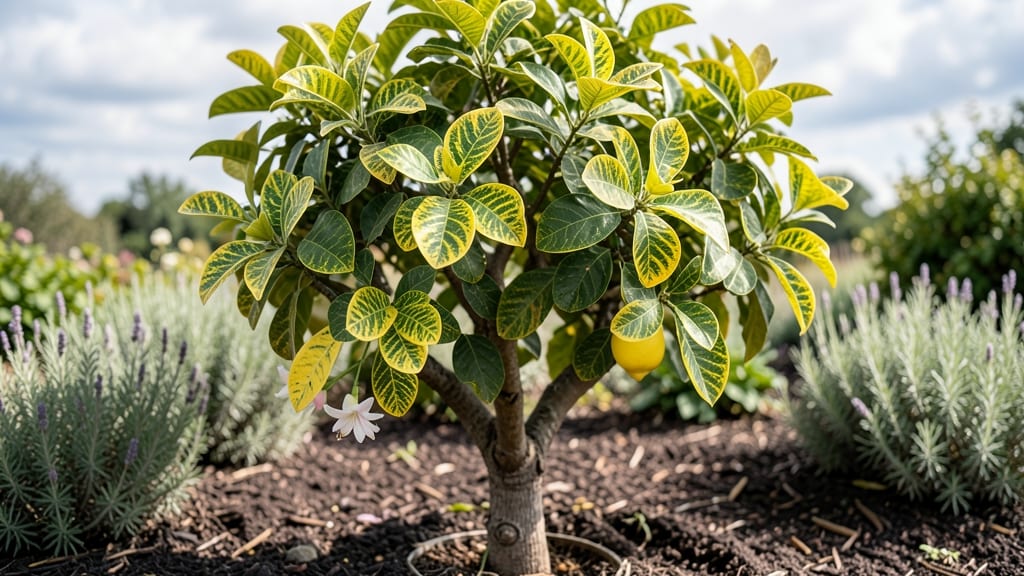
Your lemon tree’s yellow leaves with green veins scream one thing: chlorosis, and the fix starts in the soil. 🌱 I’ve nursed back more citrus trees than I’d like to admit after ignoring this classic sign of iron deficiency—until I learned the soil science behind it.
The veins stay green because chlorophyll clings there, but the rest of the leaf turns pale because the plant can’t access iron, even when it’s in the soil.
Most gardeners grab iron supplements first, but that’s like treating a headache with aspirin when you’re actually dehydrated. The real culprits are alkaline soil (pH over 7.0) or compacted roots that can’t breathe. My first step?
A simple soil test kit ($15 at garden centers) to check pH and organic matter. If your soil’s too alkaline, sulfur or peat moss can bring the pH down—just don’t overdo it, or you’ll burn the roots.
What you’ll see after a month of proper amendments is new leaves with even green color, starting at the tips of branches. The fix isn’t instant, but within 6-8 weeks, your tree will be pushing out healthy foliage again.
The key is consistency: keep the soil moist (not soggy), mulch to maintain acidity, and avoid over-fertilizing with nitrogen-heavy mixes.
This works for all citrus—limes, oranges, even Meyer lemons—and prevents future outbreaks. For extra insurance, I add a handful of chelated iron to the soil every 3 months, but the real game-changer is getting that pH right. Your tree’s not just surviving; it’s thriving.
Root Causes Behind Yellowing Leaves
When your lemon tree’s leaves turn yellow but retain their green veins, it’s often a sign of chlorosis—a condition where the plant struggles to absorb or transport chlorophyll, the pigment responsible for photosynthesis.
While this issue can feel alarming, understanding the why behind it is the first step to restoring your tree’s health. Below, we break down the most common culprits, backed by science, and explain how they disrupt your lemon tree’s nutrient flow.
Chlorosis frequently stems from a lack of essential nutrients, particularly iron, manganese, or zinc. These micronutrients are vital for chlorophyll production, and their deficiency forces the tree to prioritize vein health over leaf tissue. Here’s why it happens:
- Iron deficiency (most common):
Iron is crucial for chlorophyll synthesis, but its uptake is highly sensitive to soil pH. In alkaline soils (pH > 7.0), iron becomes locked in an insoluble form, making it unavailable to roots.
Even if iron exists in the soil, the tree can’t access it, leading to yellowing between veins.
- Manganese or zinc shortages:
These nutrients often compete with iron for absorption. Poor soil structure, high organic matter breakdown, or excessive rainfall can wash them away, leaving your lemon tree malnourished.
- Calcium or magnesium imbalances:
While not direct causes, these macronutrients influence root health. A calcium deficiency, for example, can damage root tips, reducing the tree’s ability to absorb iron and manganese efficiently.
💡 Pro Tip: Conduct a soil test to confirm deficiencies. If pH is the issue, aim for a target of 6.0–7.0 for optimal iron availability. For quick fixes, apply chelated iron (a soluble form) or use Epsom salt (magnesium sulfate) for magnesium shortages.
Water plays a dual role in chlorosis—both overwatering and underwatering can trigger yellow leaves by disrupting nutrient uptake or oxygen flow to roots.
- Overwatering:
Excess moisture drowns roots, cutting off oxygen and suffocating beneficial microbes that help break down nutrients. Waterlogged soil also leaches essential minerals like iron and manganese, making them unavailable.
- Underwatering:
While less common, chronic drought stresses the tree, forcing it to conserve resources. Roots may shrink or die back, reducing their surface area for nutrient absorption.
- Poor drainage:
Container-grown lemon trees are especially vulnerable. If the pot lacks drainage holes or uses compacted soil, roots sit in stagnant water, leading to anaerobic conditions that hinder nutrient uptake.
🔥 Action Step: Check soil moisture by inserting your finger 2–3 inches deep. If it’s soggy, reduce watering and improve drainage with perlite or sand. If dry, water deeply until it drains freely from the bottom.
Lemon trees thrive in slightly acidic to neutral soil (pH 6.0–7.0). When pH strays from this range, nutrient availability plummets—especially for iron, manganese, and phosphorus.
- Alkaline soil (pH > 7.0):
Iron and manganese become insoluble, forming compounds that roots can’t absorb. Even if the soil contains these nutrients, the tree starves.
- Acidic soil (pH < 5.5):
While less common, extreme acidity can leach nutrients like calcium and magnesium, indirectly causing chlorosis by weakening root health.
🌡️ Fix It: Test your soil’s pH with a kit or send a sample to a lab. To lower pH, add elemental sulfur or peat moss. To raise pH, use lime (calcium carbonate) or wood ash. Never adjust pH drastically in one go—aim for gradual changes.
Certain pests and diseases can damage roots or leaves, disrupting nutrient transport and leading to chlorosis. The most common offenders:
- Root-knot nematodes:
These microscopic worms penetrate roots, creating galls that block water and nutrient absorption. Infested roots appear knobby and struggle to function.
- Fungal infections (e.g., Phytophthora):
Waterlogged conditions encourage fungi that rot roots, reducing the tree’s ability to uptake iron and manganese.
- Scale insects or spider mites:
While they primarily target leaves, severe infestations stress the tree, diverting energy away from root and nutrient management.
🎯 Prevention: Inspect roots and leaves for signs of pests (e.g., sticky residue, webbing, or unusual growths). Treat with neem oil or beneficial nematodes for soil-dwelling pests. For fungal issues, improve drainage and apply copper fungicides if needed.
By identifying the specific cause behind your lemon tree’s yellowing leaves, you can target the issue with precision—whether it’s amending soil, adjusting watering, or addressing hidden pests. The good news? Most cases of chlorosis are reversible with the right corrective actions!
Revive Your Lemon Tree Naturally
If your lemon tree’s leaves are turning yellow with stubborn green veins, don’t panic—this is often a fixable issue! The key lies in addressing the root cause (literally) with targeted, soil-savvy solutions.
Below, we break down the most effective fixes for each underlying problem, plus proactive tips to keep your tree thriving.
When yellowing leaves with green veins appear, iron deficiency (chlorosis) is usually the culprit—especially in alkaline or compacted soils. Here’s how to restore balance:
🔥 Step 1: Test & Acidify the Soil
- Test your soil’s pH (ideal for citrus: 6.0–7.0). Use a home kit or send a sample to a local extension office.
- Lower pH naturally:
- Mix sulfur granules (1–2 lbs per 100 sq ft) into the top 6 inches of soil. Water thoroughly. 💡 Sulfur takes 2–4 weeks to work—be patient!
- Apply chelated iron (like Ironite or Sequestrene) every 2–4 weeks during active growth (spring–fall).
🍳 Step 2: Feed with Iron-Rich Amendments
- Organic options:
- Epsom salt (magnesium sulfate): Dissolve 1 tbsp in 1 gallon of water and spray on leaves and soil. Repeat monthly. ⚠️ Avoid overuse—too much magnesium can worsen iron uptake.
- Composted manure (chicken or cow): Spread 1–2 inches around the base and water in. Rich in micronutrients, it slowly improves soil structure.
- Synthetic boost:
- Use a citrus-specific fertilizer (like Miracle-Gro Citrus Food) with micronutrients, including iron. Follow label rates.
👨🍳 Step 3: Improve Drainage & Aeration
- Loosen compacted soil: Gently fork the top 12 inches around the tree’s drip line to encourage root growth. Add perlite or coarse sand (50/50 mix with soil) if drainage is poor.
- Mulch properly: Apply 2–3 inches of wood chips or pine straw (not fresh mulch!) to retain moisture and regulate temperature. Keep mulch 6 inches away from the trunk to prevent rot.
Yellow leaves with green veins can also signal root stress from soggy soil or poor aeration. Here’s how to correct it:
🔪 Step 1: Check the Roots
- Gently scrape back soil near the base. Healthy roots are white or tan; rotted roots are mushy and dark.
- If roots are waterlogged, trim affected areas with sterilized pruners and replant in well-draining soil.
⏰ Step 2: Adjust Your Watering Routine
- Water deeply but infrequently: Aim for 1–1.5 inches per week (more in summer). Let the top 2–3 inches of soil dry out between waterings.
- Upgrade your pot (if container-grown): Ensure drainage holes are clear and use a fast-draining mix (50% potting soil, 30% perlite, 20% sand).
- Avoid wetting foliage: Water at the base to prevent fungal diseases like root rot.
Sometimes, an excess of one nutrient blocks iron uptake. Recalibrate with these tweaks:
📊 Step 1: Flush the Soil
- Lemon-lime flush: Mix 1 tbsp baking soda + 1 tbsp lemon juice in 1 gallon of water. Pour around the base to lower soil pH temporarily and help iron dissolve.
💪 Step 2: Adjust Fertilizer Ratios
- Avoid high-nitrogen fertilizers (like lawn food)—they promote leafy growth but starve roots of iron.
- Switch to a balanced citrus fertilizer (e.g., 10-10-10 or 8-3-9) with added chelated iron and manganese.
- Foliar spray hack: Mix 1 tsp liquid seaweed extract + 1 tsp iron chelate in 1 gallon of water. Spray leaves every 2 weeks for quick absorption.
- 🌿 Plant in the right spot: Choose a location with partial sun (6+ hours/day) and shelter from harsh winds.
- 🍋 Choose the right lemon variety: Some (like Meyer lemons) tolerate slightly alkaline soil better than Eureka or Lisbon.
- 🔄 Rotate fertilizers: Alternate between organic (compost, fish emulsion) and synthetic (iron chelates) to avoid nutrient lockout.
- 🌡️ Monitor soil temp: Lemon trees hate cold roots. In winter, mulch heavily and avoid watering if temps drop below 50°F.
With these fixes, your lemon tree should show new green growth within 4–8 weeks. Track progress by comparing old leaves (which won’t recover) to fresh ones. If yellowing persists after 2 months, retest your soil and consult a local arborist—your tree might need a more drastic soil overhaul!
Frequently asked questions
Why do my lemon tree leaves stay green along the veins but turn yellow everywhere else?
This classic pattern is called chlorosis, where the plant can't produce enough chlorophyll in leaf tissue but keeps veins green because chlorophyll clings there. The yellowing happens when your tree lacks essential nutrients like iron or manganese, often due to alkaline soil (pH > 7.0) that locks these nutrients out of root reach.
Can I fix yellow leaves with green veins by just adding iron fertilizer?
Not always! While iron supplements help, the real fix often starts with soil pH. If your soil is alkaline, iron fertilizer won't work until you lower the pH to 6.0–7.0 first. Try mixing sulfur granules into the soil before adding iron—this makes the nutrients actually available to roots.
How quickly should I expect to see improvement after treating chlorosis?
New growth should show color improvement in 4–8 weeks, but existing yellow leaves won't recover. The first sign of success is fresh leaves emerging with even green color. If you don't see changes after 2 months, retest your soil—you may need more aggressive amendments or a different approach.
Will my lemon tree recover completely if I fix the yellow leaves?
Yes! Once you address the root cause (usually soil pH or nutrient deficiency), your tree will produce healthy new leaves. The key is consistency—keep soil moist (not soggy), maintain proper pH, and avoid over-fertilizing. With proper care, your lemon tree can bounce back fully within a season.
Could my lemon tree have a disease instead of chlorosis?
Unlikely, but check for these signs: Fungal diseases (like citrus greening) may cause similar symptoms but often include stunted growth or dieback. Root rot from overwatering shows as mushy roots and wilting. If you suspect disease, improve drainage first and consider a soil test to rule out nutrient issues.