
Pruning
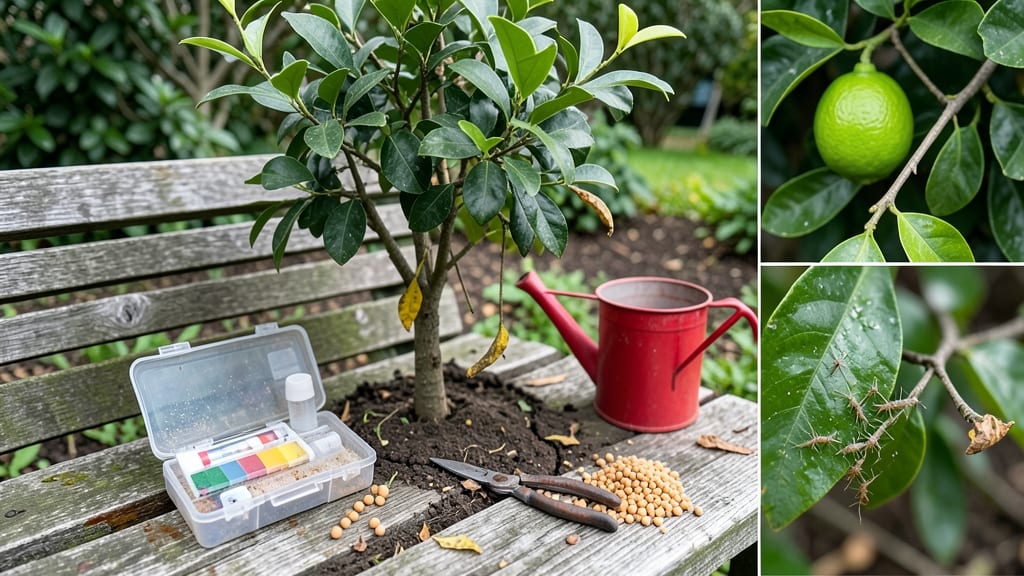
Your lime tree not producing fruit might be screaming for a little pruning attention. 🌿 I’ve seen trees go from zero blooms to heavy fruit loads in a single season just by cutting back the right way—and it’s simpler than you think.
The real culprit is often overgrown branches stealing energy from fruit production. Too much shade? That’s another common thief. Even age matters—young trees focus on growth, not fruit. But the fix is straightforward: open the canopy, balance growth, and feed the tree what it needs to flower.
By the end of spring, you’ll see new growth and buds where there were none before. The key is timing: prune in late winter or early spring, before new leaves appear, and avoid cutting into old wood. Works for Meyer limes, Persian limes, and even dwarf varieties.
Let’s get those branches in shape!
Root Causes Of Lime Fruitlessness
If your lime tree is loaded with leaves but light on fruit, the issue likely stems from one (or more) of these key biological and environmental factors.
Understanding the science behind each helps you take targeted action—whether it’s adjusting care, pruning strategically, or addressing hidden stressors. Let’s break down the most common culprits:
Lime trees (especially self-pollinating varieties like Citrus aurantifolia) still benefit from cross-pollination for optimal fruit set. Without it, flowers drop off without developing into fruit.
- Why it happens: Bees, butterflies, or wind may not be visiting your tree enough—especially in urban areas with limited pollinator activity. Some lime varieties (like Mexican lime) are partially self-fertile but produce far more fruit with cross-pollination.
- Actionable fix:
- 🐝 Hand-pollinate by gently shaking branches during bloom (morning is best) to release pollen.
- 🌿 Plant companion pollinator-friendly flowers nearby (e.g., lavender, marigolds, or citrus-friendly herbs like basil).
- 🔍 Check for pesticide use—neonicotinoids can repel bees. Opt for organic sprays like neem oil instead.
Lime trees are tropical and hate sudden temperature swings. Cold snaps or heatwaves disrupt flowering hormones (florigen) and can cause bud drop.
- Why it happens:
- 🥶 Cold damage: Temps below 40°F (4°C) can kill flower buds or shock the tree into dormancy mid-bloom.
- ☀️ Heat stress: Prolonged temps above 95°F (35°C) halt pollination and cause flowers to wither.
- 🌬️ Windburn: Strong winds desiccate delicate blossoms, preventing fruit development.
- Actionable fix:
- 🌿 Protect young trees with frost cloth or a microclimate shield (e.g., a windbreak made of bamboo screens).
- 💧 Water deeply during heatwaves to reduce stress (aim for 1–1.5 inches/week).
- ⏳ Choose cold-hardy varieties like ‘Meyer lime’ (tolerates brief dips to 20°F/-7°C) if you’re in a marginal climate.
Lime trees need full sun (6–8+ hours/day) and a balanced nutrient profile to produce fruit. Too much shade or poor soil health starves the tree’s reproductive energy.
- Why it happens:
- 🌳 Shade deficiency: Trees in partial shade redirect energy to leaf growth instead of flowering.
- 🍃 Nitrogen overload: Too much nitrogen (from fertilizer or compost) promotes foliage over fruit. Lime trees need a higher potassium/phosphorus ratio for blooms.
- 🌱 Poor drainage: Root stress from soggy soil limits nutrient uptake, including boron (critical for fruit set).
- Actionable fix:
- ☀️ Move potted trees to sunnier spots or prune overhanging branches blocking light.
- 📊 Test soil pH (ideal: 6.0–7.0) and amend with citrus-specific fertilizer (e.g., 6-6-6 or 8-3-9 NPK ratio).
- 💡 Add micronutrients: Sprinkle boron (1/4 tsp per gallon of water, monthly) or use a seaweed-based fertilizer for blooming.
Incorrect pruning removes flower buds or disrupts the tree’s energy flow. Lime trees bloom on new wood, so aggressive cuts can delay or prevent fruiting.
- Why it happens:
- 🔪 Over-pruning: Cutting back more than 25% of the canopy in one session reduces flowering capacity.
- ⏳ Wrong timing: Pruning after bloom (summer/fall) removes next year’s flower buds.
- 🌿 Poor cut placement: Leaving stubs or cutting into old wood limits regrowth.
- Actionable fix:
- ⏰ Prune in late winter/early spring (just before buds swell) to encourage new growth.
- 🎯 Focus on:
- Removing dead/diseased branches (sterilize tools with 70% alcohol!).
- Thinning crowded growth to improve airflow (but keep 60%+ of the canopy).
- Avoid heading cuts—prune at the branch collar for clean wounds.
Sap-sucking insects and fungal infections weaken the tree, diverting energy away from fruit production. Common culprits include:
| Pest/Disease | How It Affects Fruit | Solution |
|---|---|---|
| 🐜 Aphids/Scale | Excrete honeydew, promoting sooty mold and blocking sunlight to leaves/buds. | Spray with neem oil or introduce ladybugs. |
| 🍄 Citrus Canker | Ulcer-like sores on bark/leaves kill flower clusters. | Prune infected areas (sterilize tools!) and apply copper fungicide. |
| 🐛 Root-Knot Nematodes | Stunt root growth, reducing nutrient/water uptake for blooms. | Plant marigolds nearby (natural nematicide) or amend soil with sand/compost. |
Revive Your Lime Tree’s Fruit Production
A lime tree that refuses to bear fruit can be frustrating, but the good news is that most issues have simple fixes—especially when it comes to pruning and care. Below, we’ll break down practical solutions tailored to the most common causes, from improper pruning to environmental stressors.
Follow these steps to coax your tree back into action and keep it thriving for years to come.
If your lime tree has been overpruned, underpruned, or pruned at the wrong time, it may struggle to produce fruit. The key is strategic pruning that balances growth and flowering.
🍳 Step 1: Prune at the Right Time
- When to prune: Late winter or early spring (just before new growth starts).
- Avoid pruning in fall or summer—this can stress the tree and reduce flowering.
- Exception: Light shaping pruning can be done after harvest (but no heavy cuts).
👨🍳 Step 2: Focus on Open-Center Pruning
Lime trees thrive with an open vase shape (like a candelabra) to allow sunlight and air circulation.
- Remove suckers (shoots growing from the base or trunk).
- Cut back overly dense branches to improve airflow.
- Trim dead, diseased, or crossing branches first.
🥘 Step 3: Encourage Flowering Branches
- Selective pruning: Keep young, healthy branches (1-3 years old) as they produce more flowers.
- Avoid "lion’s tailing" (cutting too close to the trunk)—leave a small stub to prevent decay.
- Thin out crowded growth to redirect energy toward fruit production.
💡 Pro Tip: If your tree is young (<3 years), avoid heavy pruning—let it establish first!
Lime trees are sensitive to temperature, sunlight, and water. Fixing these issues can trigger blooming.
☀️ Step 1: Ensure Full Sun Exposure
- Lime trees need 6-8+ hours of direct sunlight daily.
- If shaded, trim nearby trees/shrubs or relocate the tree (if possible).
- Yellowing leaves? Could mean light deprivation—move or prune obstructions.
💧 Step 2: Water Deeply & Consistently
- Overwatering (soggy soil) or underwatering (dry, cracked soil) stresses the tree.
- Water deeply 2-3 times per week (more in extreme heat).
- Check soil moisture: Stick your finger 2 inches down—if dry, water thoroughly.
- Mulch around the base (2-3 inches of organic mulch) to retain moisture.
❄️ Step 3: Protect from Temperature Shocks
- Cold damage? Lime trees need winter protection if temps drop below 25°F (-4°C).
- Wrap the trunk with burlap or frost cloth.
- Avoid pruning in late winter if frost is forecasted.
- Heat stress? Provide light shade in peak summer (11 AM–3 PM) if in a hot climate.
🎯 Pro Tip: If your tree is in a container, ensure it has drainage holes and is not root-bound—repot if needed!
A lime tree needs the right fertilizer balance to produce fruit. Too much nitrogen = leafy growth, no fruit.
📊 Step 1: Use the Right Fertilizer
- Best ratio: 6-6-6 or 8-3-9 (NPK—nitrogen, phosphorus, potassium).
- Avoid high-nitrogen fertilizers (like lawn fertilizer)—they promote leaves, not fruit.
- Organic options:
- Compost or worm castings (slow-release nutrients).
- Citrus-specific fertilizer (higher in phosphorus for blooming).
💪 Step 2: Feed at the Right Time
- Spring (March-April): Apply half-strength fertilizer when new growth appears.
- Summer (June-July): Light feeding after harvest to recover.
- Fall (October): No heavy feeding—let the tree rest.
🍎 Step 3: Fix Nutrient Deficiencies
- Yellow leaves? Could be iron or nitrogen deficiency—use chelated iron or Epsom salt (1 tbsp per gallon of water).
- Purple stems? Phosphorus deficiency—apply bone meal or a phosphorus-rich fertilizer.
✨ Pro Tip: Avoid over-fertilizing! Too much salt can burn roots—always water well after fertilizing.
Pests and diseases drain energy from your lime tree, reducing fruit production.
🔪 Step 1: Inspect for Common Pests
- Aphids, mites, or scale insects: Spray with neem oil or insecticidal soap.
- Citrus leaf miners: Remove infested leaves and use row covers early in the season.
- Root weevils: Apply beneficial nematodes or diatomaceous earth to the soil.
🏥 Step 2: Treat Fungal Issues
- Citrus canker or melanose? Remove infected leaves/branches and spray with copper fungicide.
- Root rot? Improve drainage and reduce watering.
💡 Pro Tip: Prevention is key! Keep the area clean (remove fallen leaves) and prune for airflow to discourage pests.
Some lime trees (especially young ones) take 2-5 years to bear fruit.
If you’ve addressed pruning, sunlight, water, and nutrients but still see no fruit: - Check the variety: Some lime trees (like Mexican lime) are self-pollinating, while others (like Persian lime) may need cross-pollination—plant a second tree if needed. - Be patient: Heavy fruit production can deplete the tree—let it recover between seasons.
Final Thought: With the right pruning, care, and a little patience, your lime tree will bloom beautifully and reward you with a bountiful harvest. Start with one or two fixes (like pruning and fertilizing) and monitor progress—your tree will thank you with juicy, homegrown limes! 🍋✨
Frequently asked questions
Why does my lime tree have leaves but no fruit?
Lime trees often prioritize leaf growth over fruit production when stressed. Common causes include insufficient sunlight (less than 6 hours/day), over-fertilizing with nitrogen (promotes leaves, not fruit), or poor pollination. Young trees (<3 years) also focus on growth first. Check sunlight exposure and switch to a balanced citrus fertilizer (like 6-6-6 NPK ratio).
How long does it take for a lime tree to bear fruit?
Most lime varieties take 2-5 years to produce fruit, depending on the type and growing conditions. Dwarf varieties may fruit sooner (1-2 years), while standard trees need patience. If your tree is older than 5 years with no fruit, check for nutrient deficiencies, pests, or pruning mistakes that may be blocking blooms.
Can I force my lime tree to produce fruit faster?
While you can't rush nature, you can optimize conditions to encourage blooms. Try these 3 quick fixes:
- Move the tree to full sun (or prune overhanging branches),
- Switch to a phosphorus-rich fertilizer (like 8-3-9 NPK), and
- hand-pollinate flowers by gently shaking branches during bloom. Avoid heavy pruning—it delays fruiting.
What’s the best fertilizer for lime tree fruit production?
Use a citrus-specific fertilizer with a balanced ratio like 6-6-6 or 8-3-9 NPK (nitrogen-phosphorus-potassium). Avoid high-nitrogen fertilizers (like lawn food), which promote leaves but suppress flowering. Apply in early spring when new growth appears, and again after harvest. Organic options like compost or fish emulsion also work well.
Why did my lime tree’s flowers drop off without forming fruit?
Flower drop is usually caused by pollination failure, temperature stress, or nutrient deficiencies. If bees aren’t visiting, try hand-pollinating by shaking branches during bloom. Extreme heat (above 95°F/35°C) or cold (below 40°F/4°C) can also kill flower buds. Check for boron deficiency (critical for fruit set) and apply 1/4 tsp boron per gallon of water monthly.