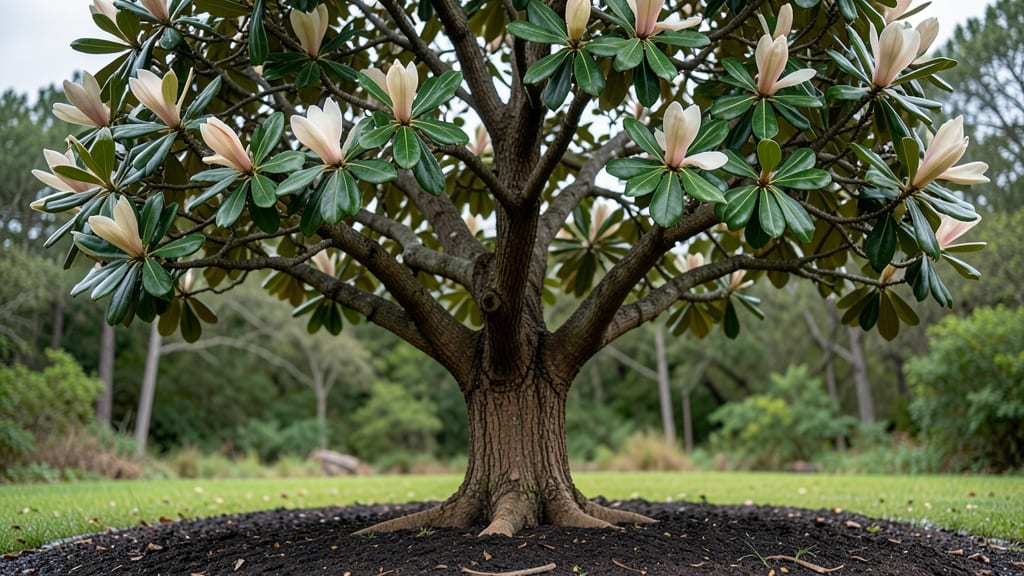
How to choose a magnolia tree based on space and landscape needs
Choosing the perfect magnolia tree starts with understanding your yard size and landscape goals. A Southern magnolia (Magnolia grandiflora) can grow over 80 feet tall, while a star magnolia (Magnolia stellata) stays under 20 feet.
Your decision should align with whether you want a specimen tree, privacy screen, or small-space accent. Let’s break down how to match the right variety to your space.
First, measure your available planting area and consider the tree’s mature width. A 20-foot-wide canopy needs at least 15 feet of clearance from structures, walkways, or other plants.
For example, the Saucer magnolia (Magnolia × soulangeana) typically grows 15–25 feet tall with a 15–25-foot spread, making it ideal for medium-sized yards. Always factor in root spread, which can be 2–3 times the canopy width.
🌿 Magnolia Tree Spacing Guide by Landscape Use
- Specimen Tree: Plant 15–25 feet from structures; choose tall varieties like Magnolia grandiflora (80 ft) or Magnolia campbellii (30–50 ft).
- Privacy Screen: Space 10–15 feet apart for a dense barrier; opt for medium-height types like Magnolia virginiana (12–20 ft) or Magnolia 'Black Tulip' (15–20 ft).
- Small-Space Accent: Keep under 10 feet tall; varieties like Magnolia stellata (10–20 ft) or Magnolia 'Little Gem' (15–25 ft, dwarf) work well in urban gardens.
- Foundation Planting: Maintain 5–10 feet clearance from walls; select compact varieties like Magnolia 'Teddy Bear' (8–12 ft) or Magnolia 'Jane' (12–15 ft).
💡 Pro Tip: Always check the mature height and spread of your chosen variety before planting.
Next, assess your sunlight exposure. Most magnolias thrive in partial shade, with morning sun and afternoon shade being ideal. However, varieties like the Sweetbay magnolia (Magnolia virginiana) tolerate full shade, while Southern magnolia can handle direct sunlight in cooler climates.
If your yard has limited sunlight, prioritize shade-tolerant types like Magnolia 'Elizabeth' or Magnolia 'Nick'.
Consider your climate zone and soil type when selecting a magnolia. For example, Southern magnolias love humid climates and acidic soil, while star magnolias prefer cooler regions (USDA Zones 4–8).
If you’re in a drought-prone area, choose varieties with moderate drought tolerance, such as Magnolia 'Butterflies' or Magnolia 'Pinkie', which have smaller canopies and lower water needs.
For urban gardens or small yards, dwarf varieties are your best bet. The Little Gem magnolia (Magnolia grandiflora 'Little Gem') grows only 15–25 feet tall but retains the glossy leaves and fragrant blooms of its larger cousin.
Another great option is the Teddy Bear magnolia (Magnolia 'Teddy Bear'), which stays under 10 feet tall and blooms early in the season. These varieties allow you to enjoy magnolia beauty without sacrificing yard space.
Finally, think about long-term maintenance. Larger magnolias may require regular pruning to control size, while smaller varieties need minimal upkeep. If you’re planning a privacy hedge, consider planting multiple medium-height magnolias like Magnolia 'Black Tulip' in a row, spaced 10–12 feet apart.
For a low-maintenance specimen tree, a slow-growing variety like Magnolia 'Ann' (15–20 ft) is perfect.
With the right magnolia variety and spacing plan, you’ll create a stunning focal point that enhances your landscape for decades.
Start by measuring your space, then choose a variety that fits your yard size, sunlight conditions, and design vision—your future self (and your neighbors) will thank you! 🌸
★★★★★5.0(11 reviews)
|