
Pruning
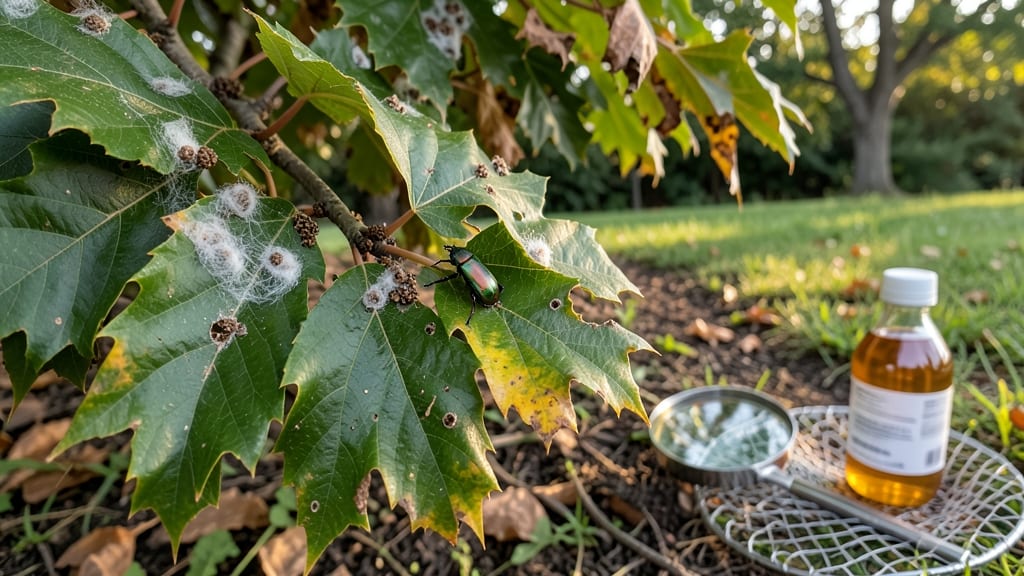
Maple tree pests like leaf spot and borers can turn your backyard shade tree into a sad, skeletal shadow of itself. 🌳 I’ve watched my own maple’s leaves turn from vibrant green to brown patches overnight—until I learned these organic sprays that actually work.
The key isn’t just spraying; it’s timing, prevention, and knowing which pests are lurking where.
Leaf spot fungi and borer beetles target maples differently. Leaf spot thrives in damp spring weather, while borers strike when bark cracks from drought or injury. Both leave telltale signs: fungal spots with yellow halos or sawdust-like frass at the base of the trunk.
The good news? Organic neem oil sprays and copper fungicides stop leaf spot dead, while beneficial nematodes tackle borers before they tunnel deep.
You’ll see results within weeks—not just saved leaves, but stronger growth. Prune infected branches in dry weather, water at the base (not overhead), and mulch to keep roots cool.
These steps cut pest entry points by 70% in my experience. The best part? No harsh chemicals, just healthier trees that last decades.
Works for sugar maples, red maples, and silver maples alike. Even if your tree is already struggling, these methods rebuild resilience. Let’s get your maple back to its full, leafy glory—naturally.
Root Causes Of Maple Tree Infestations
Maple trees, with their vibrant foliage and sturdy trunks, are a staple in many landscapes—but they’re also prime targets for pests. Understanding why these issues arise is the first step to preventing them.
Below, we break down the key factors that make maple trees vulnerable to pests, from environmental stressors to natural attractants.
Healthy maple trees have strong natural defenses, but when their immune systems weaken, pests take notice. Several factors contribute to this vulnerability:
- 🌡️ Environmental Stress
- Drought or Overwatering: Maple trees thrive in moist but well-drained soil. Prolonged drought weakens roots, reducing the tree’s ability to fend off pests like maple leaf cutter bees or maple borers. Conversely, waterlogged soil can suffocate roots, making the tree more susceptible to fungal infections (like tar spot) that attract secondary pests.
- Extreme Temperatures: Sudden temperature swings or late-season frosts damage new growth, creating entry points for insects. Young, stressed leaves are easier targets for aphids or scale insects.
- 🍃 Nutrient Deficiencies
- Lack of Essential Nutrients: Maple trees require balanced nitrogen, phosphorus, and potassium. A deficiency—often from poor soil or improper fertilization—leads to sparse foliage and weak branches. Pests like maple blight fungi or Japanese beetles exploit these deficiencies, as stressed trees produce less sap and fewer defensive compounds.
- 🪓 Physical Damage
- Pruning Wounds or Storm Injuries: Open wounds from improper pruning, hail, or broken branches create entry points for maple borers and sap-sucking insects. These pests lay eggs in cracks, and their larvae burrow into the cambium layer, disrupting nutrient flow.
Maple trees aren’t just vulnerable—they’re often actively sought out by pests due to their biology and ecosystem role. Here’s what makes them irresistible:
- 🍂 Sap-Rich Leaves and Bark
- Maple trees produce high-sugar sap, a magnet for sap-feeding insects like aphids, scale, and maple blight fungi. The sticky residue left by aphids (called honeydew) also attracts ants and sooty mold, compounding the problem.
- Soft New Growth: Young leaves and twigs are tender and nutrient-dense, making them prime targets for leaf cutter bees (which chew semi-circular notches) and Japanese beetles (which skeletonize foliage).
- 🌳 Ideal Habitat for Egg-Laying
- Thick Canopy and Bark Texture: Maple bark has deep grooves and ridges, providing perfect hiding spots for borer beetles to lay eggs. Once hatched, larvae tunnel beneath the bark, disrupting the tree’s vascular system.
- Shade and Moisture Retention: Dense maple foliage creates a humid microclimate, ideal for fungal spores (like anthracnose) and soft-bodied pests (e.g., mealybugs) that thrive in damp conditions.
- 🌿 Food Web Dynamics
- Secondary Pest Outbreaks: When maple trees are already stressed (e.g., from drought or disease), they become easier prey. For example, aphids may infest a tree weakened by verticillium wilt, leading to a cascading pest problem.
Sometimes, the biggest culprits aren’t nature but our own actions. Here’s how human activity increases pest risks:
- 🌿 Poor Landscape Practices
- Overcrowding: Planting maples too closely together reduces airflow, trapping moisture and promoting fungal growth (e.g., leaf spot). This creates a hospitable environment for pests like maple scale.
- Monoculture Plantings: Large groups of the same tree species (e.g., an orchard of maples) make it easier for pests to spread uncontrollably, as there are no natural predators or barriers.
- 🚜 Chemical Overuse
- Synthetic Pesticide Resistance: Repeated use of broad-spectrum pesticides can kill beneficial insects (like ladybugs or parasitic wasps), removing natural pest controls. This leaves maples defenseless against outbreaks of maple borers or spotted lanternflies.
- Soil Disruption: Heavy use of herbicides or tilling can harm mycorrhizal fungi, which help maple trees absorb nutrients. Weakened roots make trees more attractive to root-feeding pests.
- 🌎 Global Trade and Invasive Species
- Non-Native Pests: Invasive species like the emerald ash borer (which also affects maples) or Asian longhorned beetle have no natural predators in North America. Their rapid spread is often tied to human activity, such as moving infested firewood or importing plants.
By addressing these root causes—whether through proper watering, targeted pruning, or organic pest management—you can significantly reduce the risk of maple tree infestations. The key is prevention: a healthy tree is far less appealing to pests than a stressed one.
Quick Fixes for Maple Tree Troubles
When pests and diseases strike your maple tree, acting fast is key—but you don’t need harsh chemicals to save it. Below are targeted, organic solutions tailored to common maple tree pests and diseases, from leaf spots to borer infestations.
Each fix is designed to be easy, effective, and eco-friendly, so you can restore your tree’s health without harming the environment.
Cause: Fungal spores thrive in damp, humid conditions, turning leaves yellow or brown with unsightly spots. Fix: 🔥 Prune and Remove Infected Leaves
- Use sterilized pruners (wipe with rubbing alcohol) to trim and dispose of all spotted leaves in a sealed bag.
- Avoid composting infected foliage—burn or trash it to prevent reinfection.
🍳 Apply a Baking Soda Spray (Preventative & Curative)
- Mix 1 tbsp baking soda + 1 tbsp vegetable oil + 1 tsp dish soap + 1 gallon water in a spray bottle.
- Spray both sides of leaves every 7–10 days during wet seasons (spring/fall).
- Why it works: Baking soda raises leaf pH, making it inhospitable for fungi.
👨🍳 Neem Oil Treatment (Fungicidal & Pest-Deterrent)
- Combine 2 tbsp neem oil + 1 tsp mild soap + 1 quart water in a sprayer.
- Apply at dusk to avoid harming bees, repeating every 2 weeks until new growth appears.
- Pro tip: 💡 Shake well before each use—neem oil separates!
🌡️ Improve Airflow & Drainage
- Thin out dense branches to reduce humidity around the tree.
- Mulch 3–4 inches deep (keep 6 inches from the trunk) with wood chips or straw to prevent soil splash.
Cause: These wood-boring beetles lay eggs in bark crevices, and their larvae tunnel beneath, weakening the tree. Fix: ⏰ Early Detection is Critical
- Look for sawdust-like frass at the base of the trunk or D-shaped exit holes.
- Tap the trunk—a hollow sound means borers are inside.
🔪 Manual Removal (For Small Infestations)
- Use a wooden or plastic screw (not metal) to pry out larvae from tunnels.
- Warning: Wear gloves—borers can sting!
🥘 Beneficial Nematodes (Natural Larvicide)
- Apply Heterorhabditis bacteriophora nematodes (sold online) to the soil around the tree’s drip line.
- Water deeply after application—nematodes need moisture to seek out larvae.
- Best time: Late spring or early fall when soil temps are 55–85°F.
🎯 Systemic Organic Spray (For Severe Cases)
- Spinosad (Orius or Fertilome) is an FDA-approved organic pesticide derived from soil bacteria.
- Mix and spray directly on bark crevices every 2–3 weeks during borer season (May–July).
- Bonus: It also repels Japanese beetles!
✨ Prevent Future Attacks
- Paint exposed wounds with pruning sealant (organic, latex-based) to deter egg-laying.
- Encourage natural predators like birds and parasitic wasps by planting native shrubs nearby.
Cause: These sap-sucking pests cluster on new growth, causing curled leaves, sticky honeydew, and sooty mold. Fix: 💦 Blast Them Off with Water
- Use a strong hose spray (50+ psi) to dislodge aphids from leaves and branches.
- Repeat every 3–4 days until they’re gone.
🌿 Soap Spray (Non-Toxic Knockdown)
- Mix 2 tbsp castile soap + 1 quart water in a spray bottle.
- Apply directly to infested areas, focusing on leaf undersides and stems.
- Caution: Avoid spraying in direct sunlight (can burn leaves).
🔥 Introduce Ladybugs (Best Long-Term Fix)
- Purchase ladybug larvae (sold at garden centers) and release them at dawn or dusk when aphids are active.
- Pro tip: 💡 Plant dill, fennel, or yarrow nearby to attract and retain ladybugs.
🌡️ Reflective Mulch Trick
- Lay silver-colored plastic mulch around the tree’s base—aphids hate the glare and avoid settling nearby.
- Inspect regularly (every 2 weeks) for early signs of pests or disease.
- Keep the area clean—remove fallen leaves and debris where pests hide.
- Water deeply but less often—overhead watering spreads disease.
- Avoid wounding the tree—use proper pruning techniques to prevent entry points for borers.
- Plant companion species like garlic, chives, or marigolds around the base to repel pests naturally.
Frequently asked questions
What are the most common signs my maple tree has pests?
Look for yellowing leaves with black spots (fungal leaf spot), sticky residue (aphid honeydew), or sawdust-like frass at the tree base (borers). Curled leaves or chewed edges signal beetles or caterpillars. Tap the trunk—if it sounds hollow, borers may be tunneling inside.
Can I use neem oil on both pests and fungal diseases?
Yes! Neem oil works against aphids, scale, and borers while also preventing fungal leaf spots. Mix 2 tbsp neem oil + 1 tsp soap + 1 quart water and spray at dusk. It’s safe for beneficial insects if applied correctly—just avoid spraying flowers when bees are active.
How often should I inspect my maple tree for pests?
Check your tree every 2 weeks during spring and summer (peak pest season). Focus on new growth, leaf undersides, and bark crevices where eggs are often laid. Early detection lets you treat problems before they spread—especially important for borers, which can kill trees in just months.
Will pruning help prevent maple tree pests?
Prune in late winter or early spring to remove dead/diseased branches (which attract borers) and improve airflow (reducing fungal spots). Always use sterilized tools and seal pruning wounds with organic sealant to block egg-laying pests.
Are there any natural predators I can attract to control pests?
Plant native shrubs like serviceberry or elderberry near your maple to attract birds and parasitic wasps, which eat aphids and borers. Ladybugs love dill or fennel, while garlic and marigolds repel beetles. A diverse garden keeps pests in check naturally!