
Pruning
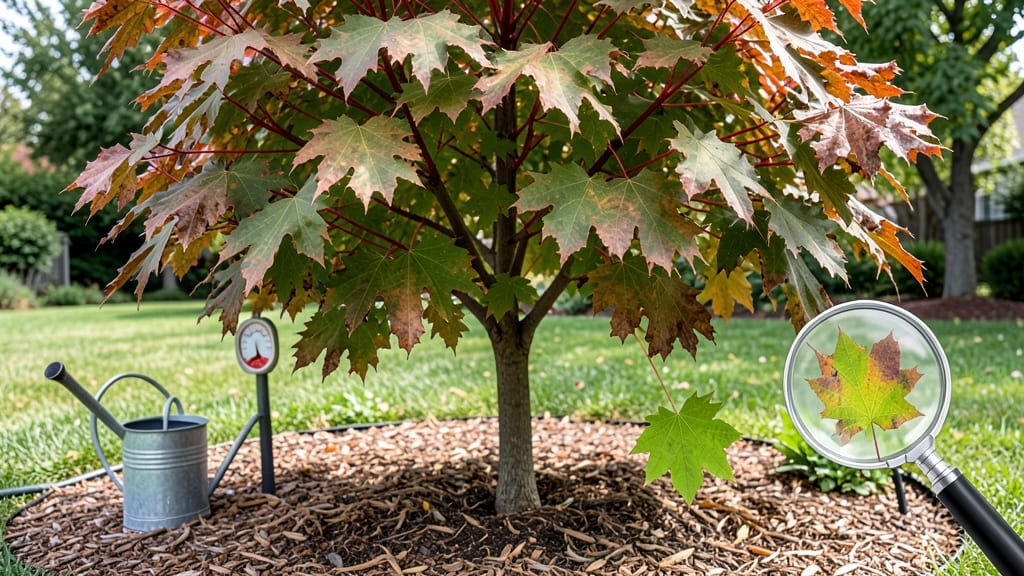
Your maple tree’s crispy brown edges aren’t a death sentence—just a cry for help. 🌳 I’ve nursed back scorched maples by fixing three simple issues: watering, shade, and soil moisture. The browned leaves you’re seeing? That’s your tree’s way of saying, "I’m thirsty and sunburned."
The culprits are usually afternoon sun paired with dry soil, but pests or fungal infections can mimic the damage. Most homeowners overwater or underwater—both stress the tree. A 1-inch weekly watering (deep, not shallow) keeps roots happy, while morning watering prevents evaporation.
Mulch helps too—3 inches of organic matter locks in moisture. You’ll see fresh green growth within 2-3 weeks of consistent care. The key is patience: scorched leaves won’t magically turn back, but new ones will emerge vibrant. Prune only the dead branches—never healthy ones—and avoid heavy trimming during stress.
Works for sugar, red, or silver maples alike. Let’s revive that canopy before winter sets in!
📚 In This Guide
- What you need
- Instructions
- Tips and common mistakes
- Wrapping up and next steps
What you need
- ● Garden hose or watering can with a spray nozzle (for deep watering)
- ● Pruning shears (sterilized) – bypass pruners for clean cuts (1 pair)
- ● Gloves – gardening gloves (1 pair, preferably water-resistant)
- ● Fungicide (copper-based or sulfur-based) – 1 quart (for fungal scorch)
- ● Mulch – 2-3 inches of organic mulch (e.g., shredded bark or wood chips)
- ○ Soil moisture meter (optional but helpful for monitoring hydration)
- ● Anti-desiccant spray (e.g., Wilt-Pruf) – 1 gallon (for extra protection in dry conditions)
- ● Tree banding material (to shield bark from sun scorch)
- ● pH testing kit – to check soil health (if scorch is suspected to be nutrient-related)
- ● Shade cloth – for temporary coverage if transplant shock is a concern
How to revive maple trees affected by scorch
Here’s the straightforward approach I’ve used to bring scorched maples back to life—no mystery or guesswork involved.
💧 Step 1: Adjust Watering Immediately
Maple trees scorch when their roots can’t keep up with moisture loss during hot, dry spells. Start by giving your tree a deep watering—that means 10-15 gallons spread evenly over the root zone, not just a quick sprinkle. You’ll know you’ve done it right when water seeps down 6-12 inches into the soil.
After that, water every 3-5 days during dry periods, checking the soil 2 inches below the surface. If it’s dry, water again. Overwatering is just as bad as underwatering—your tree’s roots need oxygen too. Mulch the base with 3-4 inches of organic mulch (like wood chips) to lock in moisture and cool the roots.
☀️ Step 2: Provide Strategic Shade Relief
Scorched leaves often mean your tree’s getting too much direct afternoon sun, which is when temperatures peak. If your maple is in a wide-open area, consider temporary shade—think of lightweight shade cloth (30-50% coverage) draped over a frame near the tree for a few hours each day. You’ll see new growth respond within 2-3 weeks if the shade is helping.
For permanent solutions, plant fast-growing shade trees (like silver maples or willows) on the tree’s southwest side to block the harshest sun. Just keep the new plants 10-15 feet away so they don’t compete for water. If you can’t add plants, even a well-placed trellis with vines can break up the sun’s intensity.
✂️ Step 3: Prune Damaged Branches Selectively
Don’t panic and trim everything—focus only on branches with completely blackened leaves or those that look crispy to the touch. Use clean, sharp pruners to cut just above a bud or outward-facing branch to encourage healthy regrowth. Sterilize your tools with rubbing alcohol between cuts to prevent disease spread.
Remove no more than 25% of the canopy at once—this keeps the tree from getting stressed. You’ll notice fresh green leaves emerging from the buds within 4-6 weeks if the tree is otherwise healthy. Avoid pruning during extreme heat or drought; wait for cooler mornings to minimize shock.
🌱 Step 4: Boost Soil Health Gradually
Scorched trees often suffer from poor soil drainage or nutrient deficiencies. Test your soil’s pH and nutrients—maples prefer slightly acidic soil (6.0-7.0). If your soil is compacted, aerate the root zone with a manual aerator or garden fork, working the tool 6-12 inches deep in a grid pattern. This helps roots access water and oxygen more easily.
Add compost or well-rotted manure to the top 6 inches of soil in a 3-foot-wide band around the tree’s drip line. Water it in well, but don’t overdo it—too much organic matter can attract pests. Monitor the tree’s response over the next 8-12 weeks; new leaves should appear darker green and more vibrant.
Tips & tricks for reviving scorched maple trees
Here’s what I’ve learned from years of bringing scorched maples back to life—simple adjustments that make all the difference.
Watering Wisdom: That initial 10-15 gallon deep watering in Step 1 is non-negotiable. Use a garden hose with a slow setting or a soaker hose to distribute water evenly—don’t just dump it all in one spot. The goal is to saturate the soil 6-12 inches deep, not just the surface. Think of it like giving your tree a long, refreshing drink rather than a quick sip. After that, stick to the 3-5 day schedule during dry spells, but always check that 2-inch soil test first. If it’s dry, water again—if it’s moist, wait. Overwatering can be just as damaging as underwatering.
Shade Strategy: When setting up temporary shade in Step 2, position that shade cloth to block the late afternoon sun (typically between 2 PM and 6 PM when temperatures peak). I’ve found that 30-50% coverage works best—it reduces heat stress without completely eliminating sunlight. For permanent solutions, focus on the southwest side of your maple, where the sun is most intense. If you’re using a trellis with vines, choose fast-growing varieties like morning glories or clematis—they’ll provide shade within weeks rather than years.
Pruning Precision: In Step 3, resist the urge to trim everything at once. Focus only on branches with completely blackened leaves or those that feel crispy to the touch. When you prune, make your cuts just above a bud or outward-facing branchno more than 25% removal in a single session. Also, sterilize your pruners between cuts with rubbing alcohol—this prevents spreading any potential diseases from damaged branches.
Soil Secret: Before aerating in Step 4, take a moment to assess your soil’s texture. If it feels compacted like a brick when dry, you’ll definitely need that 6-12 inch aeration. For stubborn compaction, rent a mechanical aerator—it’s worth the investment for large trees. When adding compost or manure, spread it in that 3-foot-wide band around the drip line, but don’t pile it against the trunk. This creates a nutrient-rich zone where roots can access what they need without competing with grass or weeds. Monitor progress by checking for new leaves within 8-12 weeks—they should be darker green and more vibrant than before.
Pro Tips for Maple Tree Scorch
- Here’s what I’ve learned from years of bringing scorched maples back to life—simple adjustments that make all the difference.
- Watering Wisdom: That initial 10-15 gallon deep watering in Step 1 is non-negotiable.
- Shade Strategy: When setting up temporary shade in Step 2, position that shade cloth to block the late afternoon sun (typically between 2 PM and 6 PM when temperatures peak).
Frequently asked questions
Got questions about maple tree scorch?
You’re not alone—this issue can be confusing, but we’ve got answers to help you save your tree! Here are some of the most common concerns and quick fixes to keep your maple healthy and vibrant.
What causes maple tree scorch in the first place?
Maple tree scorch is usually triggered by a combo of stress factors, including hot, dry weather, poor soil moisture, or improper watering. Young trees, shallow root systems, and drought-prone areas are especially vulnerable. Think of it like sunburn for your tree—too much heat without hydration leads to leaf damage!
How often should I water my maple tree to prevent scorch?
Water your maple deeply but infrequently—aim for 1–1.5 inches per week, especially during dry spells. Mulch heavily (3–4 inches) to retain moisture, and avoid shallow watering that encourages weak roots. Early morning watering (before 10 AM) reduces evaporation. Pro tip: Stick your finger 2 inches into the soil—if it’s dry, it’s time to water!
Can I fix scorch damage after it happens, or is the tree doomed?
Don’t panic! While scorch can’t be reversed, your tree can recover with proper care. Prune only the most damaged branches (sterilize tools first!), water consistently, and apply a light mulch to protect roots. Avoid fertilizing—this stresses the tree further. With patience, new growth should emerge in spring!
Are there drought-resistant maple varieties less prone to scorch?
Yes! If you’re planting new, opt for drought-tolerant maples like Norway maple or Autumn Blaze. These varieties handle heat better than sensitive types like Silver Maple. For existing trees, deep root fertilization (mycorrhizal fungi) can improve resilience. Pair this with regular pruning to reduce water loss.
Why does my maple’s scorch look worse in the afternoon?
That’s because afternoon sun intensifies stress—hot air + dry leaves = a double whammy. Scorch symptoms (brown, crispy edges) worsen as the day heats up. Shade cloth (30–50% coverage) or strategic pruning to open the canopy can help. If possible, plant near partial shade (e.g., near other trees) to naturally buffer heat.
Should I prune scorch-damaged branches now, or wait until spring?
Prune now—but carefully! Remove only dead or heavily damaged branches (they won’t recover). Avoid heavy pruning, which stresses the tree further. Wait until late winter/early spring for major shaping. Sterilize tools with rubbing alcohol to prevent disease spread. Think of it as a first-aid trim, not a full makeover.
Wrapping up and next steps
Don’t let maple tree scorch turn your beautiful foliage into a sad, crispy mess! With the right care—like proper watering, strategic pruning, and mulching—you can keep your maple trees thriving. Remember, prevention is key, but even if scorch has already set in, these fixes can help your tree recover. 🌿
Now that you’re armed with solutions, take action today! Start by checking your tree’s moisture levels and adjust your care routine. Your maple tree will thank you with lush, healthy leaves for seasons to come.