
Pruning
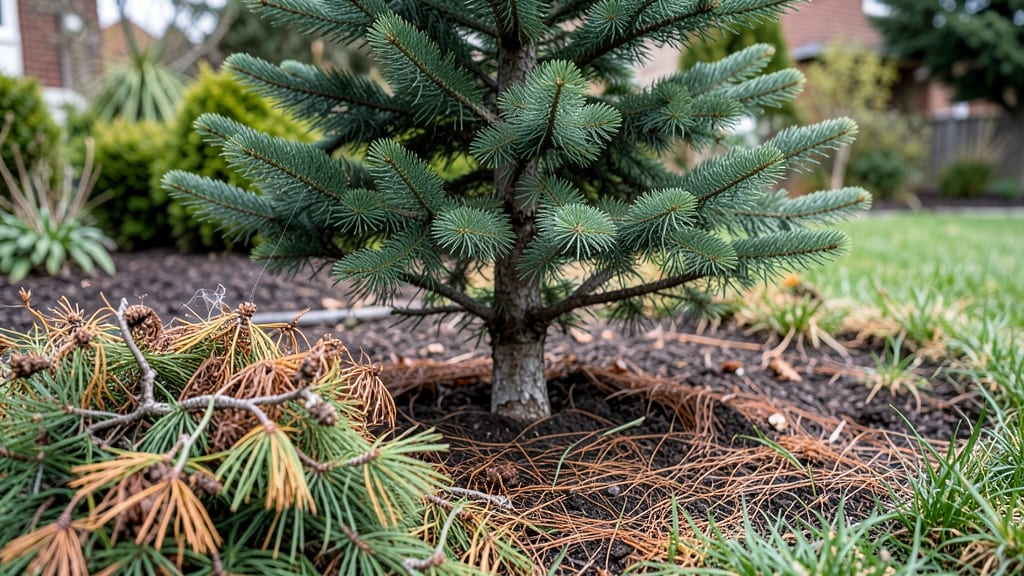
See those brown needles on your Nordmann fir tree problems?
That panic when you spot them is real—especially when your tree’s supposed to stay lush all year. 🌲 I’ve nursed back more than a few of these evergreens after needle browning, and the fixes aren’t as scary as they seem.
The key is acting fast before the problem spreads deeper into the branches.
Most browning starts with stress—too much sun, not enough water, or pests like spider mites sucking the life out of the needles. My first step? Checking the soil moisture and inspecting the undersides of branches for tiny webs or bagworm nests.
Often, the fix is as simple as watering deeply once a week and spraying neem oil, but fungal diseases (like needle blight) need a stronger approach.
Once you identify the cause, the solutions are straightforward: prune dead branches, adjust watering, and apply targeted treatments. Within 4-6 weeks, you’ll see fresh green growth pushing out, and your tree will look like it did in the holiday catalog.
The trick is catching it early—don’t wait until half the tree is bare.
Long-term, mulch around the base to retain moisture, avoid over-fertilizing, and give your tree space to breathe. These evergreens are tougher than they look—with the right care, they’ll bounce back and stay vibrant for years. Let’s get that green back fast.
Root Causes Of Needle Issues
Nordmann fir trees are prized for their lush, evergreen foliage, but when their needles start turning brown or falling off, it’s often a sign of underlying stress. Understanding the why behind these symptoms is the first step to reviving your tree.
Below, we break down the most common culprits—from environmental factors to pests—and explain the science behind each one.
---
Nordmann firs are cold-hardy (USDA Zones 3–7), but sudden temperature drops—especially below 10°F (-12°C)—can cause needle discoloration. The issue isn’t just freezing temps; it’s rapid freezing of water inside the needles, which ruptures cell walls.
This leads to: - Brown, brittle needles (often at the tips first). - Needles that stay attached but lose their vibrant green hue.
Why it happens: Fir trees rely on antifreeze proteins in their cells to prevent ice crystal formation. If temperatures plummet too fast, these proteins can’t keep up, leading to cytoplasmic damage—the liquid inside cells freezes and expands, crushing delicate structures.
Actionable insight: If your tree is in a wind-exposed area, cold damage worsens due to windburn. Mulch the root zone with 3–4 inches of organic mulch to insulate roots and reduce temperature fluctuations.
---
Nordmann firs prefer moist but well-drained soil, and waterlogged roots are a silent killer. When roots sit in soggy soil for too long, they suffocate due to: - Lack of oxygen (roots need aeration to respire). - Fungal growth (like Phytophthora, which clogs root pores).
Why it happens: Roots absorb water via osmosis, but if soil is waterlogged, anaerobic bacteria thrive, producing toxins that block nutrient uptake. The tree then transports less water to needles, causing them to dry out and turn brown—even if the soil is wet.
Actionable insight: - Test drainage: Dig a 12-inch hole near the tree. If water pools after 6 hours, amend soil with sand or perlite. - Water deeply but infrequently—aim for 1–1.5 inches per week (including rain). Use a soil moisture meter to avoid guesswork.
---
While Nordmann firs tolerate partial shade, intense afternoon sun + dry soil = scorched needles. Heat stress causes: - Needles to curl, then brown (especially on the south or west sides of the tree). - Premature needle drop as the tree sheds damaged foliage.
Why it happens: Needles act like tiny solar panels, absorbing sunlight to produce energy via photosynthesis. But when temperatures exceed 90°F (32°C), the tree’s stomata (pores) close to conserve water—trapping heat inside. This triggers oxidative stress, where excess sunlight damages chlorophyll (the green pigment in needles).
Actionable insight: - Provide afternoon shade with a lightweight shade cloth (30–50%) or plant nearby shade trees (e.g., maples). - Mulch heavily (4–6 inches) to keep roots cool. Reflective mulch (like white gravel) can reduce soil temps by 10°F+.
---
Pests don’t just nibble—they inject toxins, steal nutrients, or block water flow.
Common offenders include: - Spider mites (tiny red/yellow pests that suck cell sap, causing stippling and browning). - Bark beetles (bore into bark, disrupting xylem—the tree’s water transport system). - Aphids (excrete honeydew, which fosters sooty mold, blocking sunlight).
Why it happens: Pests target stressed trees first (drought, poor soil, or recent pruning). Their saliva contains enzymes that break down cell walls, leading to: - Chlorosis (yellowing) from disrupted nutrient flow. - Needle desiccation as pests block stomata.
Actionable insight: - Blast pests off with a strong stream of water (mites hate this). - Apply horticultural oil (like neem oil) to smother eggs/larvae. Reapply every 7–10 days. - Invite predators: Ladybugs and lacewings eat aphids; birds control beetles.
--- Brown needles can signal starvation—specifically, a lack of: - Nitrogen (N) → Pale yellow needles (old growth turns brown first). - Magnesium (Mg) → Interveinal chlorosis (yellow between veins, brown edges). - Iron (Fe) → Bronzing (purple-brown needles, common in alkaline soil).
Why it happens: Nordmann firs thrive in acidic soil (pH 5.0–6.5). If soil is alkaline (pH >7), iron and manganese become locked away—unavailable to roots. Even if fertilizer is applied, micronutrient imbalances can occur if the tree can’t absorb them.
Actionable insight: - Test your soil (kit from a garden center or lab). If pH is >6.5, add elemental sulfur (1 lb per 100 sq ft) or pine fines. - Use slow-release fertilizer (like Osmoote 16-4-8) in early spring to avoid burning roots. - For magnesium, apply Epsom salt (magnesium sulfate)—1 tbsp per gallon of water, sprayed on needles.
--- Airborne pollutants (like sulfur dioxide from cars or industrial smog) and over-zealous herbicides can bleach needles and stunt growth. Symptoms include: - Uniform browning (not patchy like pests). - Stunted new growth (needles stay short and sparse).
Why it happens: Pollutants like ozone (O₃) and peroxyacetyl nitrates (PANs) damage cell membranes, causing oxidative stress. Even residual lawn chemicals (e.g., 2,4-D) can drift onto fir needles, disrupting hormone balance.
Actionable insight: - Move the tree if possible (away from roads or industrial areas). - Avoid broadleaf herbicides near firs—use vinegar-based or natural alternatives. - Wash needles with mild soap and water (1 tsp dish soap per gallon) if chemical exposure is suspected.
--- Improper pruning stresses the tree, leading to reduced photosynthesis and needle browning.
Common mistakes: - Cutting too late (after mid-August) → New growth can’t harden off before winter. - Topping the tree → Removes leafy canopy, reducing energy production. - Using dirty tools → Spreads disease (like Rhizosphaera needle cast).
Why it happens: When you prune, the tree loses photosynthetic surface area, forcing it to redirect energy to heal wounds. If the cut is too severe or poorly made, the tree can’t compartmentalize the damage, leading to fungal infections or water stress.
Actionable insight: - Prune in early spring (before new growth starts). - Use sharp, sterilized shears (rub with 70% isopropyl alcohol). - Make cuts at a 45° angle, just outside the branch collar (the swollen area where the branch meets the trunk). Never leave stubs!
Practical fixes for a healthy Nordmann fir
Reviving your Nordmann fir tree starts with identifying the root cause—whether it’s environmental stress, pests, or disease—and taking swift, targeted action. Below are easy-to-follow solutions for the most common issues, along with prevention tips to keep your tree thriving year-round.
---
Cause: Overwatering, underwatering, or environmental stress (e.g., heat, wind, or drought). Solution: - Adjust watering habits 💧 - Water deeply but infrequently—Nordmann firs prefer 1–1.5 inches of water per week, including rainfall. Let the top 2–3 inches of soil dry out between waterings. - Check soil moisture 🌱—Stick your finger 2 inches into the soil. If it’s dry, water; if soggy, hold off. - Mulch properly 🍂—Apply 2–4 inches of organic mulch (like pine straw or wood chips) around the base (but not touching the trunk) to retain moisture and regulate temperature.
- Prune damaged branches ✂️ - Trim brown, brittle, or dead needles with clean, sharp pruners in early spring or late fall. - Avoid heavy pruning—remove only no more than 25% of the tree’s foliage at once.
Prevention Tips: ✅ Water in the morning to reduce evaporation and fungal risks. ✅ Group trees together to create a microclimate that retains humidity. ✅ Avoid overhead watering—use a drip irrigation system or soaker hose to keep needles dry.
---
Cause: Tiny pests suck sap, causing needle discoloration, webbing, or stunted growth. Solution: - Blast pests off with water 💦 - Use a strong hose spray (50+ PSI) to dislodge aphids or spider mites from needles. Do this early in the day when pests are least active.
- Apply horticultural oil or insecticidal soap 🛡️ - Spray neem oil or insecticidal soap (follow label rates) on both sides of needles for bagworms or mites.
Reapply every 7–10 days for severe infestations. - For bagworms, manually remove sacs (they look like tiny pinecones) and drop them in soapy water.
- Introduce natural predators 🐞 - Encourage ladybugs, lacewings, or parasitic wasps by planting dill, fennel, or marigolds nearby.
Prevention Tips: 🔹 Inspect trees weekly in spring/summer for early signs (sticky residue = aphids; fine webbing = mites). 🔹 Avoid broad-spectrum pesticides—they kill beneficial insects too. 🔹 Prune thick foliage to improve airflow and reduce hiding spots for pests.
---
Cause: Overly wet soil, poor drainage, or fungal spores spreading from infected plants. Solution: - Improve drainage immediately 🚿 - Aerate compacted soil with a garden fork or add compost to loosen it. - If planting in containers, ensure pots have drainage holes and use well-draining soil mix.
- Fungicide treatment 🛡️ - Spray copper fungicide or baking soda solution (1 tbsp baking soda + 1 quart water + a drop of dish soap) on needles every 10–14 days until new growth appears.
- Remove infected debris 🧹 - Rake and dispose of fallen needles (especially if moldy) to prevent spores from spreading.
Prevention Tips: 🌧️ Water at the base (not overhead) to keep needles dry. 🌿 Space trees 6–10 feet apart for airflow. 🔄 Rotate fungicides if reapplying to avoid resistance.
---
Cause: Sudden exposure to hot sun, dry wind, or salt spray (common near coasts). Solution: - Provide shade temporarily 🌳 - Use shade cloth (30–50%) for 2–4 weeks if transplanting or moving a tree to a sunnier spot.
- Windbreaks for coastal trees 🏖️ - Plant native shrubs (like boxwood or holly) as a wind barrier on the exposed side. - Stake young trees if they’re top-heavy and prone to bending.
- Fertilize lightly 🌱 - Apply a balanced, slow-release fertilizer (10-10-10) in early spring to boost recovery.
Prevention Tips: ⚡ Acclimate trees gradually if moving them to sunnier spots—expose them to more light over 2–3 weeks. ❄️ Protect from salt spray by rinsing trees near roads or coasts with fresh water after storms.
--- - Test your soil 📊—Nordmann firs prefer slightly acidic soil (pH 5.0–6.5).
Adjust with sulfur (to lower pH) or lime (to raise pH) if needed. - Avoid over-fertilizing 🚫—Too much nitrogen causes soft, weak growth that attracts pests. - Mulch in a donut shape 🍩—Keep mulch 2–3 inches deep but 6 inches away from the trunk to prevent rot.
--- By tackling the issue early and methodically, your Nordmann fir can bounce back—often within a few weeks to a season.
Most problems are preventable with consistent care, so once you’ve fixed the damage, stick to a regular maintenance routine to keep your tree lush and healthy! 🌲✨
Frequently asked questions
Why are my Nordmann fir needles turning brown only at the tips?
This is usually a sign of underwatering or dry air stress. Nordmann firs need consistent moisture—let the top 2-3 inches of soil dry out between waterings. Check for crispy needle tips first, then adjust your watering schedule to 1-1.5 inches per week. Mulch with pine straw to retain moisture and reduce evaporation.
What should I do if my Nordmann fir has spider mites?
Start by hosing down the tree with water (50+ PSI) to dislodge mites, especially on the undersides of needles. Follow up with neem oil (1 tbsp per gallon of water) or insecticidal soap, spraying thoroughly on both sides of the foliage. Reapply every 7-10 days for 2-3 weeks. Encourage natural predators like ladybugs by planting marigolds nearby.
Can I save my Nordmann fir if half the needles are already brown?
Yes, but act fast! First, prune out all dead branches (use clean, sharp shears) to reduce stress. Then focus on root health: improve drainage if soil stays soggy, and water deeply once a week. Apply a balanced fertilizer (10-10-10) in early spring to help recovery. With proper care, new growth should appear within 4-6 weeks. Most trees bounce back if the roots are still healthy!
How do I know if my Nordmann fir has a fungal disease?
Look for dark brown or black spots on needles (often with yellow halos) or moldy growth on the soil surface. Fungal issues like needle blight thrive in wet conditions. Improve airflow by pruning dense branches, water at the base (not overhead), and apply copper fungicide every 10-14 days until new growth appears. Remove and dispose of infected needles promptly.
Is it safe to fertilize a Nordmann fir with brown needles?
Only if the problem is nutrient deficiency (like yellowing between veins). Test your soil first—Nordmann firs prefer acidic soil (pH 5.0-6.5). If deficient, use a slow-release fertilizer (16-4-8) in early spring. Avoid fertilizing if the tree is already stressed by pests, disease, or improper watering—this can worsen the problem. Always water thoroughly after applying fertilizer.