
Trees
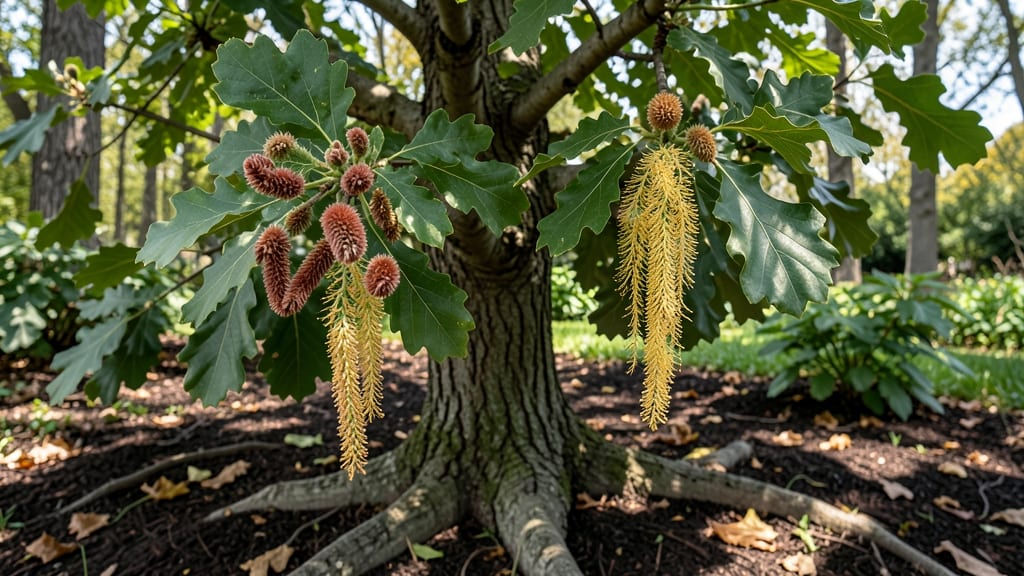
Oak tree pollen tassels appear in early spring as long, dangling catkins that signal male flowers releasing pollen for fertilization, typically between February and April depending on the oak species and climate zone. These tassels are essential for tree reproduction but can also trigger seasonal allergies in sensitive individuals.
Those distinctive dangling strands—called catkins—are nature's way of maximizing pollen distribution. 🌿 Unlike many flowers, oak trees rely on wind to carry their pollen, so the tassels hang low to catch breezes while remaining visible to potential pollinators.
The timing varies dramatically: red oaks often bloom earlier than white oaks, and warmer climates can push the season into May. What's fascinating is how these tassels develop—buds form in the previous fall, waiting until spring's warmth triggers their dramatic elongation.
For allergy sufferers, this means peak pollen season typically lasts 4-6 weeks, with symptoms often worsening on dry, windy days when pollen spreads furthest.
If you're curious about managing these seasonal effects, oak trees actually play a dual role: they support local ecosystems through pollination while sometimes becoming unwelcome neighbors for allergy sufferers. Understanding their growth cycle helps gardeners time pruning and allergy sufferers prepare with air purifiers or outdoor activity adjustments.
💡 In This Article
- How Oak Tree Pollen Tassels Develop and Function
- Managing Oak Pollen Allergies and Tree Health
How oak tree pollen tassels develop and function
The transformation from dormant buds to pollen-laden tassels begins in late summer when oak trees produce flower buds—distinct from their leaf buds. These flower buds contain the genetic blueprint for next year's reproductive structures.
During winter's dormancy, the buds undergo a biochemical process called vernalization, where cold temperatures trigger hormonal changes that prepare the buds for spring growth. Once temperatures consistently rise above 45°F for several days, these buds swell rapidly, elongating into the familiar dangling catkins we recognize in early spring.
Male catkins are the showy, pollen-producing structures, while female flowers remain small and often hidden in the tree's crotches.
The male catkins can grow up to 4-6 inches long and contain thousands of tiny pollen grains, each measuring about 0.0004 inches (10 microns) in diameter—just the right size to stay airborne for efficient wind dispersal.
This wind pollination strategy differs from many flowering plants that rely on insects, making oak trees particularly effective at spreading pollen over large distances, sometimes up to 100 miles in ideal conditions. The timing of pollen release is also strategically timed to coincide with minimal competition from other tree species.
Environmental factors play a crucial role in determining when and how vigorously these tassels develop. Moisture levels during the previous growing season directly impact bud formation—drought stress can reduce next year's catkin production by up to 30%.
Temperature fluctuations matter too: a sudden cold snap after buds begin swelling can delay the process by 1-2 weeks, while consistently warm weather accelerates development.
The pollen itself is most effectively released on days with 10-20 mph winds and relative humidity below 60%, which explains why allergy symptoms often peak during these conditions. Interestingly, red oak pollen tends to be more allergenic than white oak pollen due to its higher protein content.
What's particularly fascinating is the tree's investment in this reproductive process. A mature oak tree can produce millions of pollen grains per season, yet only a tiny fraction will successfully fertilize female flowers.
This overproduction maximizes the chances of successful pollination despite the tree's reliance on wind—a less precise pollination method compared to insect-mediated systems. The catkins themselves contain specialized structures called anthers that split open when dry, releasing pollen in explosive bursts that can travel significant distances.
This mechanism ensures even the most distant female flowers have a chance at fertilization.
For those observing oak trees closely, you might notice that the male catkins eventually turn brown and brittle after releasing their pollen, while female flowers develop into tiny, fuzzy acorns. This seasonal transformation provides clear visual cues about the tree's reproductive status.
The entire process from bud formation to pollen release typically takes about 4-6 weeks, with variations depending on the specific oak species and local climate conditions.
Understanding this cycle helps explain why allergy seasons can vary dramatically from year to year—it's not just about temperature, but also about how these environmental factors interact with the tree's internal biological clock.
The biological efficiency of this system becomes even more apparent when considering that oak trees are among the longest-lived organisms on Earth. Their reproductive strategy, while seemingly wasteful in terms of pollen production, ensures continuity over centuries.
Each successful fertilization represents a tiny but critical step in maintaining these ecological giants that have shaped forests for millennia.
For gardeners and tree enthusiasts, recognizing these developmental stages provides valuable insights into both the natural world and how to best care for these magnificent trees during their most active growing periods.