
Diseases
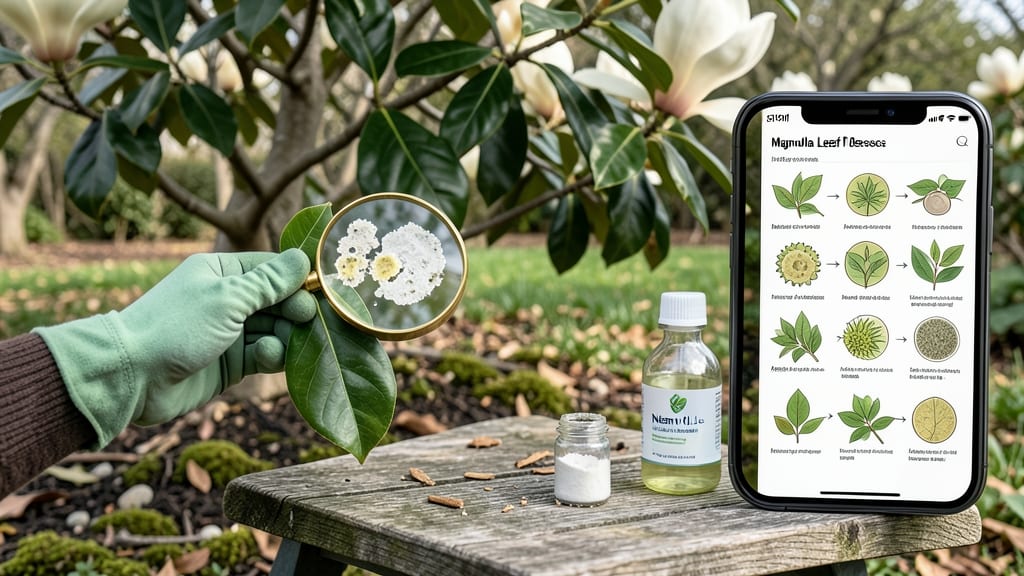
White spots on magnolia leaves can turn your tree's lush foliage into a patchwork of frustration. ✨ I've battled this myself—what started as a few spots became a full-blown leaf mess if I didn't act fast. The good news? Most cases are treatable, especially when you catch them early.
These spots could be powdery mildew, a common fungal infection that thrives in humid conditions, or even spider mites leaving their telltale webbing. The key is identifying whether the spots are fuzzy (fungal) or tiny specks with webbing (pests).
I learned the hard way that waiting turns a quick fix into a season-long cleanup. With the right organic treatments—neem oil, baking soda spray, or proper pruning—you'll see those leaves clearing up within 2-3 weeks.
The first step is confirming the cause, and I'll walk you through how to do that without a lab. Prevention is easier than treatment: improve airflow, water at the base, and avoid overhead sprinklers. Here's how to diagnose and fix it for good.
Root Causes of Leaf Spots
White spots on magnolia leaves aren’t just a cosmetic issue—they’re often a red flag from nature’s troublemakers. Understanding the why behind these spots helps you tackle the problem at its source. Let’s break down the most common culprits and their sneaky science.
Fungi are the #1 cause of white spots on magnolia leaves, thriving in warm, humid conditions. Two notorious offenders stand out:
1. Powdery Mildew (Erysiphe spp.)
- How it works: This fungus doesn’t need water to spread—just air and sugar from your tree’s leaves.
It forms a white, powdery coating (like dusting flour) that blocks sunlight and weakens photosynthesis. - Why it targets magnolias: Magnolias have broad, glossy leaves that trap moisture, creating a fungal paradise.
Stress from drought, poor air circulation, or over-fertilizing makes them even more vulnerable. - Tell-tale signs: White spots start on the top of leaves, often in circular or irregular patches. Over time, leaves may yellow, curl, or drop prematurely.
2. Anthracnose (Colletotrichum spp.)
- How it works: Unlike powdery mildew, anthracnose needs wet conditions to spread.
It infects through leaf wounds (like from hail or pruning) and produces small, sunken white or gray spots with dark edges. - Why it’s tricky: It can lie dormant in fallen leaves or soil, launching a surprise attack when spring rains arrive.
Young, tender leaves are its favorite snack. - Tell-tale signs: Spots often have a raised, velvety center and may ooze in damp weather. Severe cases cause leaf blight (brown, dead patches).
Not all white spots come from fungi—some are a side effect of pests feasting on your magnolia. Here’s how they mess with your tree:
1. Spider Mites (Tetranychus spp.)
- How they cause spots: These tiny arachnids (yes, spiders) suck sap from leaves, leaving behind stippled white or yellow patches.
Their webbing can also turn leaves grayish-white. - Why they love magnolias: Dry, dusty conditions (like indoor-like humidity) make magnolias a buffet for mites.
They multiply fast—doubling in weeks under ideal heat. - Tell-tale signs: Look for fine webbing on the undersides of leaves and a bronzy sheen on the upper surface.
2. Scale Insects (Various spp.)
- How they cause spots: Scale insects attach to leaves/stems and excrete a sticky "honeydew" that attracts sooty mold—a black, fuzzy fungus.
While the mold isn’t white, it can disguise the scale’s white, waxy shells underneath. - Why they’re sneaky: They’re immobile and blend into leaf surfaces.
Infestations often go unnoticed until honeydew drips onto cars or sidewalks (a sticky mess!). - Tell-tale signs: White, cottony bumps on stems/leaves or black mold on leaves below.
Sometimes, white spots aren’t from pathogens or pests—they’re your tree’s way of screaming, "Something’s WRONG!" Here’s how:
1. Sunburn or Chlorosis
- How it happens: Magnolias with variegated (white-striped) leaves or those suddenly moved to full sun can develop white, bleached patches from UV damage.
Chlorosis (yellowing) may also occur if the tree can’t access iron due to alkaline soil. - Why it’s confusing: Sunburn spots are dry and crispy, while chlorosis starts as pale yellow between veins.
Both can look like disease at first glance. - Tell-tale signs: Spots are irregular and often on exposed leaves. Check soil pH—if it’s >7.0, iron deficiency is likely.
2. Chemical Injury
- How it happens: Over-application of fungicides, herbicides, or even well-meaning fertilizers (like too much lime) can cause leaf burn. White or grayish patches may appear within days of treatment.
- Why it’s dangerous: Magnolias are sensitive to salt buildup (from fertilizers) and can’t recover quickly.
Roots may also get damaged, weakening the tree long-term. - Tell-tale signs: Spots are uniform and often on new growth. Check labels—some products warn about "foliar injury" on broadleaf plants.
Use this quick-reference table to narrow down the cause:
| Cause | Spot Appearance | Leaf Reaction | Other Clues |
|---|---|---|---|
| Powdery Mildew | White, powdery, dust-like | Curling, yellowing | No webbing; spreads in dry heat |
| Anthracnose | White/gray, sunken, dark edges | Blighting (brown death zones) | Needs wet conditions; spots ooze |
| Spider Mites | Stippled white/yellow | Bronzy sheen, webbing | Dry conditions; tiny moving dots (with magnifier) |
| Scale Insects | White waxy bumps + black mold | Sticky honeydew drips | Black sooty mold on lower leaves |
| Sunburn | Dry, crispy, irregular | No fungal growth | Happens in full sun; variegated leaves |
| Chemical Burn | Uniform white/gray patches | Often on new growth | Recent fertilizer/fungicide use |
To rule out fungal issues, mist a leaf in the morning. If:
- Powdery mildew stays white and flaky (like dandruff).
- Anthracnose spots darken or ooze.
- No change? It’s likely pest-related or environmental.
Act fast if you see: ✅ Spots spreading rapidly (fungal). ✅ Webbing or tiny moving dots (mites). ✅ Black mold + sticky leaves (scale). ✅ New growth dying (chemical stress).
Ignoring these can lead to defoliation, weakened branches, or even tree death—especially in young magnolias. But the good news? Most causes are preventable or treatable with the right organic fixes (we’ll cover those next!).
Step-by-Step Organic Fixes for Leaf Spots
White spots on your magnolia leaves? Don’t panic—these natural, science-backed solutions will help restore your tree’s health without harsh chemicals. Below, we’ve matched common causes to easy, effective fixes, plus prevention tips to keep your magnolia thriving.
Fungi love damp, shaded conditions, and once they take hold, they spread fast. Act quickly to stop the cycle.
🔥 Remove Infected Leaves Immediately
- How: Wear gloves and snip off all spotted leaves with clean pruners (sterilize with rubbing alcohol).
- Why: Fungal spores cling to leaves—removing them breaks the infection chain.
- Pro Tip: 💡 Bag and compost infected leaves away from the garden to prevent reinfection.
🍳 Apply a Fungicide Spray (Organic Options)
Choose one of these DIY or store-bought sprays and reapply every 7–14 days until new growth appears: - Baking Soda Spray: Mix 1 tbsp baking soda + 1 tsp dish soap + 1 gallon water.
Spray both sides of leaves (early morning or evening to avoid burning). - Neem Oil Solution: Blend 2 tbsp neem oil + 1 tsp horticultural oil + 1 tsp soap + 1 gallon water.
Shake well and spray thoroughly. - Copper Fungicide: Use a ready-made organic copper spray (like Copper Soap) for severe cases—follow label instructions.
🌡️ Improve Airflow & Reduce Humidity Fungi thrive in stagnant, moist air.
Adjust your tree’s environment: - Prune for sunlight: Thin out dense branches to let light and air circulate. - Water at the base: Avoid overhead watering—use drip irrigation or a soaker hose. - Space plants apart: If magnolias are clustered, separate them by at least 3–4 feet.
🎯 Prevent Future Outbreaks
- 🌿 Mulch properly: Use 2–3 inches of organic mulch (wood chips or pine straw) but keep it 6 inches away from the trunk.
- 🍂 Clean up fallen leaves: Rake and dispose of debris year-round—fungi survive in leaf litter.
- 🌱 Plant resistant varieties: If your magnolia is prone to disease, consider ‘Little Gem’ or ‘Ann’ (less susceptible to leaf spots).
If white spots appear only on sun-exposed leaves (often crispy or dry), your tree is struggling with too much direct sun or drought.
👨🍳 Provide Shade & Hydration
- 🌳 Partial shade: If planted in a hot, sunny spot, add light shade (like a lattice or nearby trees) for 2–4 hours of afternoon relief.
- 💦 Deep watering: Water slowly and deeply (1–2 inches per week) at the base, not the leaves.
Use a moisture meter to check soil—magnolias hate soggy roots but need consistent moisture. - 🌱 Mulch heavily: Spread 4–6 inches of mulch (avoid plastic) to retain moisture and regulate soil temperature.
⏰ Adjust Watering Schedule
- Morning watering is best: Avoid evening water (encourages fungal growth).
- Test soil moisture: Stick your finger 2 inches deep—if dry, water; if damp, wait.
🌿 Fertilize Gently
- 🍃 Over-fertilizing stresses trees. Use a slow-release, organic fertilizer (like fish emulsion) once in early spring—no summer feeding.
- 💡 Pro Tip: If leaves are yellowing too, your tree may need iron (apply chelated iron per package instructions).
Tiny pests sap leaves, leaving white, stippled spots. Act fast—they multiply quickly!
🔪 Blast Off Pests with Natural Sprays
- 🍋 Neem Oil + Soap Spray: Mix 1 tbsp neem oil + 1 tsp castile soap + 1 quart water.
Spray directly on pests (they’ll drop off). - 🌿 Horticultural Oil: Apply dormant oil (like JMS Stylet Oil) in early spring before pests hatch. - 💦 Strong Water Blast: Use a hose nozzle to knock off mites from leaves (do this early morning).
🕸️ Introduce Beneficial Insects
- Ladybugs (eat aphids/mites) or lacewings (devour spider mites) can be ordered online or attracted with neem oil sprays.
- 💡 Pro Tip: Yellow sticky traps catch whiteflies—hang them near the tree.
🌱 Long-Term Pest Control
- 🍃 Prune regularly: Remove pest-heavy branches (sterilize tools between cuts).
- 🌿 Avoid broad-spectrum pesticides: They kill beneficial insects that keep pests in check.
If your magnolia is severely infected and organic methods don’t work after 4–6 weeks, consider:
- 🍄 Fungicide: Copper fungicide (for anthracnose) or propiconazole (like Banner Maxx)—follow label rates precisely.
- 🐛 Insecticide: Imidacloprid (systemic) for scale or whiteflies (apply in early spring).
⚠️ Warning: Chemicals can harm pollinators—use only as a last resort and avoid bloom time.
🌟 Final Reminder: Prevention is key! Monitor your magnolia weekly, especially after rain, and act at the first sign of spots. With these steps, your tree will bounce back lush and healthy—no white spots in sight! 🌿✨
Frequently asked questions
Are white spots on magnolia leaves always caused by disease?
Not always! While fungal infections like powdery mildew are common, white spots can also result from pest damage (spider mites, scale insects), sunburn, or even chemical burns from fertilizers. Always check for webbing (mites) or sticky residue (scale) before assuming it's a fungal issue.
How quickly should I expect to see improvement after treatment?
With organic treatments like neem oil or baking soda spray, you should notice new, healthy growth within 2-3 weeks. Existing spots may take 4-6 weeks to fully clear, depending on the severity. If you see no improvement after 6 weeks, the issue might be environmental (like sunburn) or require stronger intervention.
Can I use store-bought fungicides on my magnolia?
Yes, but choose organic options first like copper fungicide or potassium bicarbonate. For severe cases, synthetic fungicides like propiconazole can work, but use them only as a last resort—they can harm beneficial insects. Always follow label instructions carefully and avoid spraying during bloom time.
Why do my magnolia leaves keep getting white spots even after treatment?
This usually happens when the underlying conditions persist—like poor airflow, overwatering, or high humidity. Double-check your care routine: prune for better airflow, water at the base (not overhead), and ensure 2-3 inches of mulch (but keep it away from the trunk).
Is it safe to prune infected leaves during rainy weather?
No, avoid pruning during rain or high humidity—this spreads fungal spores through the air. Wait for dry, sunny days to remove infected leaves. Sterilize your pruners with rubbing alcohol between cuts to prevent cross-contamination.