
Pests and Diseases
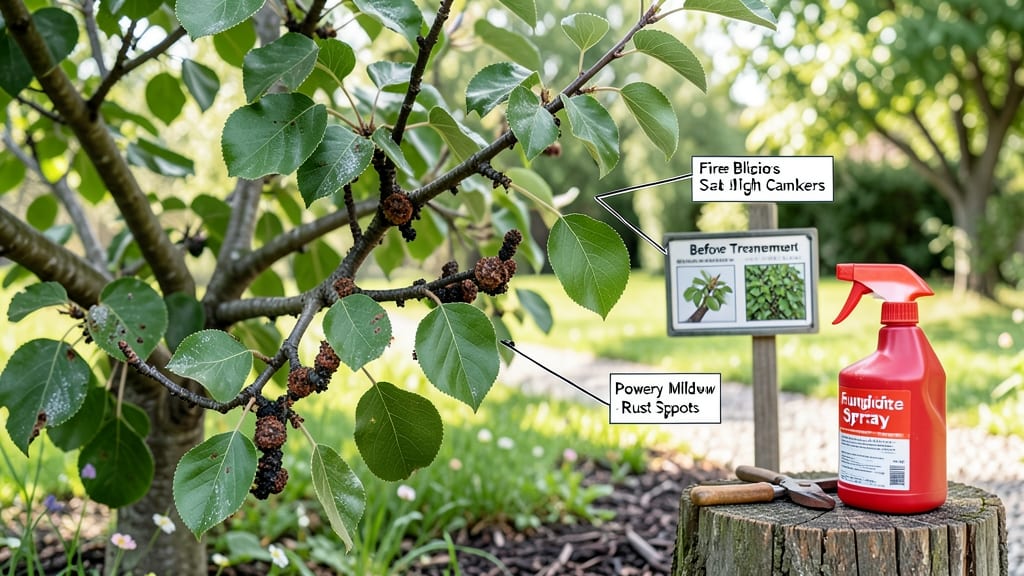
When my pear tree’s blackened branches and oozing cankers sent me scrambling for answers, I learned to spot pear tree diseases and treatment before they crippled my harvest. 🌿 These three diseases strike fast, but with sharp eyes and organic fixes, you can save your tree (and your patience).
The key? Acting early with copper sprays, pruning infected wood, and keeping the area clean.
Fire blight’s telltale sheen and scab’s velvety spots are dead giveaways, but cankers hide as sunken cracks that ooze sap. I’ve seen trees recover completely when I cut out infected limbs in dry weather and sterilized my pruners with rubbing alcohol.
Organic sprays like neem oil or baking soda mix work wonders—just apply them before buds swell in spring.
Prevention is your best tool: thin branches for airflow, remove fallen leaves, and water at the base (never overhead). My tree now thrives with one annual pruning session and a spring copper spray. The payoff? Juicy pears and a tree that looks like it’s been in the family for decades.
Even if your tree’s already struggling, don’t give up—some damage is reversible. I’ll walk you through the exact steps to diagnose, treat, and protect your pear tree’s future, so you can enjoy harvests for years to come.
Root Causes of Pear Tree Ailments
Pear trees, like all living things, are vulnerable to diseases when their natural defenses weaken. Understanding why these issues arise is the first step to prevention.
Below, we break down the key factors that turn a thriving orchard into a battleground for pathogens—so you can tackle the problem at its source.
---
Pear trees thrive in specific conditions, and when those are disrupted, their immunity plummets. Here’s how environmental factors create the perfect storm for disease:
- Extreme Temperature Swings 🌡️ Sudden shifts—like late spring frosts followed by warm spells—can shock trees, weakening cell walls and making them susceptible to fungal infections like fire blight (Erwinia amylovora).
Cold stress also slows sap flow, trapping moisture in bark crevices where bacteria and fungi love to hide.
- Poor Air Circulation 🌬️ Dense planting or overgrown branches create a humid microclimate, ideal for powdery mildew (Podosphaera leucotricha) and black spot (Venturia nashicola). Without airflow, spores linger, and leaves stay damp longer, accelerating infection.
- Excessive Moisture 💧 Overwatering or poor drainage saturates roots and soil, inviting root rot (Phytophthora spp.) and canker diseases (Nectria spp.). Even rain-splashed foliage can spread bacterial spot (Xanthomonas arboricola) from leaf to leaf.
- Nutrient Deficiencies 🌱 Lack of key nutrients—especially boron, zinc, or potassium—weakens structural integrity. For example, boron deficiency causes cracked bark, entry points for silver leaf disease (Chondrostereum purpureum), a deadly fungal invader.
--- Some diseases are always lurking, waiting for the right moment to strike. These pathogens exploit vulnerabilities in your tree’s biology:
- Fungal Spores in the Air 🍄 Fungi like apple scab (Venturia inaequalis, which also affects pears) produce spores that drift on wind or water. If your tree’s leaves are wet for more than 9 hours, spores germinate and penetrate leaf tissue within 24 hours.
- Bacterial Hitchhikers 🦠 Bacteria such as fire blight (Erwinia amylovora) survive in wild hosts (like hawthorn or crabapple trees) or in infected pruning tools. They enter through wounds, blossoms, or nectarines, then multiply rapidly in warm, wet conditions.
- Viral Threats from Insects 🐛 Viruses like pear decline virus spread via aphids, leafhoppers, or mites. These pests feed on infected trees, then carry the virus to healthy ones—often without you even noticing until yellowing leaves or stunted growth appear.
--- Sometimes, the problem isn’t nature—it’s us (or our pets!). Unintentional actions can introduce or worsen diseases:
- Improper Pruning Practices ⚠️ Cutting during wet weather or using contaminated tools spreads pathogens. Ragged cuts leave jagged edges that don’t heal properly, inviting canker or silver leaf fungi to colonize.
- Over-Fertilization with Nitrogen 💥 Too much nitrogen promotes lush, soft growth—a buffet for pests and diseases. It also delays dormancy, keeping trees vulnerable longer into fall and winter.
- Wildlife Damage 🦊 Animals like deer, rabbits, or squirrels can chew bark or scratch trees, creating wounds for pathogens. Even birds may spread fungal spores in their droppings.
- Contaminated Water Sources 🚰 Using untreated rainwater (from gutters near infected trees) or recycled irrigation water can redistribute spores and bacteria throughout your orchard.
--- A pear tree’s ability to fight disease hinges on its overall vitality. These internal factors leave it defenseless:
- Aging or Declining Trees ⏳ Older trees have thinner bark and slower wound healing, making them prime targets for canker and silver leaf. Their weakened vascular system also struggles to transport nutrients and water efficiently.
- Root Damage from Compaction 🌱💀 Compacted soil restricts root growth, reducing the tree’s ability to absorb water and nutrients. Stressed roots become entry points for root rot (Armillaria mellea), a fungal "death sentence" for mature trees.
- Improper Planting Depth 🕳️ Burying the graft union (where the scion meets the rootstock) too deep strangles the tree, while planting too shallow exposes roots to temperature extremes and disease. Both scenarios stunt growth and weaken immunity.
--- Where you live plays a huge role in disease prevalence. Some regions are hotspots for specific threats:
- Humid Climates 🌧️ Areas with high humidity (like the Pacific Northwest or Southeast U.S.) see more powdery mildew, apple scab, and fire blight due to prolonged leaf wetness.
- Arid Regions 🏜️ Drought-stressed trees in dry climates (e.g., California’s Central Valley) are prone to bacterial leaf spot and canker because their reduced sap flow can’t flush out invaders.
- Urban Pollution 🏙️ Trees near high-traffic roads or industrial areas suffer from soot and chemical damage, weakening leaves and making them more susceptible to fungal infections.
--- Diseases don’t appear out of nowhere—they exploit weaknesses in your tree’s environment, biology, or care routine. By identifying the root cause (whether it’s environmental, biological, or human-induced), you can target treatments more effectively and prevent future outbreaks.
Next, we’ll explore how to diagnose these issues before they spiral out of control. 🚀
Quick Fixes for Common Pear Tree Ailments
Pear trees are resilient, but when diseases strike, acting fast is key! Below are practical, organic solutions tailored to each problem, plus prevention tips to keep your tree thriving. 🌱🛡️
---
Cause: Erwinia amylovora bacteria (yellowing, wilting, oozing cankers).
How to Fix It: 🔥 Prune aggressively – Cut 6–12 inches below infected branches (use sterilized tools!) to remove bacteria. Dispose of clippings in a sealed bag. 🍳 Copper spray – Mix 1 tbsp baking soda + 1 tsp horticultural oil + 1 tsp soap per gallon of water, or use copper fungicide. Spray every 7–10 days during bloom. 👨🍳 Probiotic soil drench – Apply compost tea or beneficial bacteria (like Bacillus subtilis) to boost tree immunity. ⏰ Timing matters – Prune in late winter/early spring (before blooms) or immediately after harvest.
Prevention: ✅ Plant resistant varieties (e.g., ‘Moonglow’, ‘Seckel’). ✅ Thin fruit to improve airflow—less stress = fewer infections. ✅ Avoid overhead watering (use drip irrigation).
---
Cause: Venturia nashicola (dark, crusty spots on leaves/fruit).
How to Fix It: 🔥 Remove infected leaves/fruit – Rake up debris and compost it away from the tree (or burn if possible). 🍳 Neem oil spray – Mix 1 tbsp neem oil + 1 tsp soap per quart of water. Spray every 7–14 days starting at bud swell. 👨🍳 Baking soda spray – 1 tbsp baking soda + 1 tsp oil + 1 tsp soap per gallon. Reapply after rain. 🌡️ Dormant oil spray – Apply in late winter to smother overwintering spores.
Prevention: ✅ Space trees 15+ feet apart for airflow. ✅ Water in the morning to let foliage dry quickly. ✅ Mulch with straw to reduce soil splashes.
---
Cause: Sap-sucking insects (curls leaves, sticky honeydew, sooty mold).
How to Fix It: 🔪 Blast off with water – Use a strong hose spray to dislodge nymphs (especially in spring). 🍳 Insecticidal soap – Spray every 5–7 days (start at pink bud stage). 👨🍳 Kaolin clay – Apply Surround WP to create a protective barrier (psyllas hate it!). 🎯 Beneficial predators – Release ladybugs or lacewings for long-term control.
Prevention: ✅ Prune to open the canopy (less hiding spots). ✅ Remove old leaves where eggs overwinter. ✅ Avoid broad-spectrum pesticides (they kill natural predators).
---
Cause: Fungal/bacterial infections (sunken, oozing sores on bark).
How to Fix It: 🔥 Clean the wound – Scrape away dead tissue with a sterilized knife, then paint with copper fungicide. 🍳 Prune strategically – Remove small branches (larger wounds heal poorly). 👨🍳 Wound dressing – Apply organic sulfur or lime sulfur to prevent reinfection. ✨ Boost tree health – Deep-water and fertilize with compost to speed recovery.
Prevention: ✅ Avoid bark injuries (use pruners, not saws, for cuts). ✅ Keep grass/mulch 2 feet from trunk to reduce moisture. ✅ Inspect trees annually for early signs.
--- - Test soil pH (ideal: 6.0–7.0 for pears). - Mulch properly (3–4 inches, not touching the trunk). - Monitor regularly – Check undersides of leaves and new growth weekly.
Pro Tip: 💡 When in doubt, act fast! Most pear tree diseases spread quickly—prune early, spray preventatively, and keep your tree healthy to outsmart pests. Your tree will thank you with juicy, disease-free pears in no time! 🍐🌟
Frequently asked questions
How do I tell if my pear tree has fire blight vs. bacterial canker?
Fire blight causes blackened, oozing branches with a sheen, often curling like a shepherd’s crook. Bacterial canker appears as sunken, cracked sores that ooze yellowish sap and may have reddish-brown margins. The key difference? Fire blight attacks blossoms and new growth first, while canker targets older wood.
Can I use the same pruners for all my fruit trees if I sterilize them?
Yes, but sterilization alone isn’t enough—you must also clean between trees. Wipe blades with 70% rubbing alcohol or a 10% bleach solution (rinse well), but never reuse tools on infected trees without proper disposal of clippings. Fire blight bacteria can survive on tools for months!
What’s the best time of year to apply copper fungicide for disease prevention?
Apply copper fungicide in late winter/early spring (just before bud break) and again after harvest. For organic sprays like neem oil, bud swell stage is critical—spray every 7–14 days until petal fall. Avoid spraying when blooms are open to protect pollinators.
My pear tree leaves have white powdery spots—is this dangerous?
That’s likely powdery mildew, a common fungal issue. While it won’t kill your tree, it weakens growth and reduces fruit quality. Remove infected leaves and spray with a baking soda mix (1 tbsp baking soda + 1 tsp oil + 1 tsp soap per gallon) every 10 days until symptoms disappear.
How long does it take for a pear tree to recover from severe disease?
Recovery depends on the disease and how quickly you act. Fire blight may require 1–2 growing seasons to fully heal, while scab or mildew often improves within 4–6 weeks of treatment. Prune aggressively in dormant season, boost soil health, and monitor regularly—patience and consistency are key!